
AC-DC Adapters & Power Cords
Four things have to match: voltage, current, barrel gender and polarity.
Free shipping across the USA.
Not sure which adapter?
AC-DC Adapters & Power Cords catalog

Universal AC Adapter, 6 VDC
600 mA, female barrel. The TI-500 family adapter, supplied with a US blade.
Universal AC Adapter, 9 VDC
600 mA, female barrel. Covers the TI-500E as well as the TI-500 family.

120V AC Adapter, 9 VDC
100 mA, male connector. For the ESW, ESR, SPS-5 and SPS-10, and legacy SPC.
120V AC Adapter, 9 VDC
200 mA, female connector. For the newer-style SPC series only.
120V AC Adapter, 9 VDC
500 mA, male connector. For the TC-100, MCS and EL 5000 series.
120V AC Adapter, 12 VDC
500 mA, male connector. For the SPS-30, SPS-30+, DCS and EL 3000 series.

120V AC Adapter, 12 VDC
1000 mA, female barrel. The widest fitment of the small adapters, including the TI-500 SL and RF SS.

AC Adapter, 9 VDC 2.5 A
Worldwide input. Ships with a NEMA 1-15 cord; EU and UK cords available separately.

Universal AC Adapter, 9 VDC 3 A
Worldwide input, female barrel. Ships with a NEMA 5-15 cord. Powers the PC-150 in later serial ranges.
Universal AC Adapter, 12 VDC 2 A
Worldwide input, female barrel. Ships with a NEMA 1-15 cord. Covers the TI-500E and PC-150.

Power Cord, US NEMA 5-15
The grounded three-pin US cord, for the universal adapters that take a detachable lead.

Power Cord, US NEMA 1-15
The ungrounded two-pin US cord, for the 9 VDC 2.5 A and 12 VDC 2 A adapters.

Power Cord, EU CEE 7/16
The continental European cord. What makes a universal adapter actually usable in Europe.

Power Cord, UK BS 1363
The fused UK three-pin cord, for shipping an instrument to Britain or Ireland.
Custom & OEMWe also build the ones that aren’t in any catalog. Learn more
An adapter is the last thing you should be guessing at. These are the neighbouring answers.
If the instrument will not power up, the adapter is only one of three possibilities. The battery, the internal supply option and the instrument itself are the others.

Batteries
The rechargeable instruments take the NP3-6 pack rather than an adapter. A pack left flat for months rarely recovers.
View products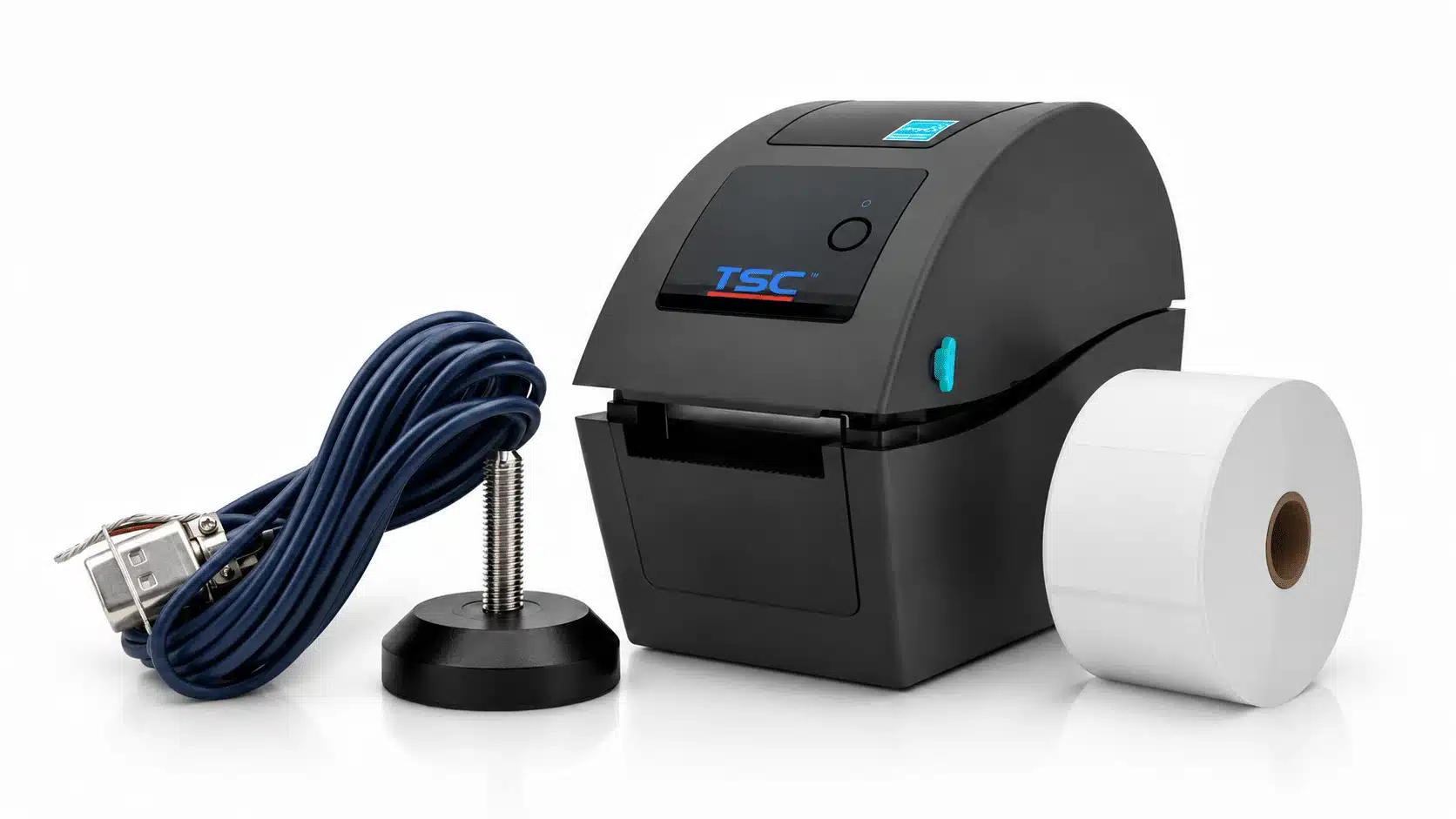
Indicator Accessories
On a washdown instrument the external adapter is the part that is not sealed. An internal supply removes it from the installation entirely.
View products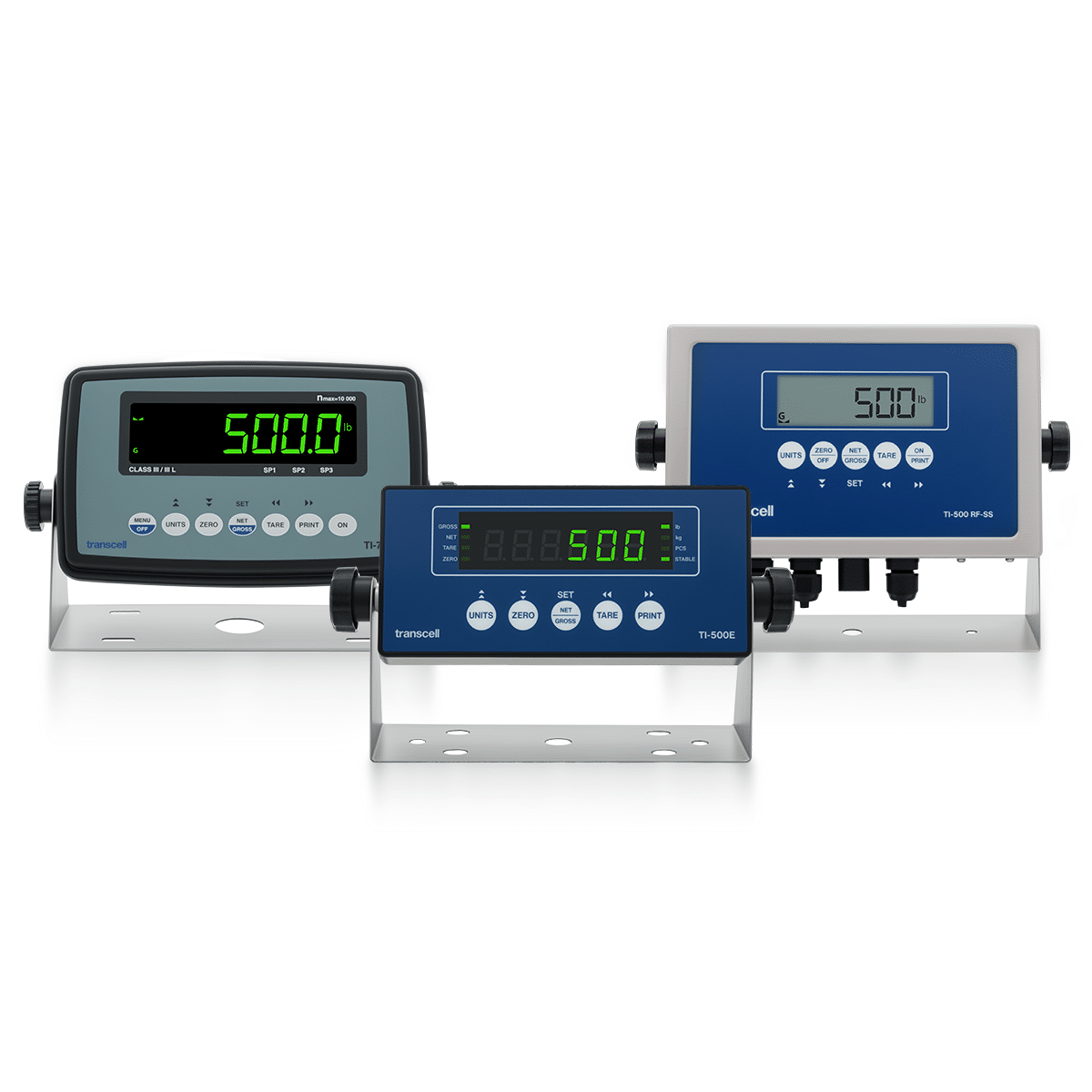
Digital Indicators
If the instrument is beyond economic repair, the current range covers the same jobs with warranty and support behind it.
View productsWhy Transcell. Ordered like a store, backed like a partner.
Free 2-day shipping
An adapter is a parcel, so it ships free in two days anywhere in the USA with no minimum order.
Ships worldwide
International orders ship at FedEx live rates, and the EU and UK cords mean the instrument arrives ready to plug in.
Warranty backed
Every product ships with a manufacturer warranty, supported from the US by the people who built the instrument it powers.
Custom when you need it
A voltage, a connector or a cord set that is not listed here is ordinary work for us rather than a special request.
Power supply reference
An adapter looks like the most interchangeable thing in the catalog and is one of the least. Below: the four specifications that have to match and why current behaves differently from the other three, what each of the fourteen parts actually powers, which cord goes with which universal adapter, and the vocabulary printed on the label.
How to choose an adapter. Four things, in this order.
Almost every wrong adapter order comes down to one of four specifications, and only one of them is forgiving. Working through them in order takes a minute and removes the guesswork entirely.
Voltage: does it have to be exact?
Voltage is the specification with no room in it. Transcell instruments run at 6, 9 or 12 V DC depending on the model, and an adapter one step up is not a conservative choice, it is an over-voltage.
The three voltages are not distributed randomly. 6 V covers the TI-500 family, the FDI readouts, the RF kits and the WB5040-AWP weigh beams. 9 V covers both a set of legacy bench scales and, in the universal versions, the TI-500E. 12 V covers the SPS-30 and DCS bench ranges at 500 mA, and at 1000 mA a much wider list including the TI-500 SL, the TI-500 RF SS and the WB5040-SWP.
If the old adapter is present, its label settles the question in two seconds and is worth more than any table on this page. If it is missing, the instrument model number gets you there instead: every adapter here names the products it powers, and the fitment table below is that information collected in one place.
One thing not to infer: two instruments in the same family can take different voltages. The WB5040-AWP takes 6 V while the WB5040-SWP takes 12 V, because the stainless model carries a rechargeable pack and the aluminium one does not. Same product line, different supply.
Current: bigger is fine, smaller is not.
Current is the specification people get wrong in the safe direction, and it is worth understanding why the asymmetry exists.
An adapter's milliamp or amp rating is the most it can deliver, not what it forces into the instrument. The instrument draws what it needs. So a 9 V 3 A adapter will run a device that draws 500 mA perfectly happily; it simply spends its life at a sixth of its capability.
The other direction is where the damage is. A 9 V 100 mA adapter asked to supply 500 mA runs hot, its output voltage sags under load, and the instrument sees a supply that drops every time the backlight or the serial port draws current. The symptom is rarely a dead scale; it is an unstable reading, an instrument that resets when it prints, or a display that dims. Those look like faults in the scale, which is why this one costs so much time to diagnose.
The practical rule: match or exceed the original rating, never fall below it. Where the catalog offers the same voltage at several currents, the higher one is always a safe substitution and the lower one never is.
Barrel gender: the detail ordered wrong most often.
This is the specification that catches experienced people, because it is invisible in a product title read quickly.
At 9 V alone the catalog has a 100 mA male connector, a 200 mA female connector, a 500 mA male connector and a 600 mA female barrel. Two of those are male and two female, and the voltage tells you nothing about which.
The generational logic behind it is worth knowing: the older bench ranges, the ESW, ESR, SPS-5, SPS-10, TC-100, MCS and EL series, generally take a male connector, while the current TI-series indicators take a female barrel. The one product page that says this outright is the 9 V 200 mA, which fits the newer-style SPC series specifically, with the older style taking the 100 mA part instead.
Four of these adapters share one product photo, so go by the product title, which names the connector as male or female, or send us the instrument model and let us pick it.
Universal or fixed, and which cord goes with it?
The ten adapters split into two kinds, and the difference only matters when the instrument leaves the country.
The fixed adapters are moulded units with US pins and a fixed output lead. Simple, cheap, and tied to a US outlet.
The universal adapters, the 9 VDC 2.5 A, the 9 VDC 3 A and the 12 VDC 2 A, accept worldwide input and take a detachable mains cord. Each ships with a US cord included, and the EU and UK cords are stocked separately at $15 each. Shipping an instrument to Europe therefore means adding a cord, not sourcing a different power supply.
Which US cord ships with which adapter is stated on the products themselves: the 9 VDC 2.5 A and 12 VDC 2 A include a NEMA 1-15, while the 9 VDC 3 A includes a NEMA 5-15.
Should it be an adapter at all?
Before replacing an adapter, it is worth asking whether the instrument should be running from one.
On a washdown or stainless installation, the external adapter is the component that is not sealed. The enclosure can be NEMA 4X and the adapter still sits in a wet room on the end of a lead. The internal power supply option moves the supply inside the housing and removes it from the environment entirely, which is a reliability improvement rather than a tidiness one.
On a portable or field instrument, the answer may be the NP3-6 rechargeable pack instead. The TI-500 SL, TI-500 BWL and WB5040-SWP are built around it, and an adapter on those is a charger rather than the running supply.
And where the instrument travels between benches, a longer output lead is usually the wrong fix; a second adapter left permanently at each station costs $25 and removes the daily unplugging that eventually breaks the barrel socket.
Reading the label. Four numbers, in the order that matters.
Everything you need is printed on the adapter you are replacing. This is what each figure means and how much latitude each one gives you.
01
Output voltage
6, 9 or 12 V DC across this range. No tolerance: the instrument is designed for one of them and an adapter one step up is an over-voltage rather than a margin.
02
Output current
A ceiling, not a target. The instrument draws what it needs, so higher is always safe and lower causes sag, heat and readings that move when the backlight comes on.
03
Connector gender
Male connector or female barrel. Both are stocked at the same voltages, older bench ranges generally take male and current TI-series indicators female.
04
Polarity
Which contact is positive. Centre-positive is usual but not universal, and reversing it can damage the instrument rather than simply failing to power it.
05
Input and cord
Fixed US pins, or a universal input with a detachable mains lead. Only the second kind can be shipped abroad by adding a cord.
If the old adapter is gone and the instrument label is unreadable, do not guess from a similar-looking unit in the drawer. Voltage and polarity together can damage an instrument that a wrong current rating would only have made unreliable. Send us the model number instead.
Which adapter do you need? Start from the instrument.
Every row here comes from the compatibility list on that adapter's own product page. Where an instrument appears twice, both parts genuinely fit it.
| If you have | Order | Why |
|---|---|---|
| A TI-500, TI-500 RF, FDI-1 or FDI-2, an RF kit or a WB5040-AWP | 6 VDC, 600 mA $25 | The 6 V female-barrel adapter for the current portable range. Supplied with a US blade, and also listed under Indicator Accessories. |
| A TI-500E | 9 VDC, 600 mA $25 | The 9 V equivalent of the row above, and the part that covers the TI-500E as well as the rest of the TI-500 family. |
| A TI-500 SL, TI-500 RF SS, SPS-70DL, SRP-300 or WB5040-SWP | 12 VDC, 1000 mA $20 | The widest fitment of the fixed adapters, and the supply for the rechargeable stainless instruments. Also covers the legacy TC-200 and TC-2001. |
| An ESW, ESR, SPS-5 or SPS-10, or a legacy SPC | 9 VDC, 100 mA $20 | Male connector. The lowest current rating in the catalog, which is exactly why it must not be substituted for a 500 mA part. |
| A newer-style SPC series | 9 VDC, 200 mA $20 | Female connector, and the clearest example on this page of a generation change being a connector change. The older SPC takes the 100 mA male part. |
| A TC-100, MCS or EL 5000 series | 9 VDC, 500 mA $20 | Male connector at 500 mA. Same voltage as two other adapters on this page and interchangeable with neither. |
| An SPS-30, SPS-30+, DCS or EL 3000 series | 12 VDC, 500 mA $20 | Male connector at 12 V. The bench-scale counterpart to the 12 V 1000 mA female-barrel part. |
| A PC-150 shipping scale | 9 VDC, 3 A $50 | Serial-range dependent: later PC-150 units take this, and the 12 VDC 2 A part also lists the PC-150. Check the serial number, or ask us. |
| An instrument going to continental Europe | CEE 7/16 cord $15 | Only useful with one of the three universal adapters, which take a detachable lead. A fixed US adapter cannot be converted with a cord. |
| An instrument going to the UK or Ireland | BS 1363 cord $15 | The fused UK three-pin lead, on the same basis as the row above. |
| A washdown scale where nothing should sit outside the enclosure | Internal power supply | Not an adapter at all. On a stainless instrument the external supply is the unsealed part of an otherwise sealed installation. |
| A portable instrument that should not be tethered | NP3-6 battery | The rechargeable models are designed around the pack. On those the adapter is a charger rather than the running supply. |
What powers what. Taken from each adapter's own product page.
Read your instrument in the right-hand column. Where a product appears against two adapters, both are listed for it on the live site.
| Adapter | Output | Connector | Price | Powers |
|---|---|---|---|---|
| Fixed US adapters | ||||
| 120V AC Adapter | 9 V DC, 100 mA | Male | $20 | ESW Series, ESR Series, SPS-5, SPS-10, SPC Series (legacy) |
| 120V AC Adapter | 9 V DC, 200 mA | Female | $20 | SPC Series (newer style) |
| 120V AC Adapter | 9 V DC, 500 mA | Male | $20 | TC-100 Series, MCS Series, EL 5000 Series |
| 120V AC Adapter | 12 V DC, 500 mA | Male | $20 | SPS-30, SPS-30+, DCS Series, EL 3000 Series |
| 120V AC Adapter | 12 V DC, 1000 mA | Female barrel | $20 | SPS-70DL, SRP-300, TI-500 SL, TI-500 RF SS, WB5040-SWP, and legacy TI-500 BWL with rechargeable pack, TC-200 and TC-2001 |
| Universal AC Adapter | 6 V DC, 600 mA | Female barrel | $25 | TI-500, TI-500RF, TI-500 FDI-1, TI-500 FDI-2, RF Kits, WB5040-AWP, TI-300E, TI-500BWL on C-size batteries. US blade included |
| Universal AC Adapter | 9 V DC, 600 mA | Female barrel | $25 | TI-500E, TI-500, TI-500RF, TI-500 FDI-1, TI-500 FDI-2, RF Kits, WB5040-AWP, TI-300E, TI-500BWL. US blade included |
| Worldwide input, detachable cord | ||||
| AC Adapter | 9 V DC, 2.5 A | Barrel | $50 | Designed for use anywhere in the world. NEMA 1-15 cord included; EU and UK cords sold separately |
| Universal AC Adapter | 9 V DC, 3 A | Female barrel | $50 | PC-150 in later serial ranges. NEMA 5-15 cord included |
| Universal AC Adapter | 12 V DC, 2 A | Female barrel | $50 | TI-500E and PC-150. NEMA 1-15 cord included |
| Mains cords | ||||
| Power Cord, US | Mains | NEMA 5-15 | $15 | Grounded three-pin. Listed for the 9 VDC 3 A adapter |
| Power Cord, US | Mains | NEMA 1-15 | $15 | Ungrounded two-pin. Listed for the 9 VDC 2.5 A and 12 VDC 2 A adapters |
| Power Cord, EU | Mains | CEE 7/16 | $15 | Continental Europe. Listed for the 9 VDC 2.5 A and 12 VDC 2 A adapters |
| Power Cord, UK | Mains | BS 1363 | $15 | United Kingdom and Ireland, fused. Same two adapters as above |
One thing in this table is worth reading twice: the WB5040-AWP takes 6 V while the WB5040-SWP takes 12 V, so the two weigh beam models do not share a supply.
Power terms, in plain language. What the label is telling you.
Show all 20 terms
- AC adapter
- The external supply that converts mains alternating current to the low-voltage direct current an instrument runs on. Sometimes called a power brick or a wall wart.
- V DC
- Volts of direct current, the adapter's output. This figure has to match the instrument exactly; 6, 9 and 12 V DC are the three used across this range.
- mA and A
- Milliamps and amps, the adapter's maximum output current. A ceiling rather than a target, so a higher rating is a safe substitution and a lower one is not.
- Barrel connector
- The cylindrical DC plug on the adapter's output lead. Outside diameter, inside diameter and gender all have to match the socket on the instrument.
- Male connector
- A plug with a pin, generally the older Transcell bench ranges. Not interchangeable with a female barrel at the same voltage.
- Female barrel
- A socket rather than a pin, generally the current TI-series indicators. The other half of the gender question.
- Polarity
- Which contact of the connector is positive. Centre-positive is common but not universal, and getting it wrong can damage the instrument rather than simply fail to power it.
- Centre-positive
- The usual convention: the inner contact of the barrel carries the positive supply and the outer sleeve is negative.
- Regulated supply
- An adapter that holds its output voltage steady as the load changes. An under-rated adapter behaves like an unregulated one, sagging when the instrument draws current.
- Voltage sag
- The drop in output voltage when a supply is asked for more current than it can deliver. On a scale it shows up as an unstable reading rather than as a dead instrument.
- Universal input
- An adapter that accepts the full range of world mains voltages, so only the cord changes between countries.
- Detachable cord
- A mains lead that unplugs from the adapter, which is what makes a universal adapter usable abroad by swapping the lead.
- NEMA 5-15
- The grounded three-pin US mains plug, the standard domestic and commercial outlet in North America.
- NEMA 1-15
- The ungrounded two-pin US plug, used where the equipment is double-insulated and needs no earth connection.
- CEE 7/16
- The two-pin continental European plug, often called a Europlug. Fits the great majority of European sockets.
- BS 1363
- The UK three-pin mains plug, which carries a fuse inside the plug body itself, unlike any other common standard.
- Internal power supply
- A mains supply built inside the instrument enclosure instead of an external adapter, which is the better answer on a washdown installation.
- Sealed lead-acid
- The chemistry of the NP3-6 rechargeable pack. Tolerant of trickle charging and intolerant of being stored discharged.
- Trickle charge
- A low continuous current that keeps a battery topped up without overcharging it, which is what an adapter does on a rechargeable instrument.
- Load
- How much current the instrument actually draws. It varies within one instrument, rising when the backlight, the serial port or a radio module is active.
Adapters and cords, answered.
How do I know which adapter my instrument takes?
The fastest answer is the label on the old one: it prints voltage, current and usually polarity. If it is gone, use the instrument's model number against the fitment table on this page, because every adapter here names the products it powers. If the model number is also gone, send us a photograph of the socket and the instrument and we will identify it rather than have you guess.
Can I use a higher current adapter than the original?
Yes, and it is entirely safe. The current rating is the maximum the adapter can supply, not what it pushes into the instrument, so a 9 V 3 A adapter runs a 500 mA device without any issue. The reverse is what causes trouble: an under-rated adapter runs hot, its voltage sags under load, and the instrument produces unstable readings or resets when it prints.
What happens if I use the wrong voltage?
Too low and the instrument either will not start or behaves erratically as the supply collapses under load. Too high risks real damage to the electronics, and it is not a conservative choice despite feeling like one. Voltage is the one specification on this page with no tolerance at all, so match it exactly rather than approximately.
Why are there four different 9 V adapters?
Because they differ in current and in connector gender, and both matter. The 100 mA and 500 mA parts have male connectors, the 200 mA and 600 mA parts are female. They suit different generations of instrument: the older bench ranges generally take a male connector while the current TI-series indicators take a female barrel. The voltage on its own tells you nothing about which one you need.
Which adapter does my WB5040 weigh beam take?
It depends which model. The WB5040-AWP, the aluminium version, takes the 6 V 600 mA adapter. The WB5040-SWP, the stainless version with the internal rechargeable pack, takes the 12 V 1000 mA. They are the same product line and they do not share a power supply, which is worth checking before ordering a spare.
I am shipping an instrument to Europe. What do I need?
If it uses one of the three universal adapters, the 9 VDC 2.5 A, 9 VDC 3 A or 12 VDC 2 A, you need only add a CEE 7/16 cord at $15, because those adapters accept worldwide mains input and take a detachable lead. If the instrument uses one of the fixed US adapters, a cord will not help and you need a different supply, so tell us the destination and we will specify it.
Can I just use a generic adapter from a drawer?
Only if voltage, current, connector and polarity all match, and polarity is the one that can do damage rather than simply fail. Generic supplies also vary in how well regulated they are, and a poorly regulated supply on a weighing instrument shows up as a reading that will not settle, which is a genuinely difficult fault to trace back to its cause.
My scale reading is unstable. Could it be the adapter?
Yes, and it is worth eliminating early because it is cheap to test. An under-rated or failing adapter sags when the instrument draws current, so the symptom often correlates with something else switching on, the backlight, a print cycle or a radio module. If a known-good adapter of the correct rating steadies the reading, you have found it. If not, the next suspects are the cable route and the load cell connections.
Should I buy an internal power supply instead?
On a washdown or stainless installation, seriously consider it. The enclosure can be rated NEMA 4X and the external adapter still sits in a wet room on the end of a lead, which makes it the weakest part of an otherwise sealed system. The internal supply option moves it inside the housing. It is listed under Indicator Accessories rather than here, and it is fitted to the instrument rather than added later.
Do you supply adapters for instruments you no longer make?
Where we can, yes. Several parts on this page exist specifically for legacy products, the SPC, TC-100, MCS, EL 3000 and EL 5000 ranges and the TC-200 and TC-2001 among them. If your instrument is older than anything listed, send us the model number and the label from the original supply and we will tell you whether a current part fits or whether it is genuinely obsolete.
We Make Your Challenge Our Business
Tell us what it has to do and we’ll tell you what it takes.