
Load cell signal conditioners and amplifiers.
Signal conditioners such as the Signal Link turn load-cell millivolts into both analog and digital output: 4–20 mA and 0–10 V analog, RS-485 Modbus RTU digital, plus relay control, all on a 25 mm DIN rail.

Explore the lineup.
Three ways to turn load-cell millivolts into a signal your system can read. Pick the housing and output your install calls for.
Signal Link at a glance.
A live readout, on the module. Tare, calibrate and diagnose standing at the cabinet.
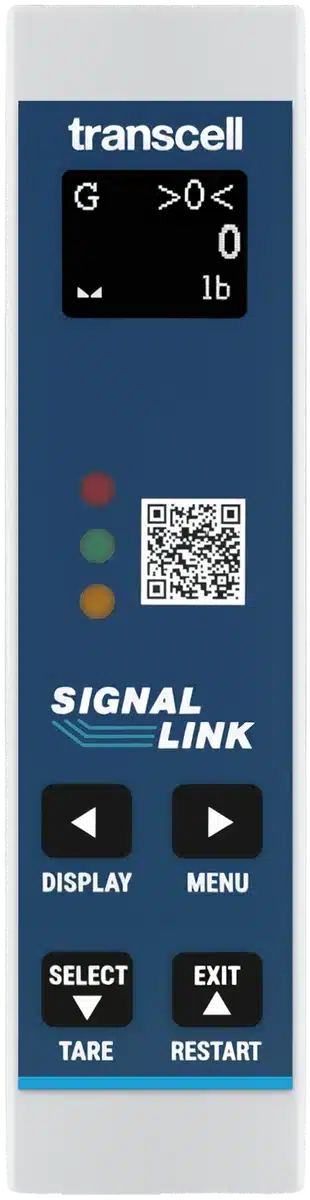
Every terminal, printed on the housing. The full map, right where you wire it.
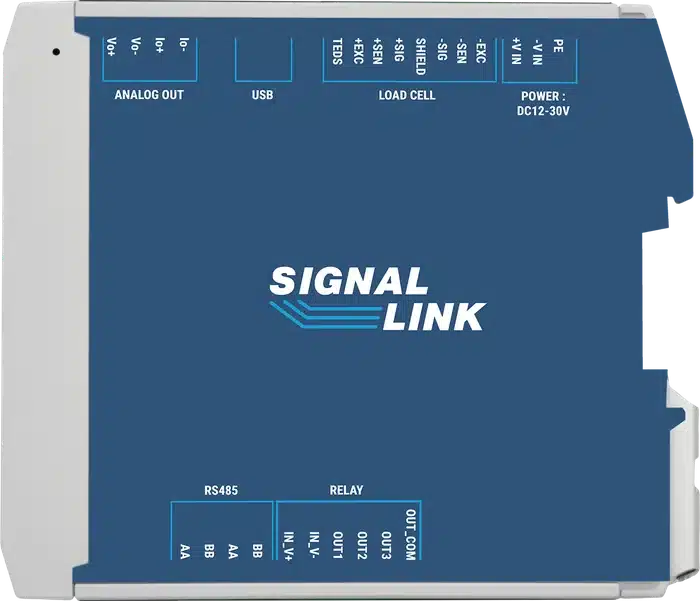
Three ways out. Proportional analog, digital communication and discrete I/O.

On the rail in seconds. 25 mm wide, fed straight from the 12–30 V cabinet supply.
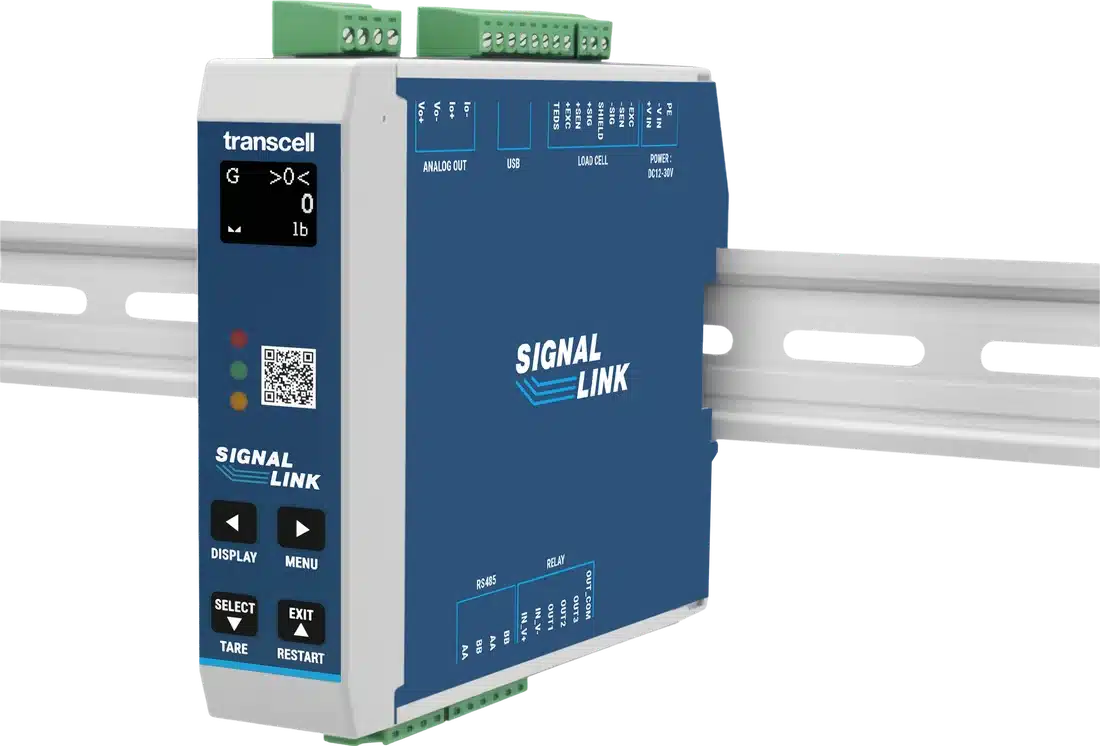
Don't take our word for it. A working digital twin runs right on this page.

Every face has a job.
Keep scrolling. The actual CAD model turns to follow the story.
The whole signal chain, in 25 mm.
Amplifier, display, comms and control in a single DIN-rail module: everything between your load cell and your PLC, in one slot on the rail.
Readings you can stand in front of.
A live OLED and four keys on the front: tare, calibrate and step through diagnostics while you're standing at the cabinet.
Every port, mapped on the housing.
Load cell, analog out, USB-C and power up top; RS-485, the trigger input and three relays below. The full terminal map is printed right on the side.
A full signal conditioner in a single DIN slot.
Built for OEMs and system integrators who need precision strain-gauge measurement inside the cabinet. Commissioning, calibration and live troubleshooting all happen at the rail, no laptop required.
Drops in on the rail.
1,000,000-count measurement, an OLED, RS-485 Modbus and three relays, all in cabinet-grade hardware.
Calibrate at the rail.
A 64×48 OLED and four-key pad: tare, calibrate and diagnose with no laptop and no proprietary cable.
Talk to anything in the cabinet.
4–20 mA, 0–10 V and bipolar analog, RS-485 Modbus-RTU to 32 nodes, and three Form-A relays: legacy and modern controls from one source.
Commission at the rail.
No laptop required.
The OLED shows live weight, state and diagnostics right on the module, so calibration, tare and setpoints happen where the wires are, not back at a desk.

Operate the whole signal chain. Right here.
A working digital twin running the same firmware that ships in the box. Drag the load cell and watch a single mV/V signal become analog, Modbus and relay outputs. Navigate with the four keys, and hold any key for its secondary function. The whole chain, live.
Open the interactive demoThe twin is built for a desktop-sized screen. Open it full screen to drag the load cell and work the keys.Open the demo Which conditioner do I need?
All three convert load-cell mV/V to a usable signal. Signal Link adds a display, digital comms and on-board control; the LCT6 units are simpler, lower-cost amplifiers for plain analog conversion.
Smart DIN-rail conditioner with display, comms and built-in control.
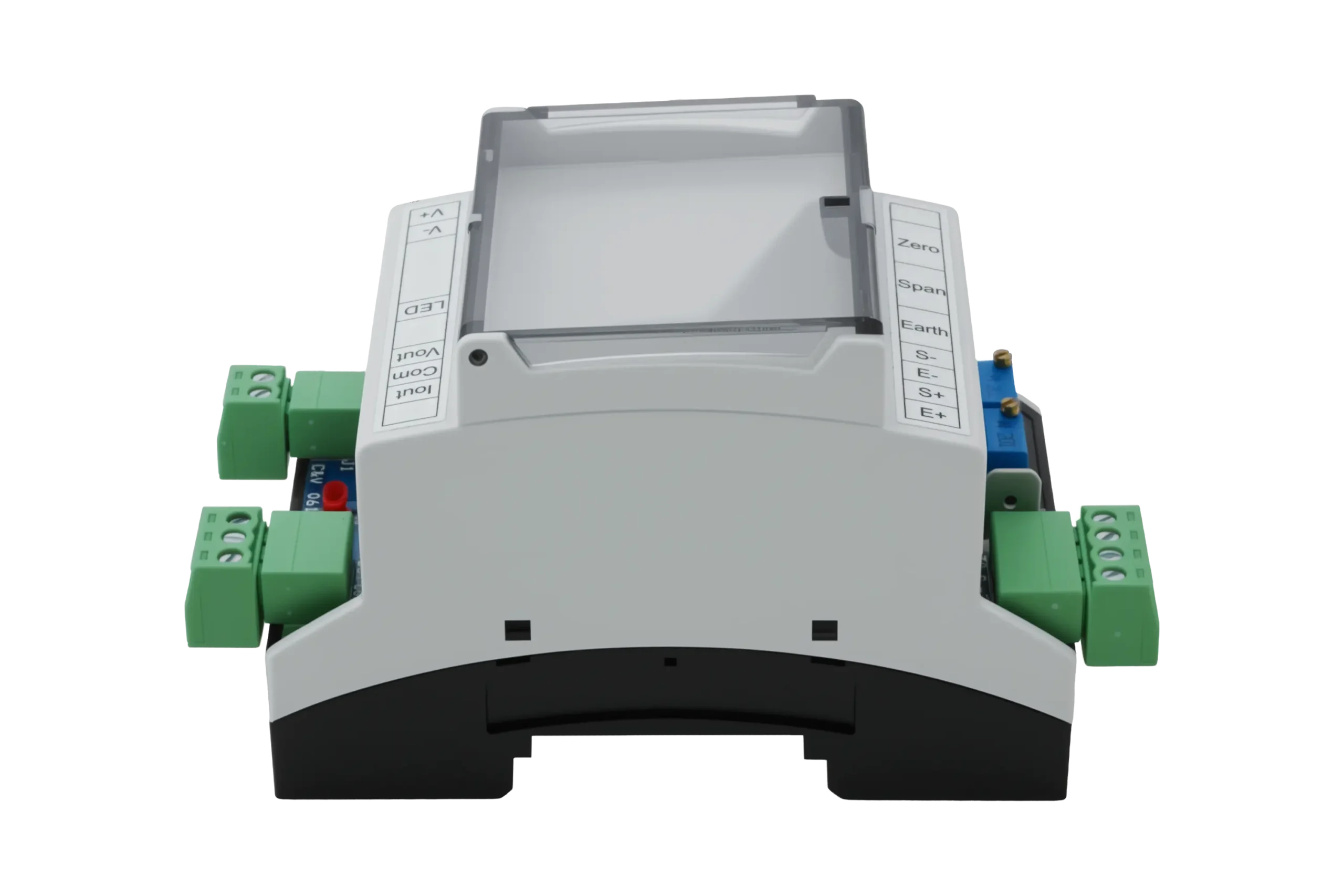
Economical DIN-rail amplifier for plain mV/V-to-analog conversion.
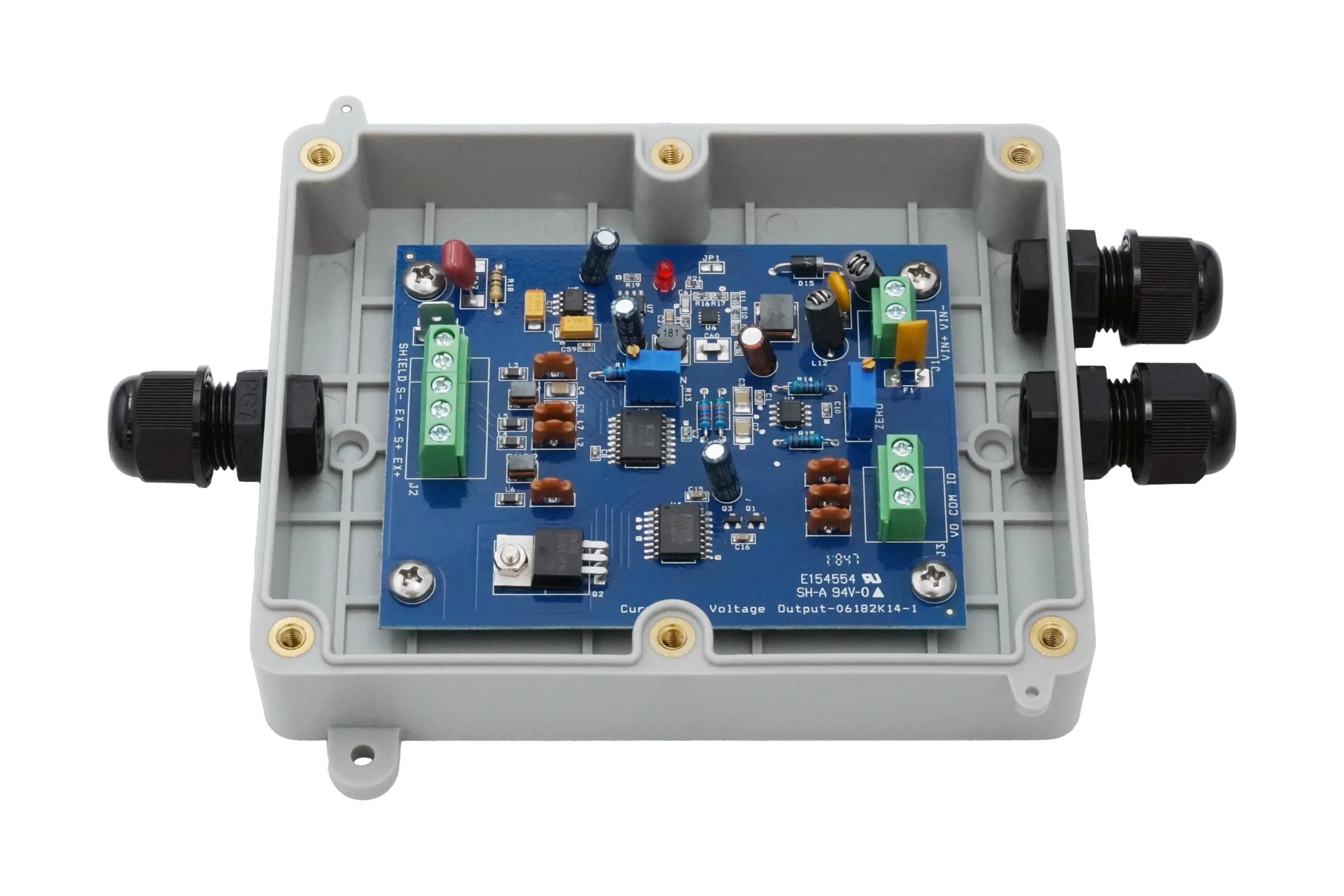
Sealed field-enclosure amplifier with cable glands for outdoor installs.
A conditioner is half the system.
Pair the Signal Link with the load cell it reads and the hardware that mounts it, all from the same catalog.
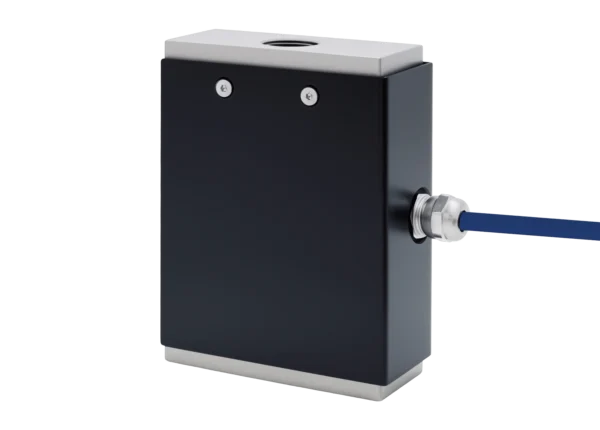
Load Cells
Every mV/V source the Signal Link reads: S-beam, single-point, canister, inline and more.
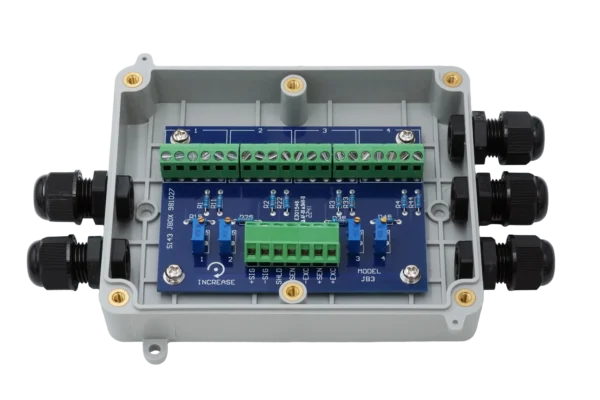
Junction Boxes
Sum and trim several load cells into one clean signal before it reaches the Signal Link.

Cables & Accessories
Shielded load-cell cable, power supplies and the small parts that finish the install.
Signal Link, answered.
How many load cells can one Signal Link drive?
Up to eight 350 Ω cells in parallel (direct or through a junction box) on its 5 V excitation supply, with a ±4.5 mV/V input range.
Will it connect to my PLC?
Yes. Choose 0–10 V, ±10 V, 4–20 mA or ±20 mA analog output scaled to your own endpoints, or poll it over RS-485 Modbus-RTU. Built-in PLC calibration points at 0 / 25 / 50 / 75 / 100% make loop checkout quick.
Can I network more than one module?
Up to 32 units daisy-chain on a single half-duplex RS-485 Modbus-RTU bus. The two AA/BB terminal pairs are paralleled so chain wiring needs no splices. Just fit a 120 Ω terminator at each end node.
Does it take 4-wire or 6-wire load cells?
Both. Six-wire cells use the remote-sense terminals for full accuracy over long runs; for four-wire cells, short SEN to EXC. A dedicated TEDS terminal supports plug-and-play transducer identification.
Do I need software to set it up?
No. Calibration, filtering, scaling and relay logic are all on-device through the OLED and four-key pad. The USB-C port is optional: it appears as a virtual COM port for PC setup and firmware updates.
What can the relays do?
Three Form-A relays (5 A · 250 VAC / 30 VDC) run on-board fill, pass-band and check-weigh logic against your setpoints, and an opto-isolated trigger input (10–30 VDC) starts the cycle: simple dosing and grading without a PLC in the loop.
Still have questions?
Buy direct from the source.
Free 2-day shipping
Nationwide, on every order. No minimum purchase required.
Talk to a real engineer
US-based application support from the team behind the product.
Factory service & repair
Troubleshooting, repair and support straight from the manufacturer.
The whole chain, one order
Load cells, junction boxes and cables from the same catalog.
We Make Your Challenge
Our Business
Talk to an engineer. Tell us what you need and we'll handle the rest.