
Postal Scales
Scales that price the parcel themselves, instead of handing a weight to a PC.
Free shipping across the USA.
Not sure which one?
Postal scale models and the rate card

SPS-10E
10 lb, and small enough for a desk. Converts ZIP to zone and works out USPS Retail postage on its own.
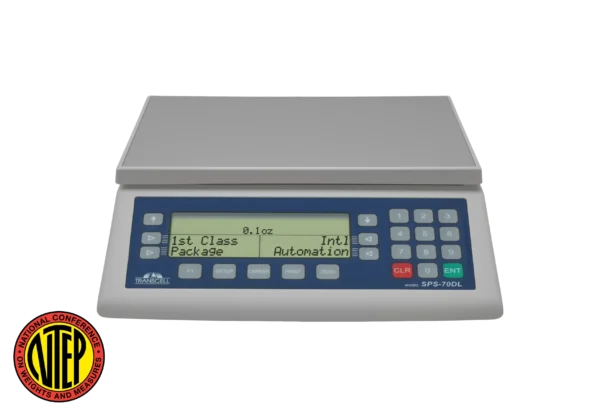
SPS-70DL
70 lb, with USPS domestic and international rates loaded, plus most UPS and FedEx Express rates at no extra cost.

SPS-70DL Rate Card
The update that reloads current postal rates into an SPS-70DL. A consumable, not an accessory: see below.
Custom & OEMWe also build the ones that aren’t in any catalog. Learn more
A postal scale prices the parcel. These are the other ways to do it.
Both scales here arrive complete and need no computer at all, which is the whole point of them. Nothing below is a missing part. They are the alternatives worth knowing about before you commit to on-board rating.

Shipping Scales
The other architecture: the scale sends a weight over USB or RS-232 and UPS WorldShip or FedEx Ship Manager does the rating, always at today's prices.
View products
TDP-225 Thermal Printer
For a printed record at a counter that has no PC. Prints a ticket or a bar code label over RS-232, cable in the box.
Shop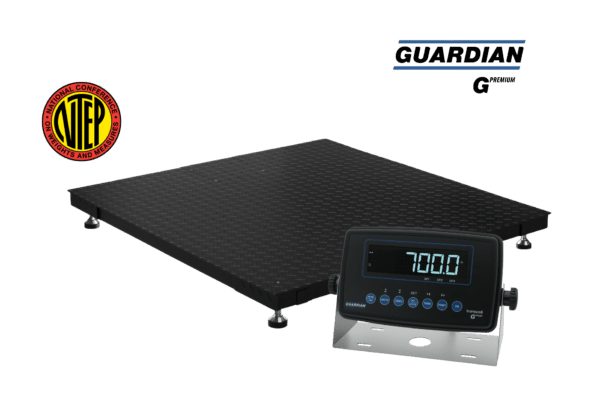
Platform Scales
Once the shipment is freight rather than mail. Above 70 lb, and certainly on a pallet, a postal scale is the wrong category.
View productsWhy Transcell. Ordered like a store, backed like a partner.
Free 2-day shipping
Both scales and the rate card ship free in two days anywhere in the USA, with no minimum order.
Ships worldwide
International orders ship at published rates from Buffalo Grove, Illinois. Note that on-board postal rates are US carrier rates.
Warranty backed
Covered by warranty and supported from the US, by a manufacturer rather than a reseller.
Custom when you need it
If a mailroom needs a capacity, footprint or output that is not listed, that is ordinary work for us rather than a special request.
Postal scale reference
A postal scale is defined by what it does after weighing: it looks the weight up in a rate table and tells you the postage. That single design decision drives everything worth knowing here. Below: how to choose between the two, what actually happens inside a rate calculation, a table that turns a situation into a part number, both scales side by side, the ongoing question of keeping rates current, and the vocabulary you will meet.
How to choose a postal scale. Three questions, in order.
The two scales on this page are ten times apart in price, and the gap is not really about capacity. It is about which carriers get rated and how much of the counter work the scale is expected to absorb. Start with the third question below if you have never bought a rate-calculating scale before, because it can change the answer to the first two.
How heavy do the parcels get, and how much desk is there?
The SPS-10E weighs to 10 lb and measures 8.4 × 7.9 × 2.1 in, which is genuinely desk furniture rather than equipment. That ceiling covers letters, flats, and the small parcels most offices actually send, and for a reception desk or a home office it is rarely the limiting factor.
The SPS-70DL weighs to 70 lb, which is not a coincidence: it is the ceiling for most USPS domestic services, so a 70 lb scale covers effectively everything the Postal Service will carry. It is a taller unit at 10.7 × 3.94 × 13.39 in, with a large LCD and soft keys, and it is built for a mailroom counter that is used all day rather than occasionally.
Above 70 lb you have left the postal world entirely and you want a shipping scale or, once it is on a pallet, a platform scale.
Which carriers need to be rated?
This is the real difference between the two, and it is where the price gap lives.
The SPS-10E handles USPS Retail rate calculation and automatic ZIP-to-Zone conversion, which is the piece of arithmetic that trips people up manually: domestic parcel prices depend on how far the parcel travels, expressed as a zone, and the zone has to be derived from the destination ZIP code. The scale does that lookup for you. It is a USPS tool.
The SPS-70DL ships loaded with the popular domestic and international USPS services, named on the product page as First-Class Mail, Priority Mail, Express Mail, Parcel Post and Media Mail, and it also handles most UPS and FedEx Express rates at no extra cost. If your counter chooses between carriers rather than defaulting to one, that is the reason to buy it.
Neither scale buys postage or prints a label. They tell you what the postage costs; paying for it remains a separate step.
Should the scale do the rating at all?
This is the question to settle first, and it is the one nobody asks until after the first rate increase.
A rate-calculating scale stores the carrier's price table in the scale. That is what lets it work with no computer, no network and no software, which is exactly right for a counter where none of those exist. The cost is that the table is a snapshot. When the carriers raise prices, and they do so regularly, the scale keeps quoting the old ones until it is updated with a new rate card at $190.
So there are two honest paths. If the mailroom has no PC, on-board rating is the right answer and the rate card is simply a running cost to budget for, like toner. If there is a PC on the counter, a shipping scale that sends its weight to UPS WorldShip or FedEx Ship Manager will always rate at today's prices, needs no rate card ever, and the PC-150 costs $750 against the SPS-70DL's $1,125.
We would rather say that plainly than sell the more expensive scale to somebody who has a computer sitting next to it.
From a parcel to a price. What a rate-calculating scale does.
A postal scale does two jobs in sequence, and only the first one is weighing. Understanding the second is what explains both the ZIP prompt and the rate card.
01
The parcel is weighed
One load cell under the platform, the same arrangement as any bench scale. Nothing about this step is special; a $20 scale does it too.
02
The weight is rounded to a rate step
Carriers do not price continuously. They price in bands, so the scale rounds the measured weight up to the next band the tariff recognizes before it looks anything up.
03
The destination becomes a zone
You enter the destination ZIP and the scale converts it to a postal zone, because domestic parcel prices depend on distance. This is the ZIP-to-Zone step, and it is the part that is genuinely tedious by hand.
04
The service is chosen
Priority, First-Class, Media Mail, or a UPS or FedEx Express service on the SPS-70DL. Each has its own table, which is why the same parcel has several different prices.
05
The table returns a price
Weight band plus zone plus service gives one number: the postage. That number came out of a table stored inside the scale, which is why the table's age matters.
Two things fall out of that chain. The scale is only as current as its stored table, which is what the rate card exists to replace. And the postage is only as right as the ZIP you typed, so a mistyped destination produces a confident, wrong price that the scale has no way to question.
Which one to order. Decided by what is on the counter already.
Two of these rows point off this page on purpose. On-board rating is genuinely the right answer for some counters and the wrong one for others, and the deciding factor is usually whether a computer is within reach.
| If the situation is | Order | Why |
|---|---|---|
| A desk or reception, letters and small parcels, no PC | SPS-10E $120 | 10 lb, desk-sized, and it does the ZIP-to-Zone lookup and USPS Retail rating on its own. The cheapest way to stop guessing at postage. |
| A mailroom counter used all day, USPS only | SPS-70DL $1,125 | 70 lb covers essentially all of domestic USPS, with the popular domestic and international services loaded, a large LCD and soft keys for repeated use. |
| A counter that chooses between carriers | SPS-70DL $1,125 | It handles most UPS and FedEx Express rates as well as USPS at no extra cost, so one scale prices the same parcel three ways. |
| An SPS-70DL already in service, quoting old prices | SPS-70DL Rate Card $190 | The rate table lives in the scale, so a carrier price rise is fixed by replacing the card rather than the scale. |
| A PC on the counter | PC-150 shipping scale $750 | Send the weight to WorldShip or Ship Manager and let the software rate it. Always current prices, no rate card ever, and cheaper than the SPS-70DL. |
| Parcels over 70 lb, or anything on a pallet | A platform scale | Past 70 lb this is freight rather than mail. A floor scale sits at 4.3 in and a forklift drives onto it. |
Both scales, line by line. And the rate card, which is neither.
The rate card column is filled in where it means something and left blank where it does not; it is a consumable for the SPS-70DL rather than a scale in its own right.
| Specification | SPS-10E | SPS-70DL | Rate Card |
|---|---|---|---|
| Capacity and size | |||
| Price | $120 | $1,125 | $190 |
| Capacity | 10 lb | 70 lb | n/a |
| Dimensions | 8.4 × 7.9 × 2.1 in 213 × 200 × 53 mm | 10.7 × 3.94 × 13.39 in 270 × 99 × 340 mm | n/a |
| Form factor | Ultra-compact, desk | Mailroom counter | Replacement card |
| Displayed division | 0.1 oz | 0.1 oz to 4 lb, 0.5 oz to 70 lb | n/a |
| Rating | |||
| USPS domestic | Retail rates | First-Class, Priority, Express, Parcel Post, Media Mail | Reloads the table |
| USPS international | First-Class International only | Popular services included | Reloads the table |
| UPS | No | Most rates, no extra cost | n/a |
| FedEx Express | No | Most rates, no extra cost | n/a |
| ZIP-to-Zone | Automatic | Yes | n/a |
| Buys postage | No | No | n/a |
| Prints a label | No | No | n/a |
| Interface and power | |||
| Display | LCD | Large LCD | n/a |
| Keys | Keypad | Soft keys | n/a |
| Power | 6 AA batteries or AC adapter | 12 VDC AC adapter, included | n/a |
| Auto power off | Yes | Mains powered | n/a |
| Serial output | No | RS-232 and USB | n/a |
| Ordering | |||
| SKU | 104400010 | SC062003 | RA006009 |
| Product type | Simple | Simple | Simple |
| Rate updates | New rate chip when USPS reprices | New rate card when carriers reprice | This is the update |
| Legal for trade | No | NTEP, CC 10-015 | n/a |
| Shipping | Free 2-day, no minimum | Free 2-day, no minimum | Free 2-day, no minimum |
| Warranty | 2-year limited warranty | 2-year limited warranty | n/a |
Note that the SPS-70DL is titled a shipping scale on its own product page while living in the postal category. It is filed correctly: it belongs here because it rates postage on board, which is what makes a scale postal rather than simply small.
Keeping the rates current. The part of ownership nobody quotes for.
This section exists because an out-of-date rate table is the one failure mode of this whole product category, and it is invisible: the scale keeps working perfectly and keeps giving the wrong price.
| The question | The answer | What it means for you |
|---|---|---|
| Where do the rates live? | In the scale, on a chip or card | That is the design trade. It is what lets the scale rate postage with no PC, no network and no subscription, and it is also why the rates can become stale. |
| What happens when USPS raises prices? | The scale keeps quoting the old ones | It does not warn you and nothing looks broken. This is the important part: an out-of-date postal scale produces plausible, wrong prices indefinitely. |
| How is it updated? | A new rate card $190 | For the SPS-70DL. The SPS-10E takes a rate chip, and its product page notes that new chips are available online when the post office updates prices. |
| How often is that? | USPS now changes prices more than once a year | Budget for it as a recurring cost rather than a one-off, in the way you would budget for toner or labels. |
| Is there a way to avoid it entirely? | Yes: a shipping scale plus software | If a PC is available, the scale sends only a weight and WorldShip or Ship Manager applies current rates. There is no table in the scale, so there is nothing to expire. |
| So which should I buy? | No PC, buy postal. PC on the counter, buy shipping | That is the whole decision, and it is worth making deliberately. The PC-150 at $750 undercuts the SPS-70DL at $1,125 and never needs a rate card. |
Postal scale terms, in plain language. What they mean at the counter.
Show all 20 terms
- Postal scale
- A scale that does not merely weigh but also looks the weight up in a carrier's rate table and reports the postage. The rating is what makes it postal rather than simply small.
- Rate-calculating scale
- The same thing said more precisely. It distinguishes these from a scale that reports only a weight and leaves the pricing to software or to a person.
- Rate table
- The carrier's price list, stored inside the scale, indexed by service, weight band and zone. Everything good and everything awkward about a postal scale follows from this table being in hardware.
- Rate card
- The physical update that replaces an SPS-70DL's stored rate table when carriers change their prices. A consumable rather than an accessory.
- Rate chip
- The equivalent for the SPS-10E: a replaceable chip carrying the current rates, available when the post office reprices.
- Zone
- A distance band used by USPS to price domestic parcels. The further a parcel travels from its origin, the higher the zone and the higher the price.
- ZIP-to-Zone
- Deriving the postal zone from the destination ZIP code. The scale does this lookup automatically, which is the single most tedious part of rating a parcel by hand.
- Weight band
- The step a carrier prices in. Tariffs are not continuous, so a parcel is charged at the next band up from its measured weight, and the scale rounds accordingly.
- USPS Retail rates
- The over-the-counter price list, as opposed to the discounted commercial rates available through software or a postage account. The SPS-10E rates at retail prices.
- First-Class Mail
- The USPS service for lighter letters, flats and small parcels. One of the services loaded on the SPS-70DL.
- Priority Mail
- A faster USPS domestic service, priced by weight and zone, and one of the tables carried on the SPS-70DL.
- Media Mail
- A cheaper USPS service restricted to books and educational media. Worth having on the scale precisely because its prices differ so much from Priority.
- Parcel Post
- The older name for the USPS ground parcel service, and the term used on the SPS-70DL's own product page.
- Dimensional weight
- Pricing by the space a parcel occupies rather than its actual weight, used by carriers for large light boxes. A scale cannot measure this, which is a real limit of on-board rating.
- Load cell
- The sensing element that turns force into a small electrical signal. A postal scale uses a single load cell under the platform.
- Tare
- Subtracting packaging so only the contents are weighed. At a postal counter you usually want the opposite, because the carrier charges for the whole parcel including its box.
- Legal for trade
- Approved for use where the weight is the basis of a commercial transaction. Relevant if you re-bill postage to a customer based on the weight you captured.
- Auto power off
- Shutting down after a period of inactivity to save batteries. Standard on the SPS-10E, and the reason it can live on a desk without an outlet.
- Soft keys
- Buttons whose function changes with what is on the display, so a small keypad can drive a menu of services. What makes repeated counter use quick on the SPS-70DL.
- Postage meter
- A separate class of device that actually buys and prints postage. Neither scale here is one: they price a parcel, they do not pay for it.
Postal scales, answered.
What is the difference between a postal scale and a shipping scale?
Where the pricing happens. A postal scale carries the carrier's rate table inside it, so it can tell you the postage with no computer involved at all. A shipping scale only reports a weight and sends it over USB or RS-232 to software like UPS WorldShip, which does the pricing. Neither is better in the abstract: the postal scale wins when there is no PC, and the shipping scale wins when there is, because its prices can never go out of date.
Do these scales buy postage or print labels?
No. Both tell you what the postage costs; neither pays for it and neither prints a label. A device that buys and prints postage is a postage meter, which is a different class of product. If you want a printed record at a counter with no PC, a TDP-225 printer on RS-232 covers the ticket or label side.
Which should I buy, the SPS-10E or the SPS-70DL?
Start with capacity and carriers. The SPS-10E at $120 weighs to 10 lb, fits on a desk, and rates USPS Retail with automatic ZIP-to-Zone conversion, which suits a reception desk or a small office. The SPS-70DL at $1,125 weighs to 70 lb, which covers essentially all of domestic USPS, carries the popular domestic and international services, and adds most UPS and FedEx Express rates at no extra cost. If your counter compares carriers, that is the one.
Why is the SPS-70DL more than nine times the price of the SPS-10E?
Because most of what you are buying is not capacity. It is a multi-carrier rate engine, a large LCD with soft keys built for all-day counter use, and a mailroom-grade unit rather than a desk accessory. If none of those matter to you, the price gap is a strong hint that the SPS-10E, or a shipping scale plus a PC, is the better buy.
What is the rate card, and do I need one?
It is the update that reloads current postal rates into an SPS-70DL, at $190. You need one whenever the carriers raise prices, because the rate table lives in the scale rather than being fetched live. Treat it as a recurring cost of ownership, not an optional extra: an un-updated postal scale carries on quoting the old prices without any warning that it is doing so.
How do I know if my scale's rates are out of date?
The scale will not tell you, which is the awkward part. Nothing breaks and nothing looks wrong; it simply keeps returning the prices it was loaded with. The practical answer is to track carrier rate changes yourself and update after each one, or to use the shipping-scale-plus-software route where the question cannot arise. Before ordering a rate card, ask us which USPS price change it covers.
Can these price a large but light box correctly?
Only by weight. Carriers price oversized light parcels by dimensional weight, which is derived from the box's measurements rather than what it weighs, and no scale can measure that. For parcels where dimensional weight governs, on-board rating will understate the cost, and carrier software that takes dimensions is the right tool.
What if the parcels are heavier than 70 lb?
Then it is not really mail any more. A shipping scale covers up to 300 lb on a bench, and once the shipment is on a pallet you want a platform scale, which sits at 4.3 in and takes a forklift directly.
We Make Your Challenge Our Business
Tell us what it has to do and we’ll tell you what it takes.