
Fixtures & Adapters
Four fixtures that align a load, and one simulator that proves the reading.
Free shipping across the USA.
Not sure which fixture?
Fixtures & Adapters catalog

DBSL Load Button, 1t to 5t
A radiused dome on an M16 x 1.5 thread, aligning compression down the load cell's axis.
DBSL Load Button, 10t and 20t
The same fixture for the middle capacity band of the DBSL range.
DBSL Load Button, 30t
The largest of the three, for the top of the DBSL capacity range.

DBSL Tension Base, 1t to 5t
Bolts to the load cell's own bolt circle and adds a central M24 x 1.5 loading thread.
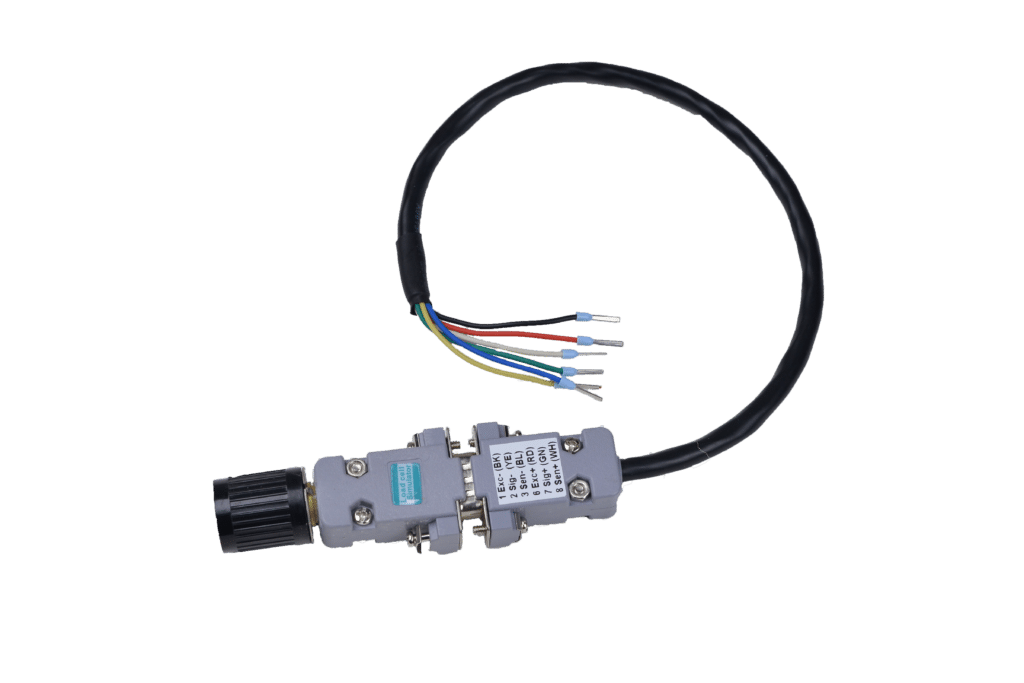
Load Cell Simulator
Substitutes a known, stable bridge signal for the real load cell. Cable included.
Custom & OEMWe also build the ones that aren’t in any catalog. Learn more
Fixtures decide what the load cell feels. These decide the rest of the chain.
A fixture is only worth fitting if everything after it is sound. These are the parts either side of it in a measuring system.
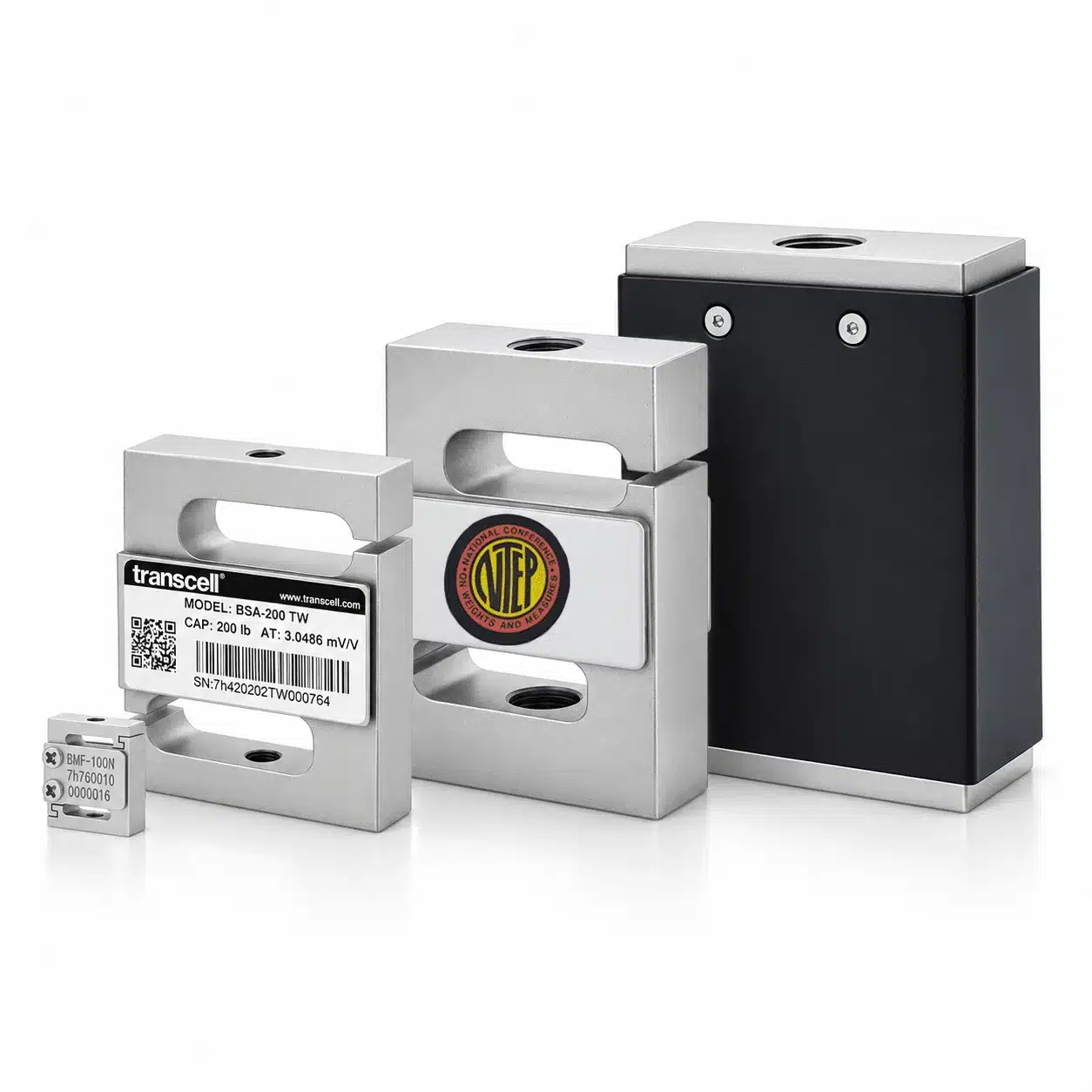
Load Cells
The DBSL fixtures on this page exist for one family. If you are specifying the load cell itself, start here.
View products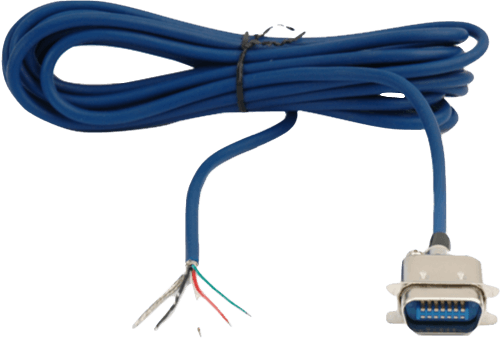
Cables
When the simulator clears the instrument, the cable is the next suspect, and usually the culprit.
View products
Feet
Alignment at the floor rather than at the load cell. The same principle, applied at the other end of the load path.
View productsWhy Transcell. Ordered like a store, backed like a partner.
Free 2-day shipping
Fixtures ship as a parcel, free in two days anywhere in the USA with no minimum order.
Ships worldwide
International orders ship at FedEx live rates: what FedEx charges is what you pay.
Warranty backed
Every product ships with a manufacturer warranty, from the people who designed the load cell the fixture bolts to.
Custom when you need it
A fixture for a load cell family that has none listed is ordinary machining work for us rather than a special request.
Fixture and adapter reference
These five parts answer two questions that decide whether a number can be trusted: is the force arriving where the load cell expects it, and is the instrument reading what the load cell is actually sending. Below: how to choose, why a load a few degrees off axis reads low, a table that turns a situation into a part, the five parts side by side, and the vocabulary on the drawing.
How to choose a fixture. Which end of the problem are you at?
The page holds two unrelated jobs. Four parts improve how a load enters a DBSL load cell; one part proves whether an instrument is telling the truth. Knowing which problem you have makes this a short decision.
Is the load arriving straight?
A compression load cell is designed to be loaded along one axis. Everything about its accuracy specification assumes that, and a load arriving at an angle violates the assumption quietly rather than obviously.
When force arrives off axis, only the component along the load cell's axis is measured. The rest becomes a side load, which the load cell largely rejects, so the reading comes out low. It is also usually repeatable, because the misalignment does not change between weighings, which is exactly what makes it so hard to spot: a repeatable low reading looks like a scale that needs calibrating, and calibrating it simply bakes the error in.
The load button exists to remove that failure mode. It is a radiused dome that threads into the centreline of the DBSL on an M16 x 1.5 thread, and the curvature is the whole point: a dome contacts whatever presses on it at a single point on its own centreline, so the force is directed down the loading axis regardless of small angular misalignment in the fixture above it.
That makes a load button the right answer whenever the loading fixture cannot be guaranteed square, which in practice is most fabricated test rigs and most field installations. On a machined, dowelled, laboratory-grade fixture it matters less. In a workshop it matters a lot.
Which capacity band of load button?
The three load buttons are the same idea scaled, and the scaling is not cosmetic.
1t to 5t at $30, 10t and 20t at $45, and 30t at $80. The price roughly triples across the range because the button has to carry the load cell's full rated capacity through a single contact point, and the contact stress at that point is what sets the size and the material.
The rule is to match the band to the load cell's capacity, not to the load you expect to apply. A load cell is routinely used well below its rating, and it is tempting to reason that a 30t load cell being used at 4t only needs the small button. That reasoning fails the moment somebody overloads the rig, and it fails at the button, which is the part in direct contact with the load.
There is also a practical reason: the button is a consumable in a way the load cell is not. A dome that has been hammered, dented or brinelled by repeated point loading no longer contacts cleanly, and a flattened dome reintroduces exactly the alignment error it was fitted to remove. Inspecting the button is a sensible part of periodic calibration, and replacing one is a small fraction of the cost of the load cell.
Do you need to measure tension as well?
A DBSL is a compression load cell: force pushes into it. A great many test applications need to pull as well, and buying a second load cell for that is the expensive answer.
The tension base at $150 is the cheaper one. The load cell mounts to it through the bolt circle around its own circumference, and the base then presents a central M24 x 1.5 threaded hole. With the load cell captured that way, the assembly can be fixtured from the base and loaded in both tension and compression.
The part worth reading twice is Transcell's own claim about it, because it is not the obvious one. Because the base is machined to very tight tolerances to complement the DBSL, fitting it typically improves measurement quality in both loading modes, not just in tension. The base gives the load cell a flat, square, dimensionally controlled reaction surface, which is precisely what a load cell's specification assumes and what a fabricated bracket rarely provides.
So the tension base is worth considering even on a compression-only rig where repeatability matters more than the cost of the fixture. It is listed for the 1t to 5t capacity band. Bases for the 10t to 20t DBSL (part 3112240007) and the 30t DBSL (part 3112240009) have drawings on the DBSL product page but are not in the online shop, so ask us about one.
Or is the question whether to trust the reading at all?
The load cell simulator at $130 has nothing to do with the other four parts, and it belongs in every service kit.
When a scale reads wrongly, the fault is somewhere in a chain: the load cell, the cable, the junction box, or the instrument. Testing that chain by substitution normally means dismantling the scale, which is slow and, on a sealed installation, disruptive.
A simulator short-circuits the process. It presents the instrument with a known, stable bridge signal in place of the real load cell. If the instrument reads that signal correctly, the instrument is good and the fault is downstream in the load cell, the cable or the box. If the instrument reads the simulator wrongly, you have found the fault without touching the mechanics at all.
That single test removes roughly half the possibility space in a couple of minutes, and it does it at the indicator rather than under the platform. Ours ships with its cable, which matters more than it sounds: a simulator you cannot connect to the instrument in front of you is not a diagnostic.
It is also the right tool when commissioning: proving the instrument and the wiring before the mechanics are finished lets two jobs happen in parallel. Its full-scale output is 1.8 mV/V ±10%, on a 6-wire lead with sense wires, so it suits 4-wire and 6-wire inputs alike.
What if your load cell is not a DBSL?
All four mechanical parts here are specific to the DBSL, which is a pancake load cell. The M16 x 1.5 centreline thread and the circumferential bolt circle are DBSL dimensions, so none of them adapts to another family.
The principle, though, is general. Any compression load cell benefits from a load introduced down its axis, and any load cell benefits from a flat, square reaction surface. What changes between families is the thread and the mounting pattern, not the physics.
For other Transcell families, the equivalent hardware is usually part of the mounting arrangement rather than a separate catalog item: S-beam load cells take rod ends and clevises, and beam load cells take mounting kits that set the load path. If you are building a rig around a load cell that has no listed fixture, tell us the family, the capacity and the direction of loading and we will machine what it needs.
And if the load cell is in a platform rather than a rig, the equivalent question is answered by feet: alignment at the floor rather than at the load cell, the same idea one step further out.
Why a few degrees costs you accuracy. The path a compression load takes.
A load button looks like a trivial piece of turned steel. This is the failure mode it removes, and why the resulting error is so easy to mistake for something else.
01
A fixture presses on the load cell
In a laboratory that surface is machined, flat and square. In a workshop rig it is fabricated, and a degree or two out of square is normal rather than exceptional.
02
The force arrives at an angle
Only the component along the load cell's axis is measured. The rest becomes side load, which the load cell is designed to reject rather than report.
03
The reading comes out low
Consistently, and repeatably, because the misalignment does not change between weighings. That repeatability is what disguises it as a calibration offset.
04
A dome fixes the geometry
A radiused button contacts at a single point on its own centreline, so whatever angle the fixture above presents, the force is directed down the loading axis.
05
The load cell reads what it was designed to
Force down the axis, no significant side load, and a specification that now means what the datasheet says it means.
The reason this matters more than the numbers suggest is that the error is repeatable rather than random. A random error is obvious and gets investigated; a repeatable one gets calibrated out, which locks it in and makes the rig quietly wrong at every load except the one it was calibrated at.
Which fixture do you need? Mechanical, or diagnostic.
The first four rows are about how force enters the load cell. The last three are about whether to believe what comes out.
| If you are | Order | Why |
|---|---|---|
| Loading a DBSL of 1t to 5t in compression | Load Button, 1t to 5t $30 | A radiused dome on the M16 x 1.5 centreline thread, directing the load down the axis regardless of small misalignment in the fixture above. |
| Loading a DBSL of 10t or 20t | Load Button, 10t to 20t $45 | The same fixture sized for the middle band. Match the button to the load cell's capacity, not to the load you intend to apply. |
| Loading a 30t DBSL | Load Button, 30t $80 | The largest button. The price step reflects the contact stress a single point has to carry at full rated capacity. |
| Testing in tension as well as compression | Tension Base, 1t to 5t $150 | Bolts to the load cell's bolt circle and adds a central M24 x 1.5 thread. Also improves compression measurements, because it gives a machined reaction surface. |
| Chasing a scale that reads wrongly | Load Cell Simulator $130 | Substitutes a known bridge signal. A correct reading clears the instrument and points at the load cell, the cable or the junction box. Ships with its cable. |
| Commissioning before the mechanics are finished | Load Cell Simulator $130 | Proves the instrument, the wiring and the configuration while the platform is still being built, so two jobs run in parallel instead of in sequence. |
| Working with a load cell that is not a DBSL | Talk to us about a fixture | Everything mechanical on this page is DBSL-specific. The principle carries across families but the threads and bolt patterns do not, so those are machined to suit. |
| Levelling a platform rather than a test rig | Feet | Alignment at the floor instead of at the load cell. A captured ball foot does for a platform what a load button does for a load cell. |
The five parts, side by side. Four mechanical, one diagnostic.
Threads and mounting details are as published on each product page. The simulator's electrical specification is not published, and the row says so.
| Part | SKU | Price | Fits | What it does |
|---|---|---|---|---|
| DBSL fixtures | ||||
| Load Button | 3112240006 | $30 | DBSL, 1t to 5t | Radiused dome, M16 x 1.5 male thread into the load cell's centreline. Aligns compression down the loading axis |
| Load Button | 3112240008 | $45 | DBSL, 10t and 20t | The same fixture for the middle capacity band |
| Load Button | 3112240010 | $80 | DBSL, 30t | The same fixture for the top of the DBSL range |
| Tension Base | 3112240005 | $150 | DBSL, 1t to 5t | M6 threads on the bolt circle to mount the load cell, central M24 x 1.5 for loading. Allows tension and compression, and improves both |
| Diagnostic | ||||
| Load Cell Simulator | 105003310 | $130 | Any indicator with a bridge input | Substitutes a known, stable bridge signal. Cable included. 1.8 mV/V ±10% full scale, 6-wire lead. |
Load buttons are in the shop for all three bands; the tension base is in the shop for the 1t to 5t band only. Bases for the 10t to 20t (part 3112240007) and 30t (part 3112240009) have drawings on the DBSL product page; ask us about one.
Fixture terms, in plain language. What they mean on a drawing.
Show all 20 terms
- Load button
- A radiused dome threaded into a load cell's centreline. It contacts at a single point on its own axis, so force is directed down the loading axis whatever angle the fixture above presents.
- Radiused dome
- The curved top surface of a load button. The curvature is the working principle, not a finish: a flat top would transmit whatever angle it was given.
- Loading axis
- The direction a load cell is designed to be loaded along. Its published accuracy assumes force arrives on this axis and not at an angle to it.
- Off-axis loading
- Force arriving at an angle to the loading axis. Only the axial component is measured, so the reading comes out low, and repeatably so.
- Side load
- The component of force perpendicular to the loading axis. A load cell is built to reject it rather than measure it, which is exactly why it reads low.
- Tension base
- A machined plate the load cell bolts to through its own bolt circle, presenting a central threaded hole so the assembly can be pulled as well as pushed.
- Bolt circle
- The ring of threaded holes around a pancake load cell's circumference, used to mount it to a base or a structure.
- M16 x 1.5
- A metric thread, 16 mm diameter with a 1.5 mm pitch. The DBSL's centreline thread, and what the load buttons screw into.
- M24 x 1.5
- A metric thread, 24 mm diameter with a 1.5 mm pitch. The central loading thread on the DBSL tension base.
- Compression load cell
- A load cell that measures force pushing into it. The DBSL is one, which is why tension requires a fixture rather than a setting.
- Bidirectional
- Able to measure in both tension and compression. What the tension base gives a DBSL that would otherwise only read compression.
- Pancake load cell
- A low-profile disc-shaped compression load cell, so called for its proportions. The DBSL family.
- Brinelling
- Permanent denting of a hardened surface by repeated point loading. What eventually flattens a load button and returns the alignment error it was fitted to remove.
- Load cell simulator
- A device presenting a known, stable bridge signal in place of a real load cell, so an instrument can be tested without the mechanics.
- Bridge
- The four-element strain gauge arrangement inside a load cell. The simulator imitates its electrical behaviour, which is why an instrument cannot tell the difference.
- mV/V
- Output per volt of excitation, the unit a load cell's sensitivity is given in and the figure a simulator has to reproduce to be useful.
- Excitation
- The stable voltage an instrument supplies to a bridge, commonly 5 to 10 V DC. A simulator has to accept whatever the instrument supplies.
- Substitution testing
- Replacing one element of a chain with a known-good equivalent to find a fault. What a simulator makes possible without dismantling a scale.
- Repeatability
- Whether the same load produces the same reading each time. Fixtures affect it more than they affect accuracy, and a good fixture improves both.
- Reaction surface
- The face a load cell bears against. Flat, square and dimensionally controlled is what the specification assumes, and what a fabricated bracket rarely is.
Fixtures and adapters, answered.
What does a load button actually do?
It removes an alignment error. A compression load cell is designed to be loaded along one axis, and force arriving at an angle is only partly measured, so the reading comes out low. A load button is a radiused dome threaded into the load cell's centreline, and because a dome contacts at a single point on its own axis, it directs the force down the loading axis whatever small angle the fixture above it presents.
Do I need one if my fixture looks square?
Probably, unless the fixture is machined and dowelled. Most fabricated test rigs are a degree or two out of square, which is enough to matter, and the resulting error is repeatable rather than random. That is the dangerous part: a repeatable low reading looks like a calibration offset, so it gets calibrated out and locked in rather than investigated.
Which capacity load button do I order?
Match it to the load cell's capacity rather than to the load you plan to apply. The bands are 1t to 5t, 10t to 20t and 30t. It is tempting to fit a small button to a large load cell that is only lightly loaded, but the button is the part in direct contact with the load and it is what fails first if the rig is ever overloaded.
What is the tension base for?
Turning a compression-only DBSL into a bidirectional one. The load cell bolts to the base through its own bolt circle, and the base presents a central M24 x 1.5 thread, so the assembly can be pulled as well as pushed. Transcell also notes that because the base is machined to tight tolerances to complement the load cell, it typically improves measurement quality in compression too, which makes it worth considering even on a compression-only rig.
Is there a tension base for the larger DBSL capacities?
The DBSL tension base is listed for the 1t to 5t capacity band. If you need to load a 10t, 20t or 30t DBSL in tension, ask us about the matching base before designing around it. Drawings for the 10t to 20t base (part 3112240007) and the 30t base (part 3112240009) are on the DBSL product page.
What is a load cell simulator used for?
Separating an instrument fault from a load cell or cable fault without dismantling anything. It presents the indicator with a known, stable bridge signal in place of the real load cell, so if the indicator reads it correctly the instrument is good and the problem is downstream in the load cell, the cable or the junction box. It is the fastest single test on a service call, and ours ships with its cable.
Can I use the simulator to calibrate a scale?
No, and it is worth being clear about the difference. A simulator verifies that an instrument responds correctly to a known electrical input. Calibration establishes the relationship between actual force and displayed weight, which requires certified test weights applied to the actual scale. The simulator proves the electronics; only real weight proves the scale.
Will these fixtures fit a load cell that is not a DBSL?
No. The M16 x 1.5 centreline thread and the circumferential bolt circle are DBSL dimensions, so nothing here adapts mechanically to another family. The principle carries across, because every compression load cell wants force down its axis and a flat square reaction surface, but the hardware has to be made to suit. Tell us the family, the capacity and the loading direction.
How do I know when a load button needs replacing?
Look at the dome. Repeated point loading eventually dents or flattens it, and a flattened dome no longer contacts cleanly, which reintroduces exactly the alignment error it was fitted to remove. Inspecting it is a sensible part of periodic calibration, and replacing one costs a small fraction of the load cell it protects.
Can you machine a fixture to my drawing?
Yes. Fixtures, adapters, mounting plates and load introduction hardware are ordinary work for us, and we design load cells as well as make them, so we can tell you whether a proposed fixture will introduce an error before you build it. Send the drawing, the capacity and the loading direction.
We Make Your Challenge Our Business
Tell us what it has to do and we’ll tell you what it takes.