
Digital Indicators
Digital weight indicators and force readouts.
Designed, built and calibrated in-house.
Free shipping across the USA.

TI-500E
Baseline NTEP. RS-232 only.

TI-500E Plus
Adds RS-485, analog, Bluetooth.
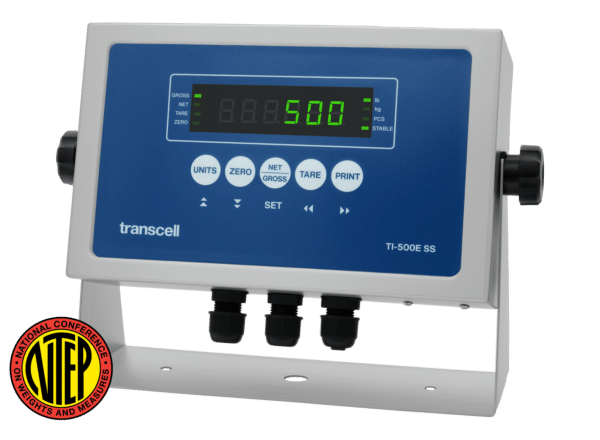
TI-500E SS
Stainless NEMA 4X, internal AC.

TI-500
Battery model. ~40 hours on AA.

TI-500 SL
Rechargeable, NTEP and OIML.

TI-500 RF
Wireless-ready. 85+ hours on AA.

TI-500 RF-SS
Stainless RF. 115+ hour battery.

TI-700K
Peak, counting, checkweighing.

TI-700K Reverse
The 700K with a reverse LCD.

TI-1520
Green LED in stainless NEMA 4X.

TI-1680
Twelve load cells, four cutoffs.

FDI-02
Force capture to 1,200 Hz.

FDI-02-SS
Stainless force. ~100-hr battery.
Custom & OEMWe also build the ones that aren’t in any catalog. Learn more
No catalog match for that combination.
That usually means it's a custom build, and custom indicators and firmware are a core part of our business. Tell us the environment, the output and what has to read it, and our engineers will take it from there.
Everything else the system needs. One catalog, one order.
An indicator never works on its own. Load cells, junction boxes and cable all come from the same catalog, on the same order.
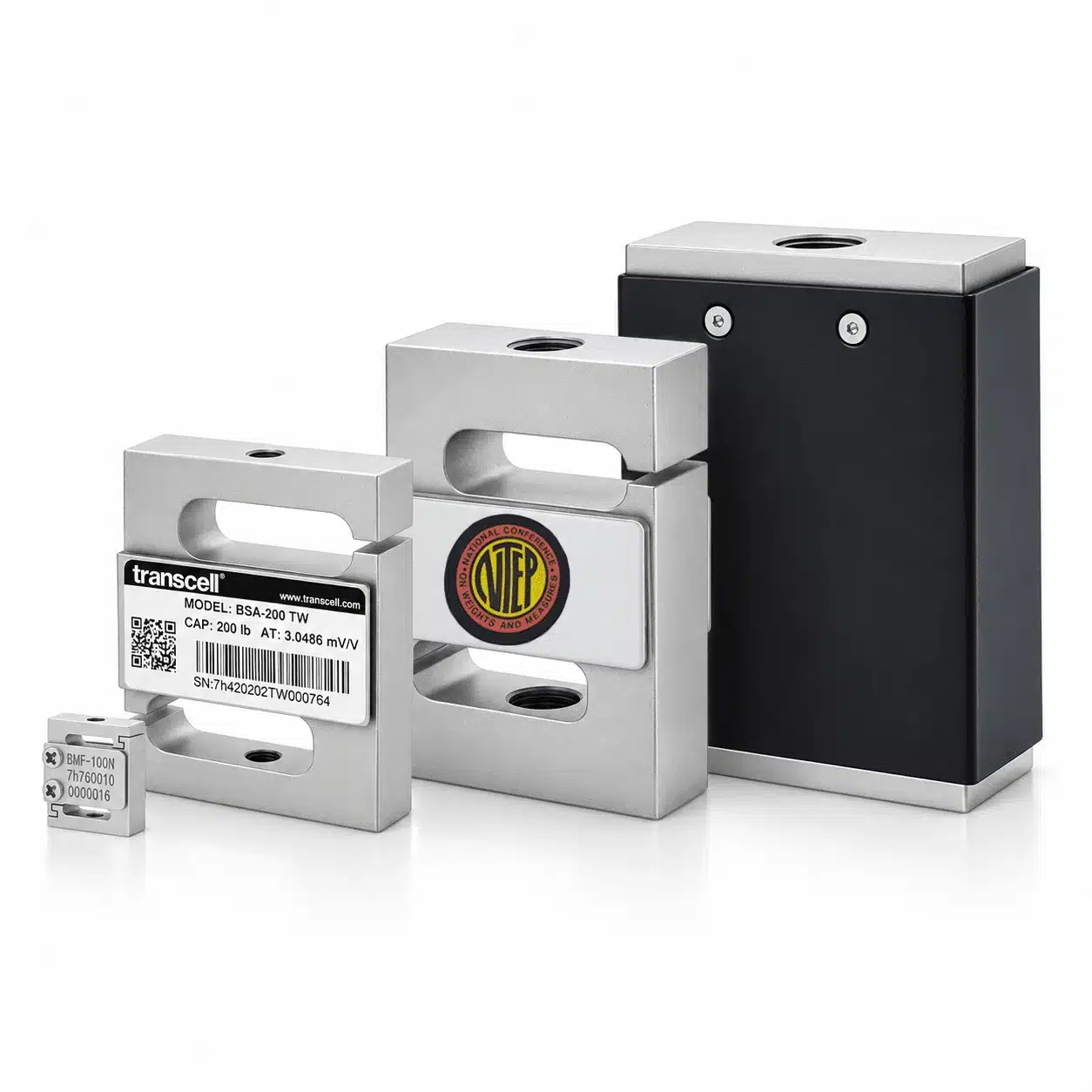
Load Cells
Every indicator here reads a mV/V bridge signal. Twelve families of load cells, designed, built and calibrated in the same building.
View products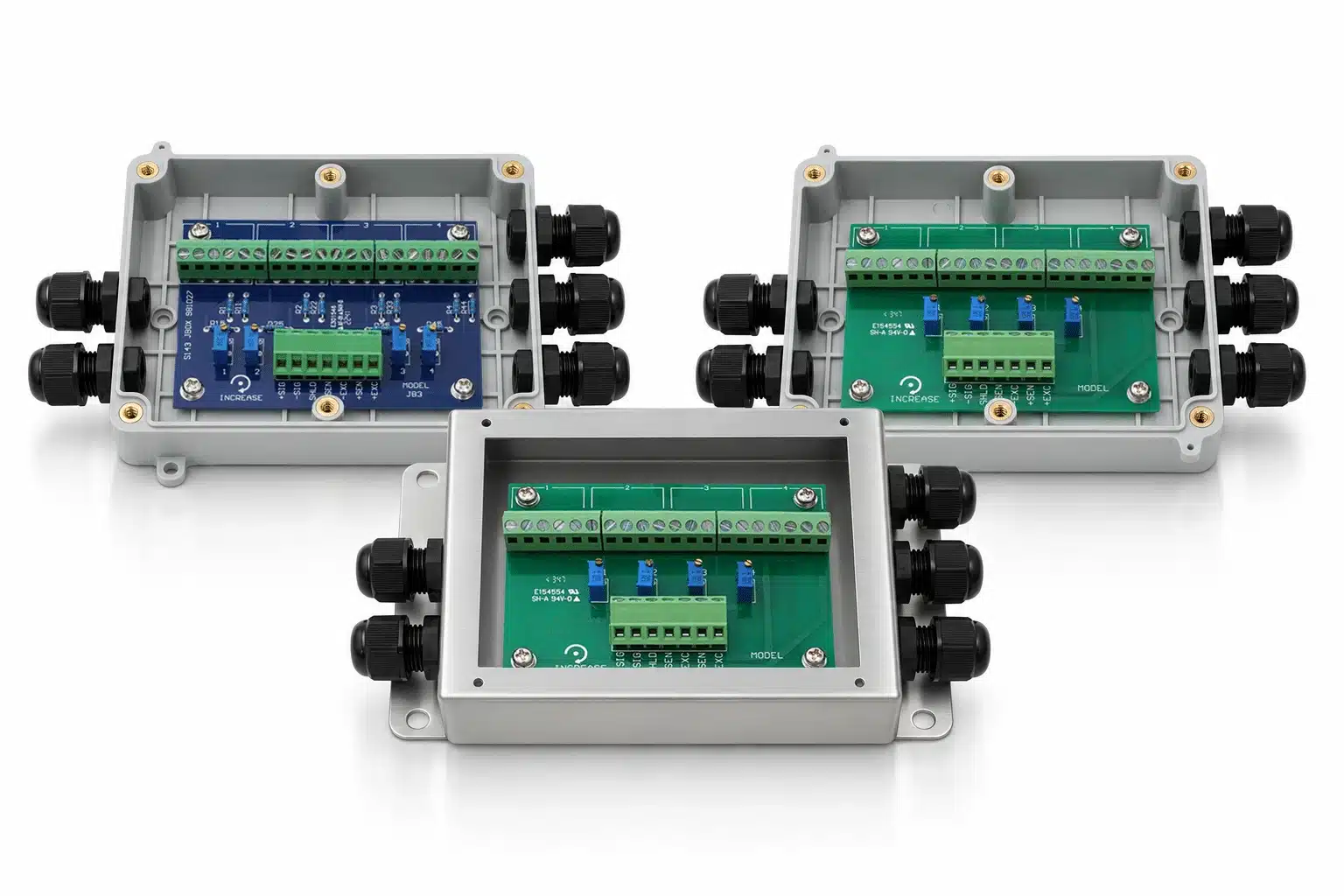
Junction Boxes
Sums up to four load cells into one signal, and trims them so a corner load reads the same anywhere on the platform.
View products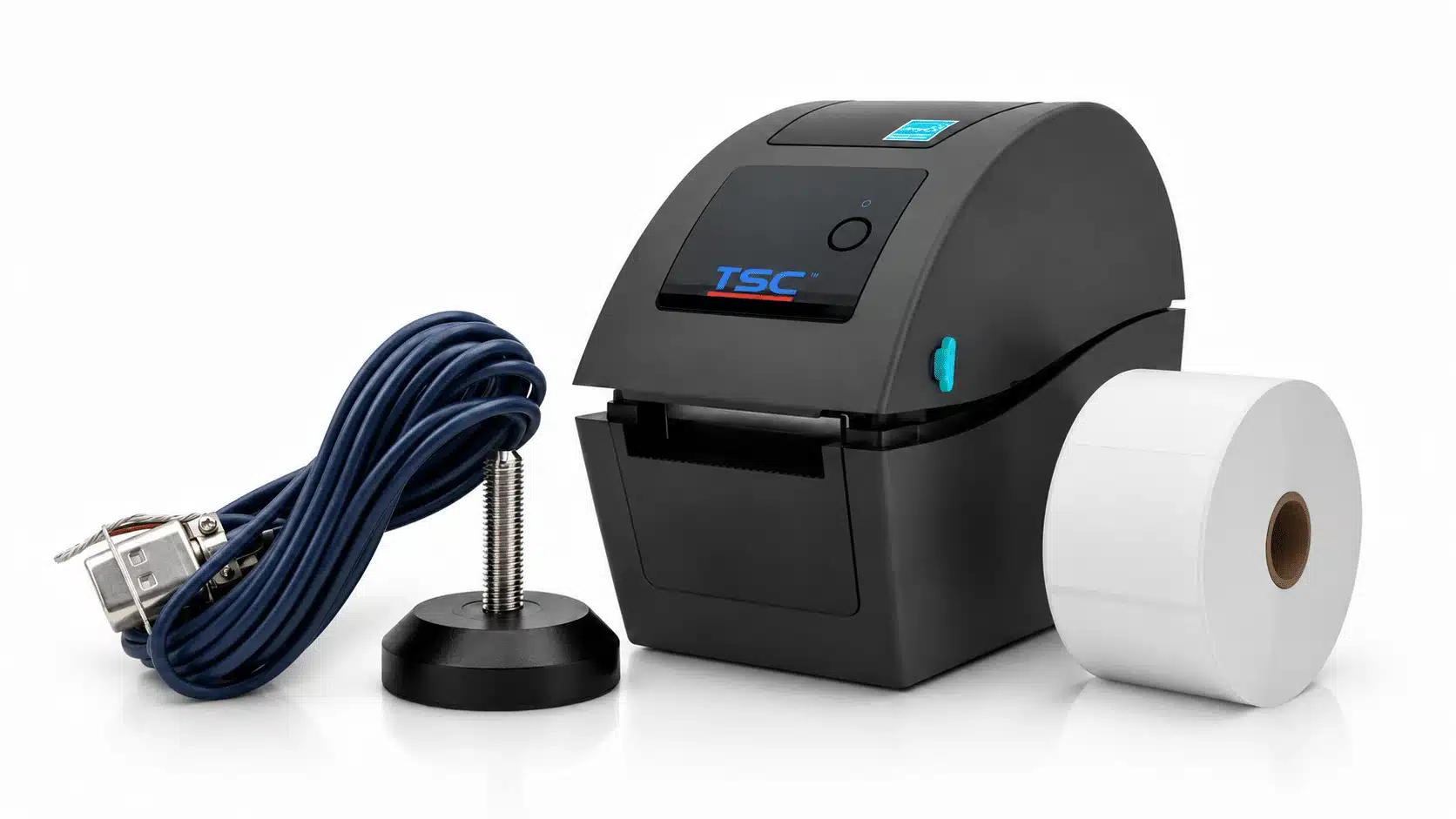
Cables & Accessories
Shielded cable, mounting brackets and indicator accessories. Cable is where most noise complaints actually start.
View productsWhy Transcell. Ordered like a store, backed like a partner.
Free 2-day shipping
Free 2-day shipping on every USA order, Alaska and Hawaii included, no minimum. Floor scales ship free by ground, continental USA only.
Ships worldwide
International orders ship at FedEx live rates: what FedEx charges is what you pay.
Warranty backed
Every product carries a manufacturer warranty. If something goes wrong, you deal with the people who built it.
Custom when you need it
Can't find the perfect fit? We build custom load cells and custom electronics for OEMs every day.
Digital indicator reference
How to choose a digital weight indicator: what you are reading, where the instrument lives, what has to receive the number, how many load cells it has to drive and whether it has to be legal for trade. Below, each of those in turn, how an indicator turns a bridge signal into a reading, every model side by side, the output options, the standards, and the terminology used on a datasheet.
Which digital indicator do you need? What decides the model.
Nearly every indicator in this catalog reads the same kind of signal from the same kind of load cell. What separates them is the housing, the output, the certificate and the number of load cells they can excite. Work through these in order and the model usually picks itself.
What are you actually reading?
A weighing indicator is built around divisions, tare, net and gross, and a certificate. It assumes the load is settling onto a platform and that you want a stable, legally defensible number. That is the TI-500, TI-500E, TI-700K, TI-1520 and TI-1680 lines.
A force indicator assumes the opposite: that the load is changing, that it may reverse, and that the interesting number is the one that occurred rather than the one on screen now. The FDI-02 holds independent calibration curves for tension and compression, samples up to 1,200 Hz and captures peak and valley, so a break or a crimp force is recorded rather than missed between updates.
The distinction matters commercially as well as technically. A force indicator is not NTEP certified and does not need to be, because nothing is being sold by the number it produces. Asking a weighing indicator to read a fast, bidirectional force is the more common mistake, and it usually shows up as a reading that never quite catches the event.
Where does the indicator live?
Every model here runs the same measurement platform, so the environment decides more than the electronics do. ABS or aluminum NEMA 12, rated IP54, is the dry indoor answer: shipping benches, parts counting, general industrial. It handles dust and the occasional wipe-down and nothing more.
Stainless NEMA 4X, rated IP65, is what food, chemical and outdoor installations end up needing. It survives hose-down cleaning and resists the corrosion that kills a painted enclosure in a wet room. The TI-500E SS, TI-500 SL, TI-500 RF-SS, TI-1520 and TI-1680 are all built this way.
IP69K is a different class of promise. It covers close-range, high-temperature, high-pressure jetting, which is standard practice in meat, dairy and pharmaceutical plants and is what destroys an IP65 instrument. The TI-700K is the model rated for it, and its sealed polycarbonate front is why it also works outdoors in direct sun.
Temperature is the quiet part of this question. Most of the range is specified from −10 °C to 40 °C; the TI-700K goes to −20 °C. A cold store or an unheated loading dock in winter is outside more indicators' specification than people expect.
What has to receive the reading?
RS-232C is standard on every indicator in this catalog, and it covers most of what people actually need: a ticket printer, a remote display, or a PC logging weights. It runs in demand mode, sending a line when PRINT is pressed, or continuous mode, streaming the reading. Decide which before you write the software; the two are configured, not detected.
An analog card giving 0–5 V DC or 4–20 mA is what drops the weight onto a standard PLC analog input. It is an option, not a default, on the TI-500E Plus, TI-500E SS, TI-500 RF, TI-500 RF-SS, TI-700K, TI-1520 and TI-1680. The 4–20 mA loop is the more robust of the two over distance, because a current loop is immune to voltage drop and a broken wire reads as zero rather than as a plausible weight.
RS-485 Modbus RTU, Ethernet, Wi-Fi and Bluetooth are the data-system answers: multi-drop addressing, longer runs and a reading that lands in software rather than on paper. Bluetooth Class I reaches about 100 m unobstructed, which covers most yards and warehouses.
Two answers are not signals at all. Cutoff outputs, four of them on the TI-1680, switch a valve or a feeder at a target weight, which is what makes batch control possible without a PLC in the loop. And a USB port, standard on the TI-700K, is often the fastest route to a PC on a bench.
How many load cells, and how is it powered?
Load cells wire in parallel, so every load cell added divides the bridge resistance and draws more current from the indicator's excitation supply. That current is the real limit. At 5 V DC a single 350-ohm load cell draws roughly 14 mA, so the published load cell count is the point at which the supply runs out, not the number of inputs on the back.
Four 350-ohm load cells covers the TI-500E, TI-500E Plus, TI-500E SS, TI-500 and TI-500 SL, which is exactly one platform or floor scale. Eight covers the TI-500 RF, TI-500 RF-SS, TI-700K, TI-1520 and, on the force side, both FDI-02 models. Twelve, the most in the range, is the TI-1680, which is why it is the vehicle-scale model. Platforms with several load cells still need a junction box to sum and trim them first.
Power splits the range as cleanly as the housing does. Internal AC supplies are for fixed installations: the TI-500E SS, TI-1520 and TI-1680 need only a cord. Batteries are for everything that moves. The TI-500 runs about 40 hours on AA alkalines, the TI-500 RF over 85, the TI-500 SL about 29 hours on a sealed rechargeable pack, and the TI-500 RF-SS over 115. The FDI-02 takes four AA batteries or its included adapter; the FDI-02-SS carries a 100-hour rechargeable pack.
Does it have to be legal for trade?
If the weight is the basis of a commercial transaction, the answer is yes, and it removes the force indicators from the list immediately. In the United States that means NTEP certification, issued as a Certificate of Conformance by the NCWM against NIST Handbook 44. Canada issues its own approval, the AM number carried alongside it, and OIML is the international equivalent, which the TI-500 SL also holds.
Two details decide which certified model you need. The first is accuracy class. Class III covers general commercial weighing: bench, floor, livestock and hopper scales. Class III L is the vehicle-scale class, and the TI-700K, TI-1520 and TI-1680 are the models certified to it.
The second is certified divisions, which is the resolution the certificate actually permits, and it is not the same as what the display can show. The basic TI-500 and TI-500E models are certified to 5,000 divisions; the TI-500 RF, TI-500 RF-SS, TI-1520 and TI-1680 are certified to 10,000. A 10,000 lb scale reading to 1 lb needs the second group.
Finally, the certificate covers the instrument, not the installation. The finished scale still has to be calibrated and sealed by a weights and measures inspector, and resealed after any recalibration.
From a bridge signal to a number. What the indicator actually does.
A load cell produces nothing on its own. The indicator powers the bridge, reads the few millivolts that come back, converts them, applies a calibration and turns the result into a weight, a ticket and whatever the rest of the system needs.
01
Excitation out
The indicator supplies a stable 5–10 V DC to the bridge. Every parallel load cell draws from it, which is what sets the load cell limit.
02
Millivolts back
A 2 mV/V load cell at full load returns about 10 mV at 5 V excitation. The input range has to cover it: ±3.125 mV/V across most of the TI series.
03
A/D conversion
The signal is digitised to 200,000–280,000 internal counts, far finer than anything displayed, at a conversion rate from 10 to 960 Hz.
04
Calibration & filtering
Zero and span are set against a known test weight and held in non-volatile memory. Averaging trades response speed for a steady reading.
05
Display and output
Engineering units on the panel, plus RS-232, analog, Modbus or Bluetooth to whatever else needs the number.
Internal counts are not resolution you can display. A legal-for-trade instrument is limited to its certified division count, and a display that changes faster than the mechanics settle is a filtering problem, not an accuracy one.
The fast mapping. Where most installations land.
Each row links straight to that model.
| If you are building | Start here | Why |
|---|---|---|
| A dry indoor bench or floor scale | TI-500E or TI-500E Plus | Legal for trade, four load cells, front-panel calibration, and the lowest cost of entry in the range. The Plus adds a metal housing and an expansion port. |
| A washdown or food-processing scale | TI-500E SS or TI-1520 | Stainless NEMA 4X and an internal supply, so there is no adapter to keep dry. The TI-1520 adds 10,000 divisions and a larger LED. |
| A high-pressure washdown or outdoor scale | TI-700K | The only IP69K model here, so it survives close-range hot jetting, and its LCD stays readable in direct sun. |
| Portable or field weighing | TI-500 or TI-500 SL | Battery powered with auto shutoff. AA batteries where you want to swap them in the field, a sealed rechargeable pack where you would rather charge overnight. |
| A cable-free or wireless installation | TI-500 RF or TI-500 RF-SS | Designed around the optional wireless module and Bluetooth Class I out to 100 m, with capacity for eight load cells and 10,000 certified divisions. |
| Batching or checkweighing | TI-1680 or TI-700K | Cutoff outputs switch a feeder at target on the TI-1680; the TI-700K carries a checkweigher mode and a tri-state readout for pass or fail. |
| A truck or vehicle scale | TI-1680 | Twelve load cells, Class III L certification, weigh-in and weigh-out with 256 stored truck IDs, and a numeric keypad for entering them. |
| A feed into a PLC or SCADA | TI-1520 or TI-1680 | Optional 4–20 mA or 0–5 V analog and RS-485 Modbus, so the weight lands on a standard input card rather than a serial port. |
| A force test stand or fixture | FDI-02 or FDI-02-SS | Bidirectional with separate tension and compression curves, 1,200 Hz sampling and peak and valley capture, so a fast event is recorded rather than missed. |
Every model, side by side. Sorted by what differs.
Housing, load cell count and certified divisions separate these models faster than display size does.
| Model | Reads | Display | Housing & rating | Load cells | Power | Legal for trade |
|---|---|---|---|---|---|---|
| TI-500E | Weight | 0.6″ LED | ABS, NEMA 12 / IP54 | 4 | 9 VDC adapter | NTEP 94-080A3 · 5,000 d |
| TI-500E Plus | Weight | 0.6″ LED | Aluminum & steel, NEMA 12 / IP54 | 4 | 9 VDC adapter | NTEP 94-080A2 · 5,000 d |
| TI-500E SS | Weight | 0.6″ LED | Stainless, NEMA 4X / IP65 | 4 | Internal AC | NTEP 94-080A3 · 5,000 d |
| TI-500 | Weight | 0.9″ backlit LCD | ABS & steel, NEMA 12 / IP54 | 4 | AA batteries or 6 VDC | NTEP 94-080A3 · 5,000 d |
| TI-500 SL | Weight | 0.9″ backlit LCD | Stainless, NEMA 4X / IP65 | 4 | Rechargeable, ~29 h | NTEP 94-080A3 · OIML |
| TI-500 RF | Weight | 0.8″ backlit LCD | Aluminum & ABS, NEMA 12 / IP54 | 8 | 4×AA, 85+ h | NTEP 12-002 · 10,000 d |
| TI-500 RF-SS | Weight | 0.8″ backlit LCD | Stainless, NEMA 4X / IP65 | 8 | Rechargeable, 115+ h | NTEP 12-002 · 10,000 d |
| TI-700K | Weight | 1.0″ 7-digit colour LCD | Polycarbonate & ABS, IP69K | 8 | AC, optional Li-ion 85+ h | NTEP 16-086 · Class III/III L |
| TI-700K Reverse LCD | Weight | 1.0″ reverse colour LCD | Polycarbonate & ABS, IP69K | 8 | AC, optional Li-ion 85+ h | NTEP 16-086 · Class III/III L |
| TI-1520 | Weight | 1.0″ green LED | Stainless, NEMA 4X / IP65 | 8 | Internal AC | NTEP 99-017 · 10,000 d |
| TI-1680 | Weight | 1.0″ green LED + bar graph | Stainless, IP65 | 12 | AC or 12 VDC | NTEP 10-078 · 10,000 d |
| FDI-02 | Force | 0.8″ backlit LCD | Aluminum & ABS, IP64 | 8 | 4×AA or adapter | Not certified |
| FDI-02-SS | Force | 0.8″ backlit LCD | Stainless, NEMA 4X / IP65 | 8 | Rechargeable, ~100 h | Not certified |
Load cell counts are for 350-ohm load cells wired in parallel and are an excitation limit, not a number of inputs. Certified division counts are what the Certificate of Conformance permits and are usually lower than the display can show. Optional modules on several models add RS-485, Bluetooth, Wi-Fi, Ethernet and analog output: ask an engineer which combination is available on the model you are specifying.
Which output your system needs. Decided by what reads it.
Every indicator here can print a ticket out of the box. What you add depends on whether a person, a controller or a database is on the other end.
Standard
RS-232C serial
On every model. Demand mode sends a line when PRINT is pressed; continuous mode streams the reading to a remote display or logger.
Use for ticket printers, remote displays, PC logging.
Analog
4–20 mA and 0–5 V
An option card that drops the weight onto a standard PLC analog input. The current loop survives distance better and a broken wire reads as zero.
Use for process control, trending, thresholds.
Digital
RS-485 / Modbus RTU
Multi-drop addressing, longer runs and better noise immunity than RS-232. Verify the register map against your controller before committing.
Use for multi-instrument networks, SCADA, high-noise plants.
Wireless
Bluetooth, Wi-Fi and RF
Bluetooth Class I reaches about 100 m unobstructed. Wi-Fi and Ethernet put the reading straight into a network application.
Use for yards, mobile carts, temporary installs.
Two outputs are not signals. Cutoff relays, four of them on the TI-1680, switch a feeder or valve at a target weight, which is what makes batch control possible without a PLC. A USB port, standard on the TI-700K, is usually the fastest route to a laptop on a bench. Cable choice matters as much as the port: run the load cell signal in shielded cable, grounded at one end only, and keep it away from motors and drives.
Standards and accuracy classes. What the certificates actually cover.
United States
NTEP, to NIST Handbook 44
Issued by the NCWM as a Certificate of Conformance for a specific instrument and division count. Class III covers general commercial weighing; Class III L is the vehicle-scale class.
Canada
Measurement Canada
Its own approval, carried as the AM number listed beside the NTEP certificate. Required for legal-for-trade use in Canada, and held by every certified model here.
International
OIML
The international framework for non-automatic weighing instruments, and the common reference point when equipment crosses borders. The TI-500 SL carries it at 3,000 divisions.
A certified indicator does not make a certified scale. The instrument, the load cells, the mounting and the calibration are approved as a system, and the finished installation is sealed by a weights and measures inspector. Recalibration breaks that seal and requires reinspection.
Datasheet terms, in plain language. What they mean when you're comparing.
Show all 24 terms
- Division (d)
- The smallest weight increment the display steps in. A 10,000 lb scale at 10,000 divisions reads to 1 lb.
- Certified divisions
- The division count the NTEP certificate permits, which is usually lower than the display's maximum.
- Internal counts
- The A/D converter's own resolution, 200,000 to 280,000 here. Far finer than anything shown, and not displayable resolution.
- Excitation
- The stable voltage the indicator supplies to the load cell bridge, commonly 5–10 V DC.
- Input range
- The largest bridge signal the indicator can read, given in mV/V. ±3.125 mV/V on the TI series, ±5 mV/V on the FDI-02.
- Conversion rate
- How many readings per second the A/D takes. Faster catches transients; slower is steadier.
- Averaging
- Digital filtering that smooths the reading. Too much of it makes the display lag the actual load.
- Zero calibration
- Teaching the indicator what an empty platform reads, including the dead weight of the structure.
- Span calibration
- Teaching it a known test weight, which sets the scale factor between millivolts and displayed units.
- Linearization
- Extra calibration points between zero and full scale, used when mid-range accuracy matters.
- Tare
- Subtracting a container's weight so the display shows contents only.
- Net and gross
- Net is weight after tare; gross is everything on the scale. Legal-for-trade tickets normally show both.
- Auto zero tracking
- Slowly re-zeroing small drift so an empty platform stays at zero. It has a limited band by design.
- Motion band
- How much movement is allowed before the indicator declares the reading stable and will print it.
- Piece counting
- Dividing weight by a sampled average piece weight to display a quantity instead of a mass.
- Peak hold
- Holding the highest reading seen, so a maximum force is captured rather than missed between updates.
- Valley capture
- The same thing for the minimum, used on bidirectional force work.
- Checkweighing
- Comparing each reading against under, accept and over limits, usually shown as a light or bar graph.
- Setpoint / cutoff
- A relay output that switches at a target weight, used to stop a feeder or close a valve.
- Accumulation
- Adding successive weighments into a running total, for batch or shift records.
- Demand vs continuous
- Serial output on PRINT, or streamed constantly. Configured, not detected, so decide before writing software.
- Sense lines
- The extra pair in 6-wire cabling that corrects for voltage drop in a long load cell run.
- NEMA / IP rating
- Enclosure protection. NEMA 12 / IP54 is dry indoor, NEMA 4X / IP65 is washdown, IP69K is high-pressure jetting.
- Class III / III L
- NTEP accuracy classes. III is general commercial weighing; III L is the class for vehicle scales.
Indicators, answered.
Which digital indicator do I need?
Start with what you are reading and where it lives. Weighing calls for a TI-series indicator with divisions, tare and net/gross; force testing calls for the FDI-02, which reads bidirectionally and captures peaks. Then let the environment pick the housing: ABS for dry indoor, stainless NEMA 4X for washdown, IP69K for high-pressure cleaning. Use the filters at the top of the catalog to narrow it down, and if you are between two models, talk to an engineer.
What does NTEP certified mean for an indicator, and do I need it?
NTEP certification means the indicator has been evaluated against NIST Handbook 44 for commercial, legal-for-trade weighing in the US, and it is issued as a Certificate of Conformance. If weight is the basis of a sale you generally need it. The certificate covers the instrument and its certified division count; the finished scale still has to be calibrated and sealed by a weights and measures inspector. For internal process control, testing and inventory, a non-certified indicator is usually the better value.
How many load cells can one indicator drive?
It is an excitation budget rather than a channel count, because load cells wire in parallel. The TI-500E, TI-500E Plus, TI-500E SS, TI-500 and TI-500 SL drive four 350-ohm load cells. The TI-500 RF, TI-500 RF-SS, TI-700K, TI-1520 and the FDI-02 models drive eight. The TI-1680 drives twelve, the most in the range. Platforms with several load cells still need a junction box to sum and trim the load cells first.
Can I get the weight into a PLC?
Yes. Several models take an optional analog card giving 0–5 V DC or 4–20 mA, which drops straight onto a standard PLC analog input, and RS-485 Modbus RTU is available on the TI-500E Plus, TI-500E SS, TI-500 RF, TI-500 RF-SS, TI-700K, TI-1520 and TI-1680. The TI-1680 also carries four cutoff outputs, which can run a simple batch sequence without a PLC in the loop at all.
Do these indicators work with load cells from another brand?
Yes. Any standard strain-gauge load cell with a mV/V bridge output will work, provided its rated output falls inside the indicator's input range and the combined load cell resistance stays inside its excitation budget. Calibration is done from the front panel against a known test weight, so nothing has to be matched at the factory. Our own load cells are calibrated in the same building as these indicators, which is the simplest way to keep one supplier accountable for the whole system.
Can I calibrate it myself?
Yes. Every TI-series indicator calibrates from the front panel with no PC and no external software, and the parameters are held in non-volatile memory. Legal-for-trade installations are normally recalibrated annually and resealed by an inspector; high-throughput process scales are often done twice a year.
What's the lead time, and is it in stock?
Catalog models ship from stock with free 2-day delivery nationwide. Option cards, custom firmware and private-label versions are quoted with a lead time up front, so you know the date before you commit. In-stock orders ship the same business day.
Is there a minimum order?
No. There's no minimum purchase, and free 2-day shipping applies to every order regardless of size, whether that's one replacement indicator or a full system's worth.
What's the warranty, and what if it fails in service?
Every indicator on this page carries a 2-year limited warranty with US-based support. Service and repair are handled factory-direct rather than through a third party, by the same people who built and calibrated the instrument. To start an RMA, call (847) 419-9180 or reach us through the Contact page.
Do you offer OEM and volume pricing?
Yes. Private-label OEM versions, custom firmware and volume terms are a core part of our business, alongside standard modifications and engineer-to-order designs. Tell us the annual quantity and the configuration and an engineer will follow up. Dealer pricing is also available on request.
We Make Your Challenge Our Business
Tell us what it has to do and we’ll tell you what it takes.