
Load Cells
Load cells for force and industrial weighing.
Designed, built and calibrated in-house.
Free shipping across the USA.
Shop load cells by type

S-Beam Load Cells
Highly accurate tension and compression measurement across a wide range of capacities.

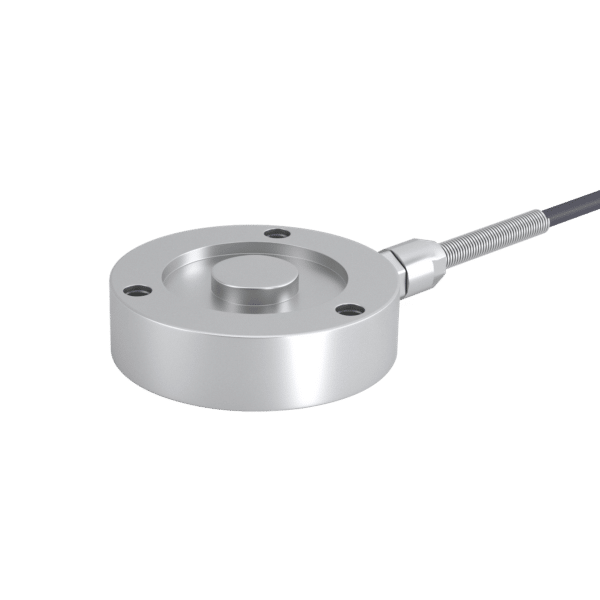
Pancake Load Cells
Classic low-profile form factor. Accuracy from industrial up to calibration grade.

Single-Ended Beam Load Cells
Nickel-plated beams with high accuracy for floor scales, mixing systems and belt scales.
Load Button Load Cells
Compressive measurement in very compact spaces, with improved accuracy and durability.

Inline Threaded Load Cells
Compact miniature column design with integrated male threads. Handles higher forces.

Single Point Load Cells
Built for the demands of postal, counting and small hopper scales. One load cell per platform.

NTEP Load Cells
BSS S-beams and SBS single-ended beams, NTEP certified in set capacity ranges for legal-for-trade weighing.

Load Cells for Chatillon and Lloyd Instruments
Drop-in compatibility with Chatillon force gauges and Lloyd materials testing machines.

Multi-Column Load Cells
Tight measurement performance in a compact package. Bidirectional, for testing applications.

Bending Beam Load Cells
Hermetically sealed, easy to install and built for rugged industrial conditions.

Double-Ended Beam Load Cells
Corrosion-resistant alloy steel shear beams for batching, warehousing and inventory.
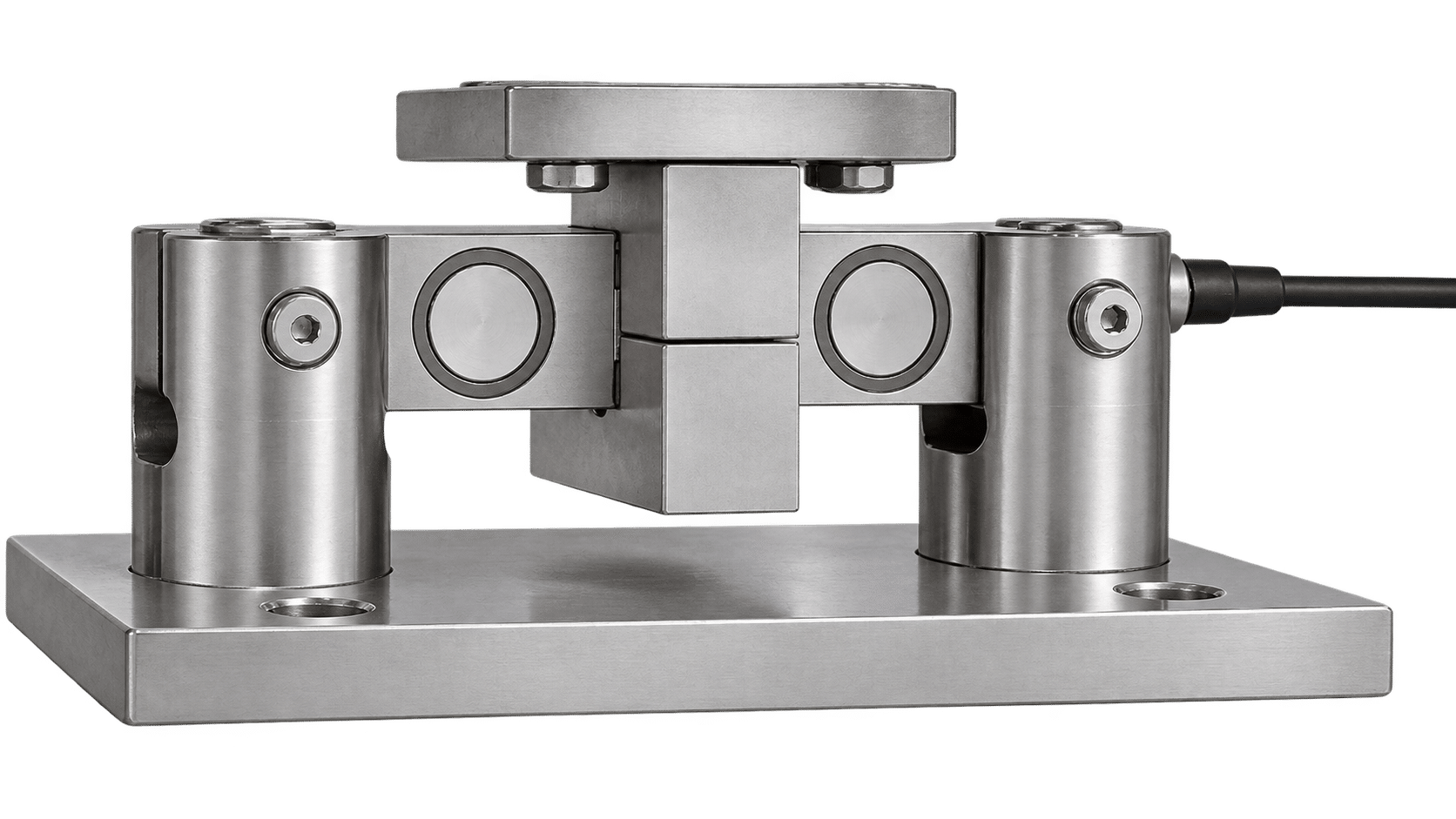
Weighing Modules
A precision load cell integrated into a durable mount: easier installs, protected accuracy.
Custom & OEMWe also build the ones that aren’t in any catalog. Learn more
No catalog match for that combination.
That usually means it's a custom job, and custom load cells are a core part of our business. Tell us the capacity, envelope and environment and our engineers will take it from there.
Everything else the system needs. One catalog, one order.
Sum it, condition it and wire it, all from the same catalog, all in one order.
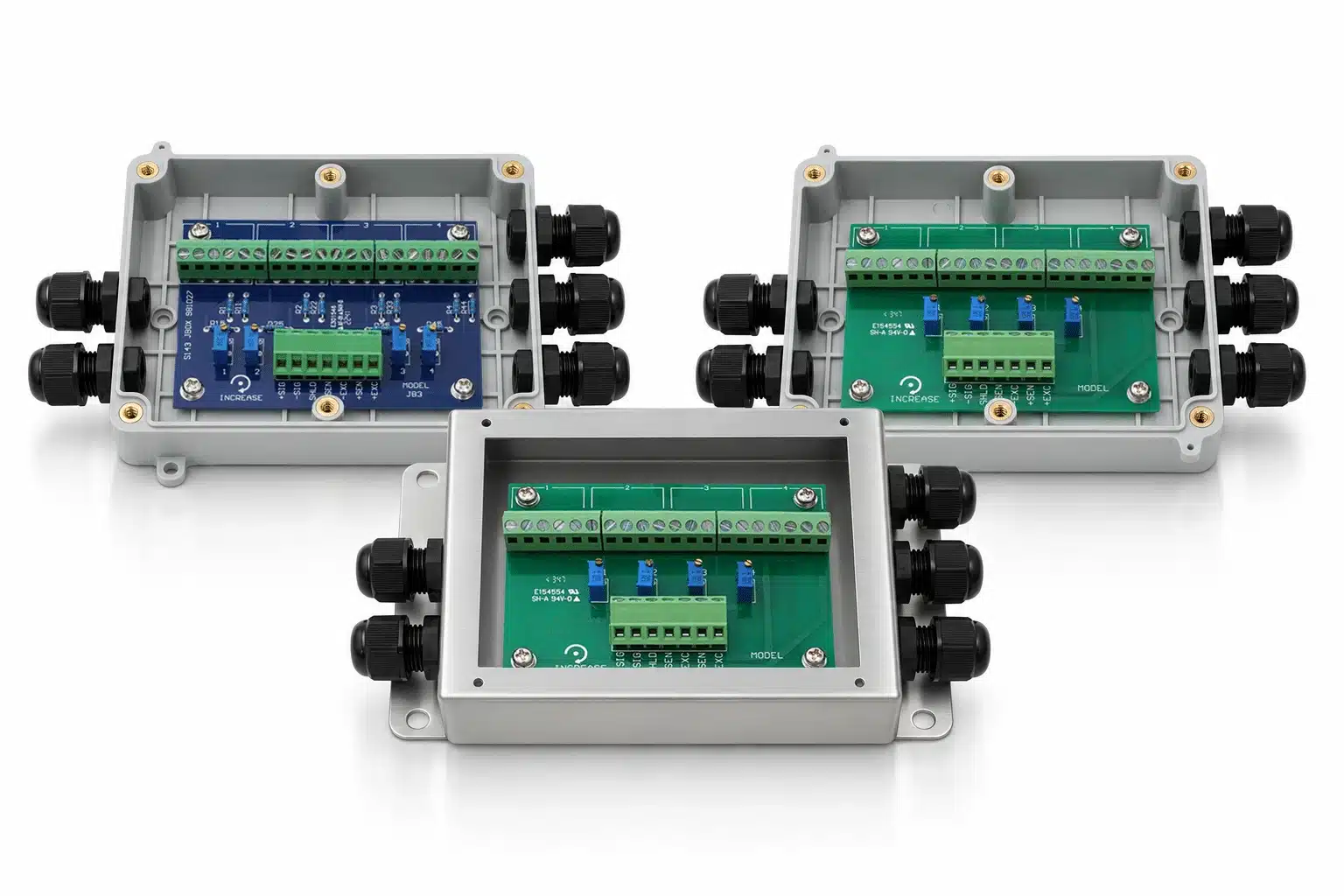
Junction Boxes
Sums up to four load cells into one signal, and trims them so a corner load reads the same anywhere on the platform.
View products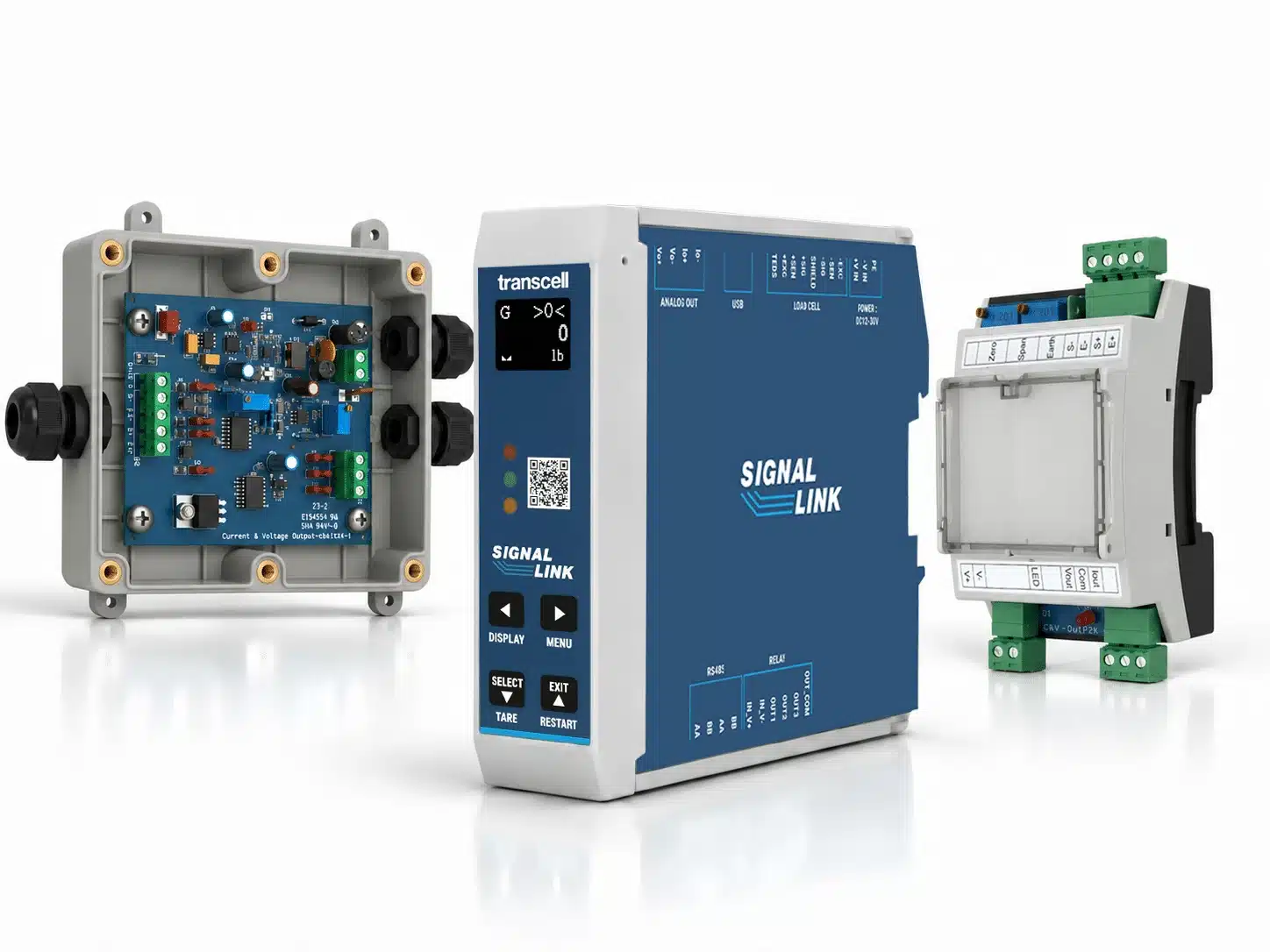
Signal Conditioners
Turns the load cell's few millivolts into 4–20 mA, 0–10 V or Modbus RTU, so it lands on a standard PLC analogue card.
View products
Cables & Accessories
Shielded cable keeps the millivolt signal clean past motors and drives, which is where most noise complaints actually start.
View productsWhy Transcell. Ordered like a store, backed like a partner.
Free 2-day shipping
Free 2-day shipping on every USA order, Alaska and Hawaii included, no minimum.
Ships worldwide
International orders ship at FedEx live rates: what FedEx charges is what you pay.
Warranty backed
Every product carries a manufacturer warranty. If something goes wrong, you deal with the people who built it.
Custom when you need it
Can't find the perfect fit? We build custom load cells and custom electronics for OEMs every day.
Load cell reference
How to choose a load cell: mounting direction, capacity, environment, output signal and legal-for-trade approval decide the family long before a part number does. Below, each of those in turn, how a strain gauge load cell works, every family side by side, the output signals, the standards, and the terminology used on a datasheet.
Which load cell do you need? What decides the family.
Capacity is near the end of that list, not the start. Work through these in order and the family usually picks itself, long before a part number does.
Which way does the force arrive?
Every load cell is built to read one direction of force cleanly. Compression pushes into the load cell and suits column, pancake and canister bodies. Tension pulls it apart, which is what an S-beam is threaded at both ends to do. Shear and bending are what beam load cells read, and they are the basis of almost every platform and floor scale.
Then ask what else the mounting introduces. Side load, torque and misalignment are the errors that never appear on a data sheet, and no amount of sensor accuracy removes them. A load cell rated to 0.02% will happily read 1% wrong if the load arrives at an angle. They are designed out mechanically: swivel rod ends and clevis attachments on a tension link, self-aligning mounts under a vessel, or simply a flat, machined seat that is actually flat.
How much capacity, really?
Size at 125 to 150% of the maximum expected load. That leaves headroom for the load arriving faster than expected, for the vessel being overfilled once, and for the day someone stands on the platform, without throwing away resolution you paid for.
Oversizing is the more common and more expensive mistake. A load cell rated far above its working load spends its life at the bottom of its range, where the output is smallest and every source of noise, drift and thermal error counts for proportionally more. A 10,000 lb load cell reading a 500 lb process is a 5% signal fighting 100% of the noise.
Two cases justify going higher. Dynamic loading, where material drops in rather than settling, can double the peak the load cell actually sees. Shock and impact should be answered with mechanical stops and bumpers rather than with capacity, because a hard overload can shift zero permanently even when the load cell survives.
What is the environment?
Temperature moves both zero and span. A load cell that reads correctly on a bench can drift in a cold store, beside an oven, or simply across a day in an unheated warehouse. Check the compensated temperature range, not just the operating range: they are different numbers and only one of them is a promise about accuracy.
Washdown and humidity decide the sealing rating and the element material. IP67 covers dust and temporary immersion, which is enough for most washdown work; hermetically sealed stainless is what food, pharmaceutical and outdoor installations end up needing. Moisture in the gauge cavity is one of the most common ways a load cell dies.
Vibration is answered with mounting rigidity first and filtering second: filtering a signal that is mechanically unstable only hides the problem. Electrical noise is answered with shielded cable, a single grounding point and routing that keeps the load cell run away from motors and drives. All of that is far cheaper to plan than to retrofit.
What has to read it?
A raw mV/V bridge output is the most accurate and the most demanding. It is millivolts travelling down a cable, so it wants a proper indicator or conditioner, a short or well-shielded run, and careful grounding. This is what precision weighing uses.
4–20 mA or 0–10 V drops straight into a PLC analogue card. The 4–20 mA loop is the more robust of the two over distance, because a current loop is immune to voltage drop and a broken wire drops it to 0 mA, below the 4 mA zero, so the fault shows instead of a plausible number.
Digital output over Modbus or RS-485 buys noise immunity, longer runs and diagnostics for each load cell, which matters most in systems with several load cells where you want to know which load cell drifted. Wireless earns its place where cabling is genuinely impractical, such as rotating equipment or temporary installations.
Decide this before the load cell, not after. It determines whether you are buying a load cell, or a load cell plus a signal conditioner.
Does it have to be legal for trade?
If the weight is the basis of a commercial transaction, the answer is yes, and it changes which load cells you can buy. In the United States that means NTEP certification, issued as a Certificate of Conformance against NIST Handbook 44; internationally the equivalent is OIML R60. A certified load cell has been tested for accuracy class and number of divisions, and its certificate number can be looked up.
Two things catch people out. First, certification applies to specific capacities within a series, not to the series as a whole, so a family can be legal for trade at 2,500 lb and not at 5,000 lb. Second, the certificate covers the load cell, not the installation: the finished scale still has to be sealed by a weights and measures inspector. If you are selling by weight, start with NTEP load cells and confirm the capacity you need is on the certificate.
From force to a number. What actually happens inside.
A strain-gauge load cell is an elastic metal element with gauges bonded to it. Force deforms the element by microns, the gauges change resistance, and a Wheatstone bridge turns that into a small voltage proportional to the load. Everything downstream is interpretation.
01
Force arrives
Compression, tension, shear or bending, along the axis the load cell was built to read.
02
Elastic deformation
The element flexes within its elastic region and returns to shape when the load is removed. Overload is what breaks that promise.
03
Resistance changes
Bonded strain gauges stretch or compress with the element, changing their electrical resistance.
04
Bridge outputs mV/V
Four active gauges in a Wheatstone bridge, excited at 5–10 V DC, produce a few millivolts per volt.
05
You read weight
An indicator or conditioner scales that signal into engineering units, or into 4–20 mA, 0–10 V or Modbus.
The load cell is one link in that chain. A load cell rated to 0.02% will still read badly through a bent mount or a cable run beside a VFD, which is why mounting and signal integrity get as much space below as the sensor does.
The fast mapping. Where most applications land.
Each row links straight to that family.
| If you are weighing or measuring | Start here | Why |
|---|---|---|
| Floor and platform scales | Single-ended beams and double-ended beams | Usually four load cells under a deck, summed and trimmed through a junction box so the reading is the same wherever the load lands. |
| Tanks, hoppers and silos | Weighing modules | The mount matters as much as the load cell: it has to absorb thermal movement and piping loads instead of feeding them into the reading. |
| Suspended and hanging loads | S-beam load cells | Threaded at both ends, so the load cell sits inline in the load path and reads tension directly, with no mounting plate needed. |
| Low profile under a heavy load | Pancake load cells | High capacity in very little height, and more tolerant of off-centre load than a column of the same rating. |
| Test stands and press force | Multi-column load cells | A compact column that reads tension and compression, 50 kg to 3 t, for testing machines, force stands and press force. |
| Tight spaces and tooling | Load buttons or inline threaded load cells | Fit where a conventional body will not: robotics end effectors, presses, medical device tooling and test fixtures. |
| One platform, off-centre loading | Single point load cells | A single load cell carries the whole platform and is corner-compensated, so the reading holds wherever the item is placed. |
| Washdown and corrosive lines | Bending beam load cells | Hermetically sealed stainless, 50 to 300 kg, for filling, batching and hose-down lines where an aluminum load cell would not last. |
| A Chatillon or Lloyd instrument | Chatillon & Lloyd drop-ins | Replacement load cells matched in capacity, mounting and connector to Chatillon force gauges and testers and Lloyd materials testing machines. |
| Anything sold by weight | NTEP load cells | Legal for trade, so the finished scale can be sealed by a weights and measures inspector. |
Every family, side by side. Sorted by what differs.
Force direction and environment narrow the field faster than capacity does.
| Family | Force direction | Capacity range | Typical use | Environment |
|---|---|---|---|---|
| S-Beam | Tension & compression | 2 lbf – 20,000 lb | Test rigs, hanging and inline | IP65–IP67 |
| Inline Threaded | Tension & compression | 2,000 – 10,000 lbf | Tight envelopes, higher force | IP64, 17-4PH stainless |
| Pancake | Compression | 300 lbf – 30 t | Presses, calibration-grade work | IP65–IP66 |
| Load Button | Compression only | 100 – 65,000 lbf | Very compact spaces | IP64; IP68 hermetic option |
| Multi-Column | Tension & compression | 50 – 3,000 kgf | Test stands, presses, static loads | Aluminum to 500 kg, alloy steel above |
| Single Point | Bending | 10 – 1,000 kg | Postal, counting, small hoppers | IP67 on FASB; aluminum |
| Single-Ended Beam | Shear | 250 – 20,000 lb | Floor scales, belt, mixing | IP67; hermetic stainless option |
| Double-Ended Beam | Shear | 2,500 – 75,000 lb | Batching, warehousing, inventory | Not published |
| Bending Beam | Bending | 50 – 300 kg | Filling, batching, washdown lines | Hermetically sealed stainless |
| Weighing Module | Shear / compression | 50 – 300 kg / 50k – 75k lb | Drop-in mount, protected accuracy | Hermetic stainless (BSH) |
| NTEP (BSS, SBS) | Tension & compression; shear | 250 – 10,000 lb | Legal-for-trade weighing | IP67 |
| Chatillon & Lloyd | Tension & compression | 10 N – 100 kN | Drop-in for existing instruments | Not published |
Capacity figures are the span of orderable variants in each family, not a continuous range. Weighing modules are offered in two separate bands with no models between them. NTEP certification covers specific capacities within a family rather than the whole family: ask an engineer which variants are certified for your application.
Which output your system needs. Decided by distance and noise.
The load cell's native output is millivolts. What you convert it to depends on how far the signal travels, what it travels past, and whether a PLC or an indicator is reading it.
Native
mV/V bridge output
The most accurate and the most demanding. Millivolts down a cable, so it wants proper excitation, a short or well-shielded run and careful grounding.
Use for precision weighing with a dedicated indicator.
Analogue
4–20 mA and 0–10 V
Drops straight onto a standard PLC analogue card. The current loop survives distance better, and a broken wire drops it below its 4 mA zero, so the fault shows instead of a plausible number.
Use for process control, trending and thresholds.
Digital
RS-485 / Modbus RTU
Better noise immunity, multi-drop addressing and diagnostics on the wire. Verify the register map against your controller before committing.
Use for long runs, networks with several load cells, high-noise plants.
Wireless
Radio links
Useful where cabling is impractical or temporary, but power, range and interference all have to be engineered rather than assumed.
Use for temporary installs and hard-to-cable locations.
Wiring note: 4-wire cabling carries excitation and signal only. 6-wire adds sense lines that compensate for voltage drop over a long run, which matters more than most datasheets suggest. Pair any load cell with a signal conditioner, and sum platforms with several load cells through a junction box first.
Standards and accuracy classes. What the certificates actually cover.
Legal for trade
NTEP
The US certification pathway for weighing systems sold by weight. Issued against specific capacities within a series, and the finished scale still has to be sealed by a weights and measures inspector.
International
OIML R60
The international accuracy classification for load cells used in weighing instruments. The common reference point when equipment crosses borders.
Force metrology
ISO 376
The calibration framework referenced for force-measuring instruments, as distinct from weighing. Relevant to test stands and reference standards.
A certified component does not make a certified system. Accuracy in service is the sensor, the mounting, the electronics and the calibration procedure together, and the weakest of the four sets the result.
If you are selling by weight
Cross-reference. What each Transcell load cell replaces.
Transcell load cells are drop-in replacements for 69 part numbers across 16 manufacturers, among them Rice Lake, HBM, Tedea-Huntleigh, Celtron, Sensortronics, Futek, Interface, Flintec, Scaime, Artech, Cardinal, Omega, RTI, BLH / NMB, Chatillon, Lloyd Instruments. Interchangeable here means the same mounting, capacity range and output, so confirm the exact capacity and cable length on the product page before ordering.
All 25 models and the parts they replace
| Transcell | Family | Replaces |
|---|---|---|
| BSH | Bending Beam | Rice Lake RL9018SS, Tedea 355, HBM Z6, RTI SHB, Scaime F60X, Cardinal CB6, Celtron HBB, Flintec SB8 |
| A1 Series | Chatillon & Lloyd | Chatillon CLC, Lloyd Instruments XLC, Lloyd Instruments YLC |
| CS / CS2Plus | Chatillon & Lloyd | Chatillon CS, Chatillon CS2Plus |
| DFE3 | Chatillon & Lloyd | Chatillon DFE3 |
| DFS-R-ND | Chatillon & Lloyd | Chatillon DFS-R-ND, Chatillon DFS II-R-ND |
| DFX II | Chatillon & Lloyd | Chatillon DFX II |
| TCD | Chatillon & Lloyd | Chatillon TCD Series |
| TS-DFX | Chatillon & Lloyd | Chatillon DFX |
| DBS | Double-Ended Beam | Rice Lake RL75016, RTI 5203, Sensortronics 65016, Celtron DSR |
| TCM325 | Inline Threaded | Futek LCM325 |
| TCM350 | Inline Threaded | Futek LCM350 |
| TCM375 | Inline Threaded | Futek LCM375 |
| TC-LB | Load Button | Futek LLB400 |
| TC-LB (5K/10K) | Load Button | Futek LLB450 |
| TC414 | Pancake | Omega LC-414 |
| BAB-MT2 | S-Beam | Interface SMT, Omega LCCE |
| BMF | S-Beam | Futek LSB200 |
| BSA | S-Beam | Rice Lake RL20000, Artech 20210, RTI 363 |
| BSS | S-Beam | Rice Lake RL20001, Sensortronics 60001, RTI 363, Celtron STC |
| FAK | Single Point | Rice Lake RL1521A, Tedea 1022, HBM PW6KRC3, BLH / NMB C2G1, Scaime LP, RTI 640, Celtron LPS |
| FAS | Single Point | Rice Lake RL1042, Tedea 1042, HBM SP4, RTI 642, Scaime AG |
| FAV | Single Point | Tedea 1263, HBM PW24, BLH / NMB C2L1 |
| FAY | Single Point | Rice Lake RL1250, Tedea 1250, HBM PW12, Sensortronics 60060, Celtron LOC |
| SBS | Single-Ended Beam | Sensortronics 65023A, Rice Lake RL30000 (threaded), Rice Lake RL35023, Tedea-Huntleigh 3411, Celtron SQB, Artech 30310 |
| SBSB | Single-Ended Beam | Rice Lake RL39123, RTI 9123, Celtron SQB HSS, HBM H35, Sensortronics 65023 SS |
Datasheet terms, in plain language. What they mean when you're comparing.
Show all 21 terms
- mV/V
- Signal output per volt of excitation. A small analogue bridge output that needs conditioning before anything can read it. See signal conditioners
- Excitation
- The stable input voltage applied to the bridge, commonly 5–10 V DC. See junction boxes
- Linearity
- How closely output follows a straight line across the range. See pancake load cells
- Hysteresis
- The difference between loading and unloading output at the same point. See pancake load cells
- Repeatability
- How consistent readings are when the same load is applied again. See S-beam load cells
- Creep
- Output drift over time under a constant load. See single point load cells
- Zero balance
- No-load output. A change here often means overload or mechanical damage. See S-beam load cells
- Span
- Full-scale output range after calibration, tied to capacity and mV/V. See NTEP load cells
- Resolution
- The smallest detectable change, set by the sensor, electronics, filtering and noise together. See NTEP load cells
- Side load
- Force arriving off the intended axis. A leading cause of drift and premature failure. See single point load cells
- Overload
- Load beyond rated capacity, or sudden impact. Can permanently shift zero even when the load cell survives. See load button load cells
- IP rating
- Ingress protection against dust and water. IP67 covers washdown; hermetic sealing goes further. See weighing modules
- Hermetic sealing
- A welded, sealed construction that keeps moisture out of the gauge cavity. See bending beam load cells
- Junction box trimming
- Balancing multiple load cells so a platform reads the same wherever the load sits. See single-ended beams
- EMI
- Electrical noise from motors and drives, which destabilises low-level mV/V signals. See inline threaded load cells
- Sense lines
- The extra pair in 6-wire cabling that compensates for voltage drop over distance. See double-ended beams
- Temperature compensation
- Design methods that limit zero and span drift across temperature. See multi-column load cells
- Compensated range
- The temperature band over which accuracy is actually promised. Narrower than the operating range. See multi-column load cells
- Dead load
- Permanent weight always present, such as the vessel and structure. Counts against capacity. See weighing modules
- Live load
- The variable weight you are actually measuring. See single-ended beams
- Filtering
- Signal smoothing that stabilises a reading. Too much of it slows response.
Load cells, answered.
Which load cell type do I need?
Start with the direction of the force and the mounting. Measuring tension and/or compression in a test rig or hanging application usually calls for an S-beam, inline threaded or multi-column load cell. Building a platform, floor scale, tank or hopper points to single points, beams or complete weighing modules. Use the filters at the top of the catalog to narrow by what you're measuring and your application, and if you're between two options, talk to an engineer.
What does NTEP certified mean, and do I need it?
NTEP certification means the load cell has been evaluated to the accuracy and performance requirements for commercial, legal-for-trade weighing in the US. If you're weighing goods for sale by weight, you generally need NTEP-certified components. For process control, testing and internal measurement, non-NTEP load cells are usually the better value.
Can you build a custom capacity, thread or geometry?
Yes. Custom load cells and custom electronics are a core part of our business: capacities, threads, cable lengths, geometries and private-label OEM versions. Contact us with your requirements and an engineer will follow up.
How do I get a signal my PLC can read?
A load cell outputs a small mV/V signal. Pair it with one of our signal conditioners to convert it to 0–10 V, 4–20 mA or RS-485 Modbus RTU. For platforms with several load cells, a junction box sums the load cells into one signal first.
Are your load cells calibrated before they ship?
Yes. We design, build and calibrate our load cells ourselves, and every load cell is tested and calibrated before it leaves the factory.
What's the lead time, and is it in stock?
Catalog load cells ship from stock with free 2-day delivery nationwide, and there is no minimum order. Custom capacities, threads and geometries are quoted with a lead time up front, so you know the date before you commit.
Is there a minimum order?
No. There's no minimum purchase, and free 2-day shipping applies to every order regardless of size, whether that's a single replacement load cell or a full platform's worth.
What's the warranty, and what if it fails in service?
Every load cell carries a manufacturer warranty. The term varies by product family, so ask an engineer about the model you are considering rather than assuming one figure covers the catalog. Service and repair are handled factory-direct rather than through a third party, by the same people who built and calibrated the load cell.
Do you offer OEM and volume pricing?
Yes. Private-label OEM versions and volume terms are a core part of our business, alongside standard modifications and engineer-to-order designs. Tell us the annual quantity and target envelope and an engineer will follow up.
We Make Your Challenge Our Business
Tell us what it has to do and we’ll tell you what it takes.