
Shipping Scales
Two bench scales, both NTEP, both with USB and RS-232 in the box.
Free shipping across the USA.
Not sure which capacity?
Shipping scale models

PC-150
150 lb on a 13 × 13 in platform. The packing-station scale: one carton at a time, straight into WorldShip.

SRP-300
300 lb on an 18 × 18 in platform, on a carbon steel under-structure. NTEP and Canadian certified.
Custom & OEMWe also build the ones that aren’t in any catalog. Learn more
A shipping scale is one weight at a time. These are what sit around it.
Both of these arrive complete: platform, readout, USB cable, RS-232 cable and adapter, calibrated and ready. Nothing here is a part they are missing. These are the three things that change what the packing station can do.

TDP-225 Thermal Printer
For a weight ticket or a bar code label when the shipping software is not the thing printing it. RS-232 cable in the box.
Shop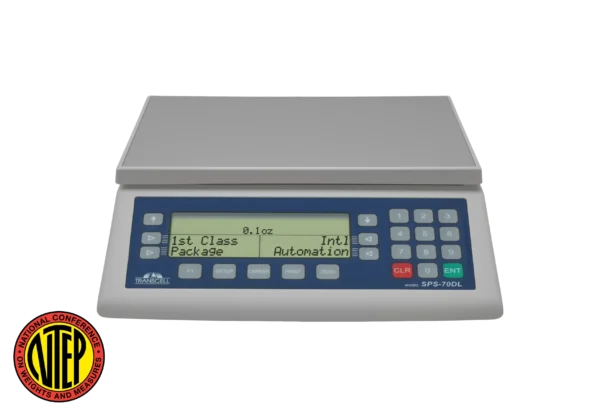
Postal Scales
When you want the scale itself to price the parcel. The SPS-70DL carries USPS, UPS and FedEx Express rates on board.
View products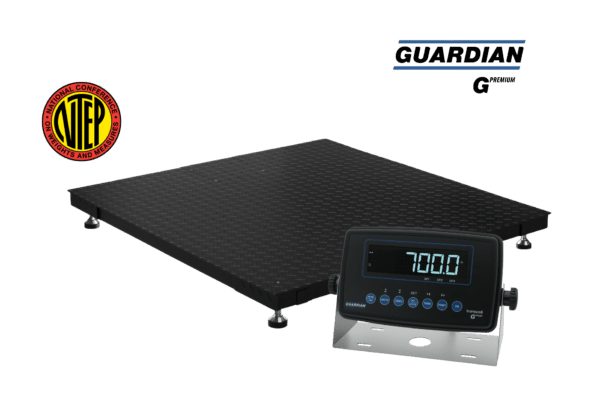
Platform Scales
The answer when the freight stops being cartons. A pallet does not go on a bench scale at all.
View productsWhy Transcell. Ordered like a store, backed like a partner.
Free 2-day shipping
Both of these are small enough to move as parcels, so they ship free in two days anywhere in the USA with no minimum order.
Ships worldwide
International orders ship at published rates from Buffalo Grove, Illinois, with the paperwork handled at this end.
Warranty backed
Covered by warranty and supported from the US, and the term is on the product page rather than buried in a policy.
Custom when you need it
A platform size, capacity or output that is not listed is a normal request, not a special favor. We build the load cells inside these ourselves.
Shipping scale reference
Two scales and a short list of decisions: how much weight, how much platform, and how the number gets into the software that buys the label. Below, each of those in turn, the load path through a bench scale, a table that turns a situation into a part number, both models side by side, exactly what to do with the USB and RS-232 ports, and the vocabulary on the datasheet.
How to choose a shipping scale. Three questions, in order.
There are only two models here and they share their electronics, their certification and their connectivity, so this is a shorter decision than most of the catalog. Capacity and platform size are the real choice. Everything after that is the same scale.
How much capacity, and how much platform?
The obvious way to choose is by weight, and it is usually the wrong one. A 150 lb ceiling is far more than most parcels will ever reach, so on a normal shipping bench the PC-150 is not capacity-limited in practice. What runs out first is deck area: its platform is 13 × 13 in, and a carton wider than that overhangs. An overhanging box still weighs correctly as long as its weight is bearing on the platform and nothing else, but it is unstable, it fouls the display, and it makes the operator hold it, which is exactly how a bad weight reaches a label.
So measure the largest carton you actually ship. If it fits inside 13 in square, the PC-150 is the scale and the extra $375 buys nothing. If it does not, the SRP-300 gives you 18 × 18 in and 300 lb, and the capacity comes along as a side effect of wanting the area.
There is a second reason to move up that has nothing to do with size. The SRP-300 is built on a heavy-duty carbon steel under-structure for overload protection, which is the specification that matters when parcels get dropped onto the platform rather than placed on it. A busy outbound bench is an impact environment, and the heavier under-structure is what survives it.
Above 300 lb, or once the thing being weighed arrives on a pallet, neither of these is the answer and a platform scale is. A bench scale is for one parcel at a time.
How does the weight get into the shipping software?
This is the whole reason to buy these two rather than a cheaper scale. Both are built to interface with UPS WorldShip and FedEx Ship Manager over standard USB and RS-232, and both ship with the USB cable, the RS-232 cable and the adapter included. There is no accessory to add and no dongle to source.
The detail worth knowing before the scale arrives: the USB connection is not a keyboard-style device that types the weight into whatever field has focus. It presents as a virtual COM port, so the PC needs the Silicon Labs USB-to-UART bridge driver installed, and the shipping software then talks to it as a serial port exactly as it would over RS-232. The driver is a free download from Silicon Labs. Install it first, note which COM number Windows assigns, and point WorldShip or Ship Manager at that port.
Use the RS-232 port instead when the machine is older, when the software only offers a serial option, or when you want the cable run to be longer than USB comfortably allows. Electrically it is the simpler path and it needs no driver at all. The two ports do the same job; pick whichever the PC makes easier.
If nothing on the bench is a PC, then the weight has to leave on paper instead, and that means a printer on the RS-232 port.
Does it have to be legal for trade?
The test is the same one that applies anywhere else in the catalog: if the weight is the basis of a commercial transaction, the scale has to be legal for trade. For a shipping bench that is a real question rather than a theoretical one, because a carrier rate is priced by weight. If you are re-billing freight to a customer, or the weight you capture is what a customer is charged on, the scale is in commerce and needs the certificate.
Both of these are NTEP certified, so both pass that test in the United States. The SRP-300 also carries Canadian certification, which is the deciding factor if the packing station is in Canada or if you need one part number approved for both countries.
Two caveats that catch people out. Certification is not the same as permission: a legal-for-trade scale still has to be placed into service and sealed by the local weights and measures authority once it is installed. And the approval covers the scale as it was submitted, so it is the complete unit that is certified, not the load cell inside it.
If the weight only ever feeds your own records, and no money is calculated from it, none of this applies and you are buying these two purely for their accuracy and their ports.
From a carton to a COM port. What a bench scale actually does.
A bench scale is a much shorter chain than a floor scale: one load cell instead of four, and no junction box to trim. That is why it can be accurate at a low price, and it is also why the platform has to be treated with more respect than a steel deck.
01
The platform takes the parcel
A removable stainless steel platter, so it lifts off to be cleaned and there is nothing underneath it to trap packaging debris. Removable also means it can be knocked off center, which is worth a glance before a shift.
02
One load cell reads it
A single load cell under the center of the platform, not four in the corners. Nothing has to be summed and nothing has to be trimmed, which removes the whole class of corner-balance problems a floor scale can develop.
03
Leveling feet make it valid
Adjustable feet, and this is the step people skip. A bench scale with one load cell reads through its own center line; set it on a bench that is not level and you have introduced an error that no calibration will remove.
04
The indicator turns millivolts into pounds
The readout excites the load cell, reads a few millivolts back, and applies the calibration. On these two it is built into the same housing as the keypad and the display rather than being a separate box on a stand.
05
The number leaves as serial data
Over USB as a virtual COM port, or over RS-232 directly. Either way what crosses the cable is a serial weight string, which is what UPS WorldShip and FedEx Ship Manager are expecting to read.
One consequence falls straight out of that chain: because there is a single load cell and no summing box, a bench scale has far fewer things that can drift out of adjustment, but the platform and the feet carry more of the responsibility. Level it, keep the platter seated, and load it near the middle.
Which one to order. Decided by the biggest carton, not the heaviest.
The last three rows deliberately point away from this page. A shipping scale is a narrow tool, and the wrong answer here is expensive in a way the right answer is not.
| If the situation is | Order | Why |
|---|---|---|
| Cartons that fit inside 13 in square | PC-150 $750 | 150 lb is more headroom than parcel work needs, so the platform size is the real constraint and this one clears it for the lowest price. USB and RS-232 both included. |
| Cartons wider than 13 in | SRP-300 $1,125 | 18 × 18 in of platform. The extra capacity comes along with the area rather than being the reason to buy it. |
| Parcels dropped onto the scale, not placed | SRP-300 $1,125 | The heavy-duty carbon steel under-structure is there for overload protection. On a busy outbound bench that is an impact rating, not a capacity rating. |
| A packing station in Canada | SRP-300 $1,125 | NTEP and Canadian certified, so one part number is legal for trade on both sides of the border. |
| The scale should price the parcel itself | SPS-70DL postal scale | Carries USPS, UPS and FedEx Express rates on board and prints the cost, so no PC is involved. It is filed under postal scales even though its own name says shipping. |
| Anything arriving on a pallet | A platform scale | A pallet does not belong on a bench scale at any capacity. A floor scale is 4.3 in high and a forklift drives onto it. |
| Counting parts, not weighing parcels | A counting scale | Same bench, different job. A counting scale divides by a piece weight and reports quantity instead of pounds. |
Both models, line by line. Where they differ, and where they do not.
Everything in the connectivity and certification block is identical, which is the point: the two scales are the same product in two sizes. Only the first block actually changes.
| Specification | PC-150 | SRP-300 |
|---|---|---|
| Capacity and size | ||
| Price | $750 | $1,125 |
| Capacity | 150 lb | 300 lb |
| Platform size | 13 × 13 in 330 × 330 mm | 18 × 18 in 458 × 458 mm |
| Under-structure | Standard | Heavy-duty carbon steel |
| Platform | Removable stainless steel | Stainless steel, ball top optional |
| Displayed division | 0.05 lb legal for trade (0.01 lb under 5 lb in non-trade mode) | 0.1 lb |
| Certification | ||
| NTEP certified | Yes | Yes |
| Canadian certified | No | Yes |
| Legal for trade | USA | USA and Canada |
| Readout and connectivity | ||
| Display | Self-contained LED | Digital weight indicator |
| Keypad | Built in | Built in |
| USB | Standard, cable included | Standard, cable included |
| RS-232 | Standard, cable included | Standard, cable included |
| Adapter | Included | Included |
| Carrier software | UPS WorldShip, FedEx Ship Manager | UPS WorldShip, FedEx Ship Manager |
| USB driver | Silicon Labs CP210x VCP | Silicon Labs CP210x VCP |
| Ordering | ||
| SKU | SC062001 | SC062002 |
| Product type | Simple, one price | Simple, one price |
| Leveling | Adjustable feet | Adjustable feet |
| Datasheet | PC-SERIES (PDF) | SRP-300 (PDF) |
| Shipping | Free 2-day, no minimum | Free 2-day, no minimum |
| Warranty | 2-year limited warranty | 2-year limited warranty |
Both product pages carry a user guide and a datasheet, and both offer STEP files if you need to drop the footprint into a bench layout before you buy.
Getting the weight into WorldShip. The part that is actually fiddly.
Nothing here is specific to Transcell; this is how any serial bench scale is wired into a carrier application. It is written out because "has USB" hides a genuine setup step, and the step is easier to do in the right order.
| Step | Do this | Why it matters |
|---|---|---|
| 1. Install the driver first | Silicon Labs CP210x VCP driver | Do it before plugging the scale in. The USB port is a USB-to-serial bridge, not a keyboard emulator, so without the driver Windows has no COM port to offer the shipping software. |
| 2. Find the COM number | Device Manager, under Ports (COM & LPT) | Windows assigns the number, and it can change if the scale is later moved to a different USB socket. Note it, and keep the scale on the same port. |
| 3. Point the software at it | WorldShip or FedEx Ship Manager scale setup | Both applications ask for a serial port and a scale type. This is where the COM number from step 2 goes. |
| 4. Or skip USB entirely | Use the included RS-232 cable | No driver, no COM assignment that can move, and a longer usable cable run. If the PC still has a serial port, this is the simpler installation. |
| 5. If no PC is involved | Put a printer on RS-232 | The weight leaves on paper instead of into software. Useful for a manual manifest, a bar code label, or a bench that is not networked. |
| 6. If a controller needs it | A signal conditioner | For a PLC or process controller rather than shipping software. This is a different architecture, and it applies to load cells rather than to a finished bench scale. |
One habit worth building regardless of which port you use: zero the scale at the start of a shift and after anything is spilled on the platter. A serial weight string is trusted completely by the software reading it, and there is no human sanity check between the platform and the label.
Datasheet terms, in plain language. What they mean when you're specifying.
Show all 20 terms
- Bench scale
- A scale sized to sit on a work surface and weigh one item at a time, with the readout built into the same housing. Distinct from a floor scale, which sits on the ground and takes a pallet.
- Shipping scale
- A bench scale specified for parcel work: a capacity in the hundreds of pounds rather than thousands, and a serial output aimed at carrier software rather than at a process controller.
- Platform size
- The usable area of the weighing surface. On parcel work this is usually the binding constraint rather than capacity, because a carton runs out of room long before it runs out of pounds.
- Removable platform
- A platter that lifts off for cleaning. Convenient, and worth reseating deliberately: a platter sitting proud of its locating points can read against the housing instead of the load cell.
- Under-structure
- The frame beneath the platform that carries load into the load cell. A heavier under-structure is an impact specification, protecting the load cell when a parcel is dropped rather than placed.
- Load cell
- The sensing element that converts force into a small electrical signal. A bench scale uses a single load cell under the center of the platform; a floor scale uses four, one per corner.
- Single-point load cell
- A load cell designed to read correctly regardless of where on the platform the load sits, which is what lets a bench scale work with only one of them.
- Leveling feet
- Adjustable feet that bring the platform to true horizontal. Not optional on a scale with a single load cell: an out-of-level platform introduces an error that calibration cannot remove.
- Division
- The increment the readout counts in. A 150 lb scale reading to 0.05 lb is showing 3,000 divisions; the division, not the capacity, is what determines how fine a reading you actually get.
- NTEP
- The National Type Evaluation Program. A scale with an NTEP Certificate of Conformance has been type-evaluated as legal for trade in the United States.
- Canadian certification
- The equivalent Measurement Canada approval. Needed if the scale is used commercially in Canada; NTEP alone does not cover it.
- Legal for trade
- Approved for use where the weight is the basis of a commercial transaction. A shipping bench is in scope whenever the weight determines what somebody is billed.
- Placed in service
- The inspection and sealing step performed by the local weights and measures authority after installation. Certification makes a scale eligible; being placed in service is what makes it legal to use.
- Class III
- The NIST Handbook 44 accuracy class covering ordinary commercial weighing, which is the class shipping and bench scales are approved under.
- RS-232
- A point-to-point serial standard. On these scales it is the direct route to a PC or a printer, needs no driver, and tolerates a longer cable run than USB.
- Virtual COM port
- A USB device that presents itself to the operating system as a serial port. It is why a USB scale still needs a driver and still appears as COM3 or similar to the shipping software.
- CP210x
- The Silicon Labs USB-to-UART bridge chip family used for the USB port on these scales, and the reason the required driver is a Silicon Labs download rather than a Transcell one.
- Weight string
- The line of serial text a scale sends when polled or when the reading stabilises. Carrier software parses it; nothing between the platform and the shipping label checks whether it is sensible.
- Tare
- Subtracting the weight of the packaging so the display shows net contents. On a shipping bench the usual use is the opposite: you want gross, because the carrier charges for the whole parcel.
- Ball top
- An option on the SRP-300 replacing the flat platter with a bed of rollers, so a heavy carton can be slid on and off rather than lifted.
Shipping scales, answered.
Which one should I buy, the PC-150 or the SRP-300?
Measure your largest carton rather than your heaviest. If it fits inside 13 in square, the PC-150 at $750 is the scale and the extra $375 buys nothing you need, because 150 lb is already more capacity than parcel work uses. Move to the SRP-300 if cartons are wider than that, if parcels get dropped onto the platform rather than placed on it, or if the station is in Canada and needs Canadian certification.
Do both really include the cables?
Yes. Both the PC-150 and the SRP-300 ship with a USB cable, an RS-232 cable and an adapter in the box. There is no interface kit to add and no adapter to source separately, which is the main practical difference between these and a consumer scale.
Will they work with UPS WorldShip and FedEx Ship Manager?
Both are built for it and both list it explicitly. The one setup step people miss is that the USB connection is a virtual COM port rather than a keyboard-style device, so the PC needs the Silicon Labs CP210x driver installed first. After that the shipping software talks to the scale as a serial port, exactly as it would over RS-232.
Why does a USB scale need a driver at all?
Because the USB port is a USB-to-serial bridge rather than a human-interface device. The scale speaks serial internally; the bridge chip carries that over USB, and the driver is what makes the operating system present it as a COM port that WorldShip or Ship Manager can be pointed at. If that sounds like an unnecessary step, use the included RS-232 cable instead and skip it entirely.
Are these legal for trade?
Both are NTEP certified, and the SRP-300 is Canadian certified as well. That matters whenever the weight you capture is what somebody gets billed on, which on a shipping bench is often the case. Certification is not the last step, though: the installed scale still has to be placed into service and sealed by your local weights and measures authority.
What is the ball top option on the SRP-300?
A roller bed in place of the flat platter, so a heavy or awkward carton can be slid on and off the scale instead of lifted onto it. It is selectable on the SRP-300 product page.
Can I weigh a pallet on one of these?
No, and not because of the capacity. A pallet does not fit an 18 in platform and cannot be placed on a bench in the first place. That is a floor scale: a Guardian platform scale is 4.3 in high, takes a forklift directly, and starts at 5,000 lb.
Where is the SPS-70DL, which is also called a shipping scale?
Filed under postal scales, despite its name. It belongs there because it works differently: instead of sending a weight to a PC, it carries USPS, UPS and FedEx Express rates on board and prices the parcel itself. If you want the scale to do the rating, that is the one to look at.
Do you build bench scales to a size that is not listed?
Yes. Custom platform sizes, capacities and outputs are ordinary work for us, and we manufacture the load cells and electronics inside these ourselves rather than reselling somebody else's. Tell us the footprint, the capacity and what has to read the weight.
We Make Your Challenge Our Business
Tell us what it has to do and we’ll tell you what it takes.