How they work
A column’s job, inside a disc.
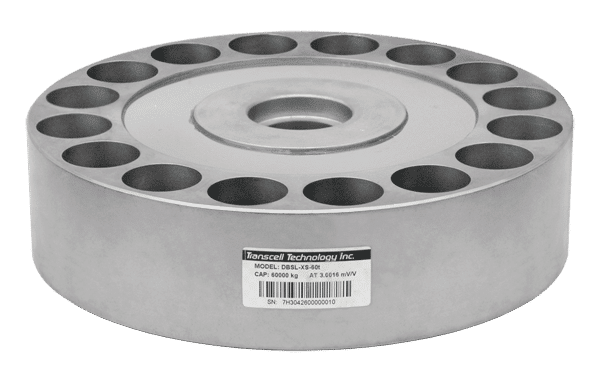
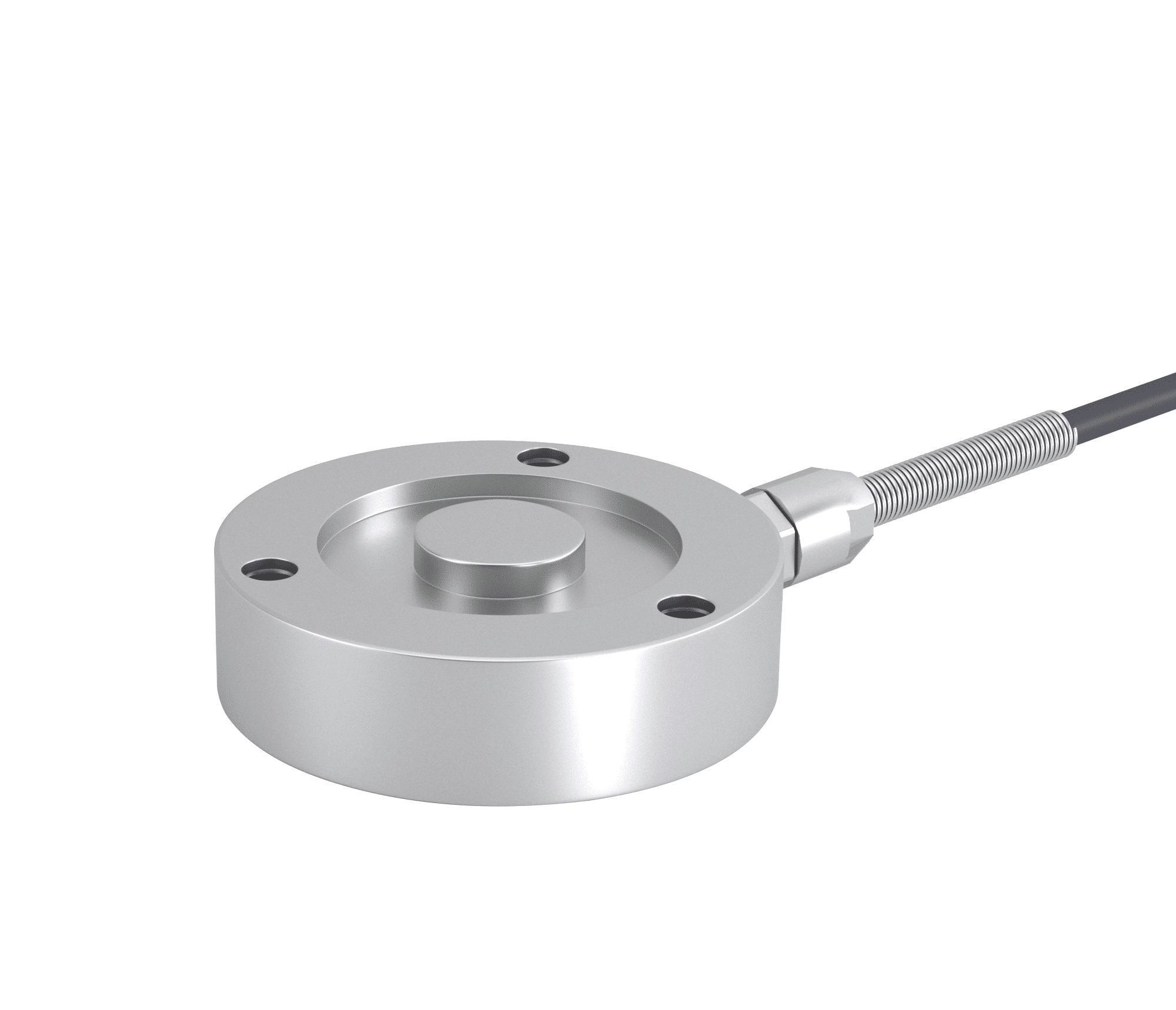
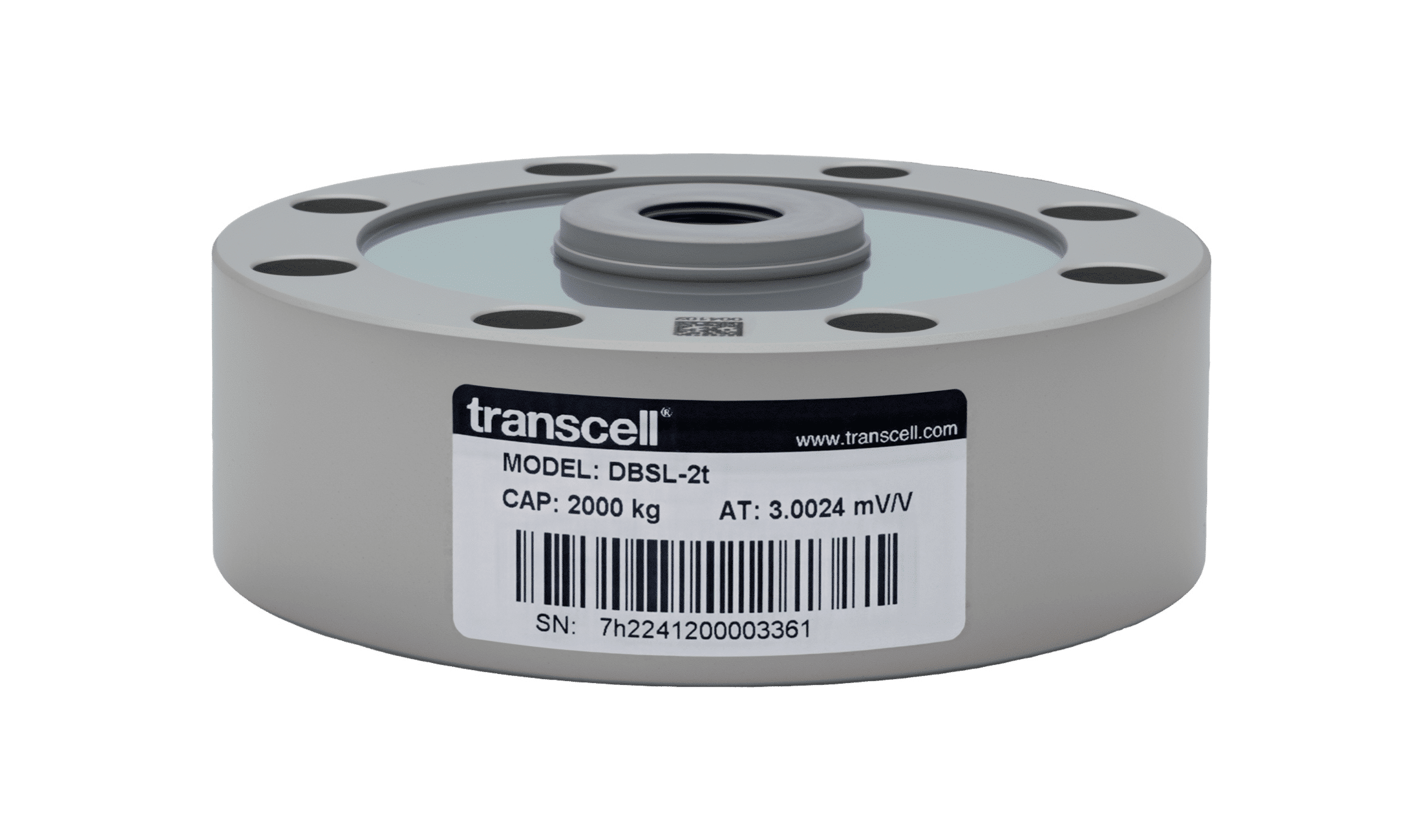
A pancake is a base-mount compression load cell machined as an annulus. Load goes in at the centre and comes out at the rim, and the whole measurement happens inside a body a few tens of millimetres tall. Height is the property you are buying.
The annular body and the shear web
Force arrives at a boss in the middle of the top face, through a rod or a loading dome screwed into it. From the boss it travels radially outward through a web machined into the body, then out through the rim into whatever the load cell is bolted to. The strain gauges sit on that web, reading the shear the radial path puts through it.
Shear is why the part can be short. A bending element has to be long: the strain it measures comes from a moment, a moment is a force times a distance, and the beam needs length to develop one. A shear web produces usable strain across its own thickness instead, so the sensing section is a few millimetres of material inside a disc.
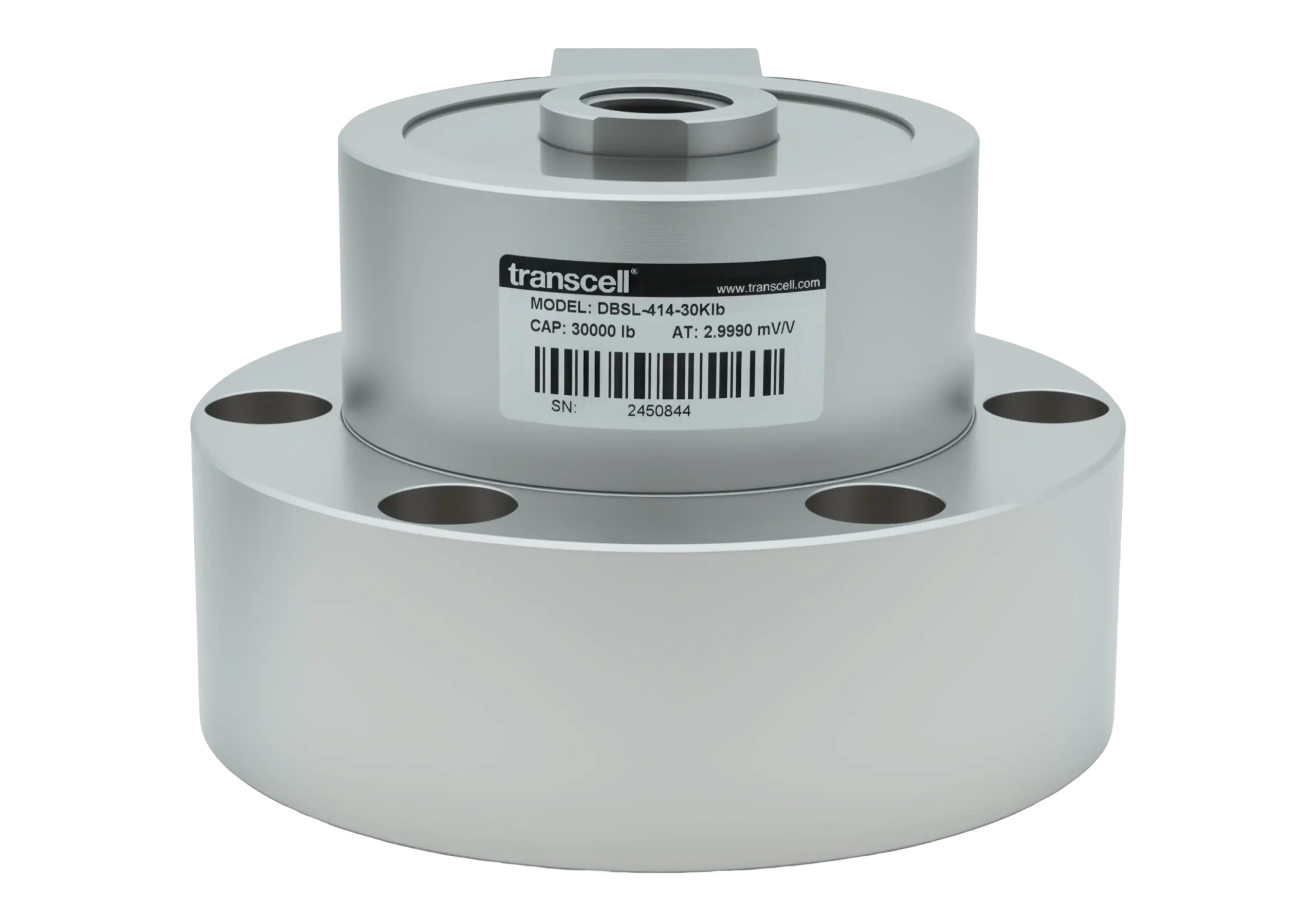
The dimensions make the point. A 2 t DBSL body is 105 mm in diameter and 37 mm tall. At 30 t it is 141 mm across and 57.2 mm tall: fifteen times the capacity for a third more diameter and half again the height. An S-beam or a column rated for the same load stands far taller, and that is the whole reason to reach for this geometry.
Go deeper
What the low profile costs you
Two things, both structural. The first is direction: the DBSL, the DBSL-XS and the TC414 are compression load cells, and only the DBSL can be converted for tension, through its optional tension base. The load path exists while the load presses the rim down onto its seat, so a reversed load does not read negative, it unseats the part. If the structure can lift (wind on a vessel, torque from a mixer, a specimen that snaps back in a test frame), the uplift has to be carried somewhere else.
The second is the mounting surface. A beam spans between a fixed end and a loaded end, and the arm between them absorbs some imperfection in how it was bolted down. A pancake has no arm, so the plate underneath sits inside the measuring system and its flatness is a specification.
Three body sizes, and the bridge that changes at 20 t
The DBSL sheet draws the series in three bands (1 to 5 t, 10 to 20 t and 30 t), and each one has its own body. The centre thread goes M16×1.5, M32×1.5, M40×1.5, and the base pattern from eight 7.5 mm holes to eight 11 mm, so two capacities that look adjacent on a price list can need two different mounting plates.
The bridge changes too. At and below 20 t the DBSL is 387 ±20 ohm in and 350 ±5 ohm out; above that it is 775 ±20 ohm and 700 ±5 ohm. Two bridge resistances cannot be summed in one junction box and trimmed sensibly, so check resistance as well as capacity when replacing one load cell out of a set.