
Cables & Accessories
Matched to the instruments we build.
Free shipping across the USA.
Cables and accessories categories
Indicator Accessories
RS-232, RS-485, USB, Ethernet, Bluetooth, analog and relays.

Cables
Bulk 4-conductor spool, 14-pin and quick disconnect leads.
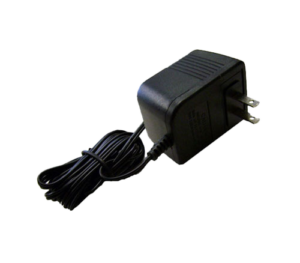
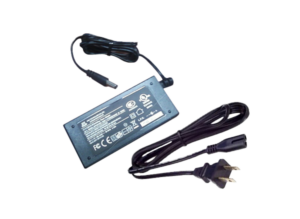
AC-DC Adapters & Cords
6, 9 and 12 V DC, both barrel genders, plus EU and UK cords.

Batteries
The NP3-6 sealed 6 V 3 Ah pack, for rechargeable instruments.

Feet
Polyurethane and stainless captured ball, 1/2-20 and 3/4-16 UNF.
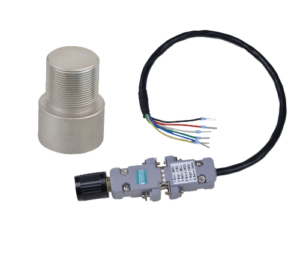
Fixtures/Adapters
DBSL load buttons, a tension base and the load cell simulator.
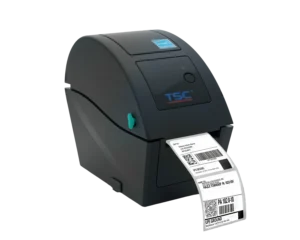
Printers & Thermal Paper
The TDP-225 printer, plus paper and labels for it and the MP-20.
Accessories finish a system, not start one. One catalog, one order.
If you are specifying rather than repairing, the load cells, the summing box and the readout come first.
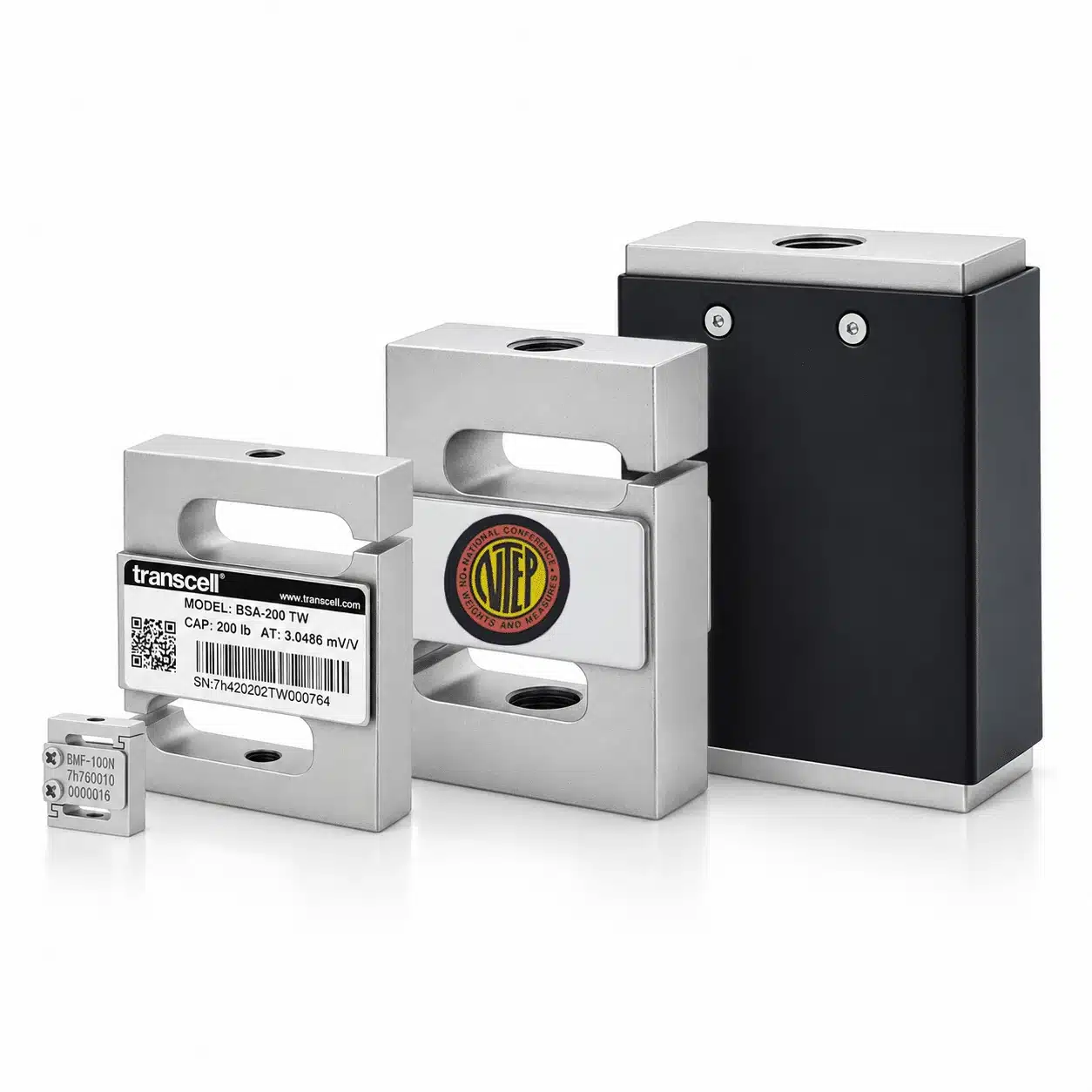
Load Cells
Twelve families, designed, built and calibrated in the same building. Every cable and fixture here is cut for them.
View products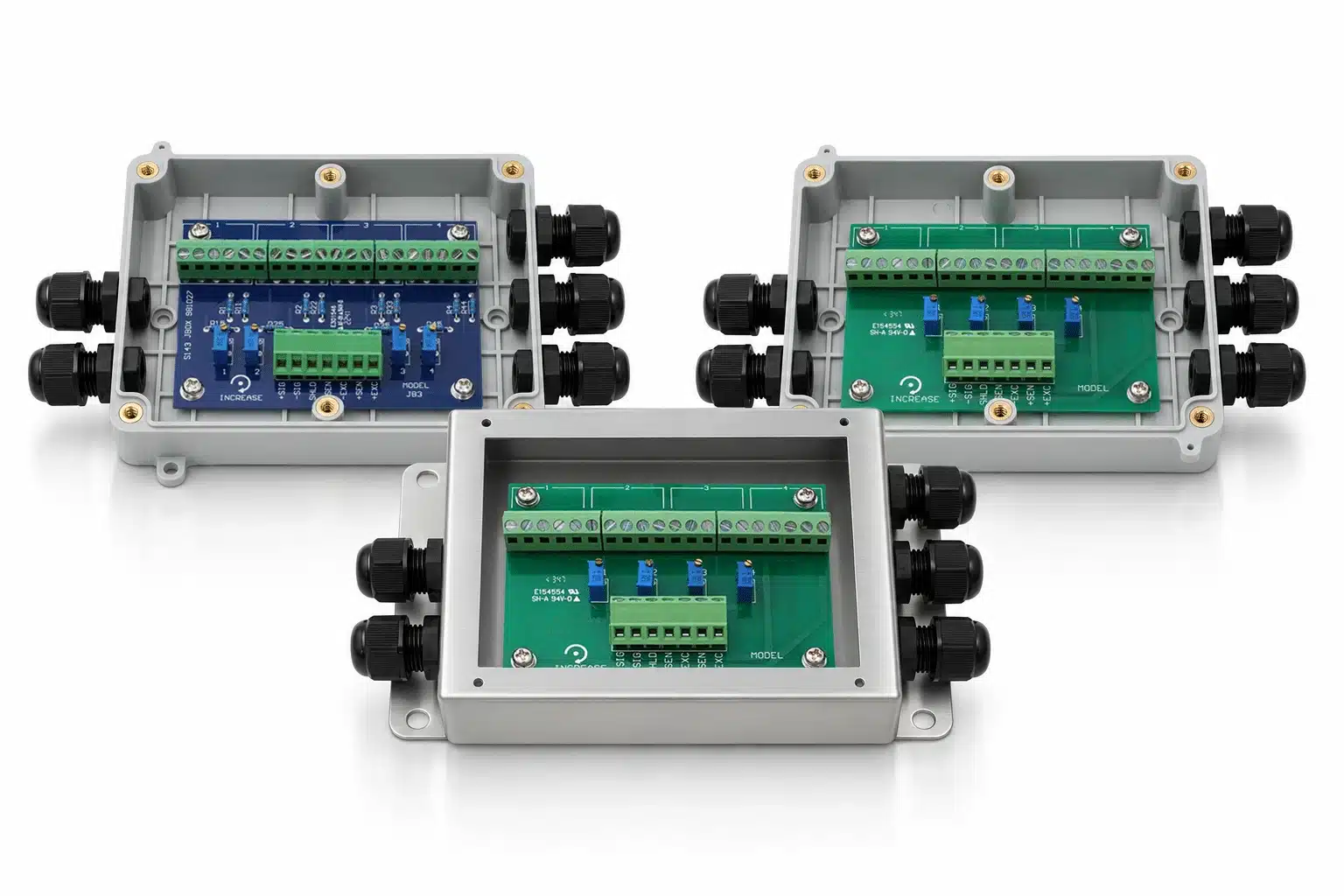
Junction Boxes
Sums up to four load cells into one signal, and trims them so a corner load reads the same anywhere on the platform.
View products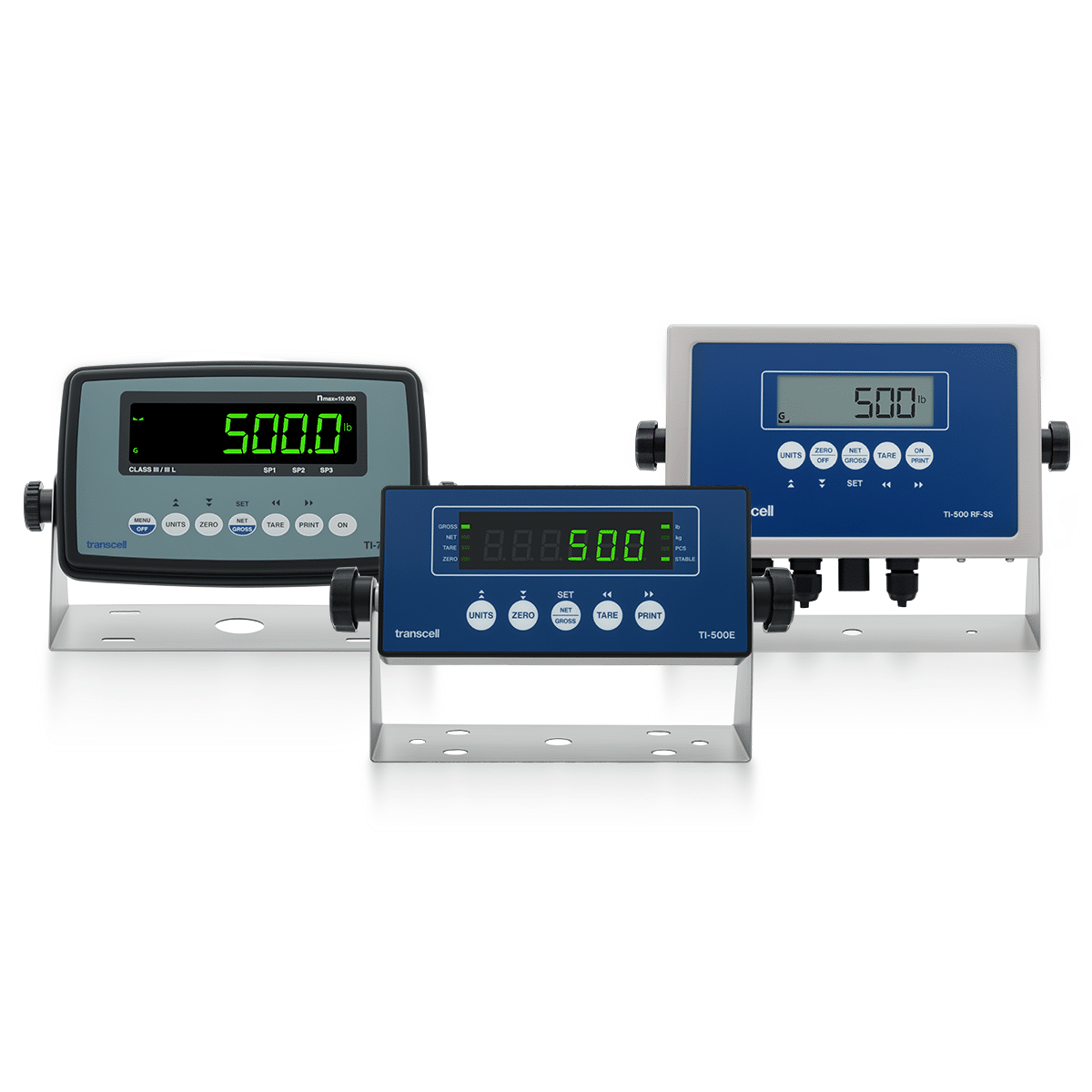
Digital Indicators
Fourteen weight and force readouts. The option modules on this page are built to the model, so pick the indicator first.
View productsWhy Transcell. Ordered like a store, backed like a partner.
Free shipping
Parcels ship free in two days, nationwide, no minimum. Floor scales and weigh beams go by freight: free ground to the contiguous 48 states in 2 to 3 days.
Ships worldwide
International orders ship at FedEx live rates: what FedEx charges is what you pay. Tracking follows the order from our door to yours.
Warranty backed
Every product carries a manufacturer warranty. If something goes wrong, you deal with the people who built it.
Custom when you need it
Can't find the perfect fit? We build custom load cells and custom electronics for OEMs every day.
Cables and accessories reference
What decides an accessory part number: what actually failed, how the load cell is wired, what has to receive the reading, how it is powered, and what it stands on. Below, each of those in turn, what the cable is really carrying, all fifty-nine parts with the models they fit, and the wiring vocabulary a datasheet assumes you already have.
Which accessory do you need? What decides the part number.
Almost every wrong accessory order comes down to the same four details: voltage, connector gender, conductor count and which instrument the module was built for. Work through these in order and the part number is usually decided before you reach the catalog.
What are you actually replacing?
Repair orders and specification orders behave differently, and mixing them up is where most of the friction on this category comes from. If something failed, the old part carries its own answer: an adapter's label states voltage, current and polarity; a cable assembly's connector states pin count; an option card is printed with the models it fits. Photographing that label before ordering saves more time than any filter on this page.
If you are specifying instead, the constraint runs the other way. Start from the indicator model, because it decides which interface modules exist for the instrument at all, and from the load cell, because it decides the cable, the fixture and the foot thread.
Three items in this catalog are model-locked in a way that is easy to miss. The option modules are built for named groups of indicators and are not interchangeable across the range. The NP3-6 battery fits only the rechargeable models, not the ones that run on AA alkalines. And the DBSL load buttons and tension bases are sized by the load cell's capacity band, so a 1t to 5t button will not serve a 30t load cell.
How is the load cell wired, and how far does the signal run?
A strain-gauge load cell is a four-wire device at heart: two conductors carry excitation out to the bridge, two carry the millivolt signal back. Our bulk replacement cable is 4-conductor, 24 AWG, on a 500-foot spool, which covers standard installations and is what most platform scales are built with.
Six-wire cable adds a sense pair, and it exists for one reason: copper has resistance. Over a long run, the current the bridge draws produces a voltage drop in the excitation conductors, so the load cell sees less than the indicator thinks it is supplying. Since the load cell's output is proportional to its excitation, that drop reads as a span error, and it moves with temperature because copper resistance moves with temperature. Sense lines let the indicator measure the voltage actually arriving at the load cell and correct for it. Long runs, outdoor runs and installations where the cable is spliced at a junction box are the cases that need them.
Two practical rules follow from that. Do not cut and splice a factory load cell cable to shorten it unless the system is recalibrated afterwards, because on a 4-wire installation the cable resistance is part of the calibration. And do not add length by joining two runs in a wiring box without a proper terminal and strain relief; a corroding splice in a wet room is the classic intermittent fault.
Where a cable has to be disconnected routinely, buy the connector rather than making one. The 5-pin quick disconnect cable is 18 feet total, a one-foot pigtail on the instrument side and 17 feet on the other, and it exists so a stainless indicator can be lifted off the scale base for cleaning without disturbing the wiring.
This is the short version. The Cables page carries the full treatment: the five-step signal path, when a run genuinely needs six wires, the routing and single-point grounding rules, and all six cables side by side.
What has to receive the reading?
This is the largest group in the catalog and the one with the most expensive mistakes in it, because the modules look interchangeable and are not. Order by indicator model first, protocol second. RS-485 half duplex is built for the TI-500E Plus, TI-500E SS and TI-1520; RS-485 isolated is a different part for the TI-700K and TI-1680. USB and Ethernet are for the TI-500 RF-SS and TI-1680. Even Bluetooth at the same range splits into two part numbers, one for the TI-500 RF-SS and TI-1680 and another for the TI-500 RF, FDI and TI-700K.
Once the model is fixed, the protocol follows what is on the other end. A ticket printer, a remote display or a PC log needs nothing extra, because RS-232C is standard across the range; add the isolated RS-232 module only where ground potential differs between the two ends, which is common between buildings and around large drives.
A PLC or a process controller wants analog. The active card sources its own signal; the loop-powered card is fed by the receiving device, which is what a lot of installed 4-20 mA loops expect. A SCADA system or several instruments on one run wants RS-485 Modbus RTU, which multi-drops and survives electrical noise far better than RS-232.
Two options are not communications at all. Relay outputs switch a feeder or a valve at a target weight, which is how simple batching gets done without a PLC in the loop. And Time/Date/Print Formats is a firmware option for the TI-500E Plus and TI-500E SS, which matters when the ticket has to carry a timestamp for records rather than just a number.
How is it powered?
Voltage has to be exact. Transcell instruments run at 6, 9 or 12 V DC depending on the model, and an adapter one step up is not a safe approximation. Current is a ceiling, not a target, so a 9 V 3 A adapter will happily run a device that draws 500 mA, while a 9 V 100 mA adapter feeding a 500 mA load will run hot, sag under load and produce readings that drift as it warms.
Barrel gender is the detail most often ordered wrong. We stock both: adapters described as female barrel and adapters described as male connector are not substitutes for each other. Check the plug on the instrument before ordering, or read the description on the old adapter.
Instruments with an internal supply take a mains cord instead, which is why the catalog carries four: NEMA 5-15 for standard grounded US outlets, NEMA 1-15 for ungrounded two-pin, CEE 7/16 for continental Europe and BS 1363 for the UK. Shipping an instrument abroad usually means shipping the right cord with it, not an adapter on the end of a US one.
Battery-powered models split into two families. The AA-alkaline models, such as the TI-500 and TI-500 RF, take no accessory from us at all. The rechargeable models take the NP3-6 sealed 6 V, 3 Ah pack, which fits the TI-500 SL, TI-500 BWL and WB5040-SWP, plus the legacy TI-500BW, TI-1510, TI-1200, TI-1000 and TI-1001. A sealed pack that has been left flat for months rarely comes back, so on a scale that is used seasonally the spare is worth stocking.
What is it standing on, or bolted to?
A load cell measures the force that reaches it, so anything in the load path is part of the measurement. Feet are specified by thread, diameter and material. Most of the range is 1/2-20 UNF with a 2 inch stem; the 3-1/4 inch polyurethane foot for 10K load cells is 3/4-16 UNF. Polyurethane grips and damps, which suits benches and portable platforms. Captured ball feet, in alloy steel or stainless, let the platform settle and self-align on an uneven floor instead of loading one corner, which is what a floor scale in an older building normally needs. The 2-3/8 inch stainless captured ball foot is NTEP certified, which is the one to specify when the finished scale has to be legal for trade.
Fixtures do the same job at the load cell. The DBSL load button is a radiused dome that threads into the centreline of the load cell on an M16 x 1.5 thread, and it exists to force a compression load down the loading axis rather than at a slight angle, which is a real and repeatable source of error on pancake load cells. Three capacity bands are stocked: 1t to 5t, 10t to 20t, and 30t.
The DBSL tension base converts the same compression load cell into a bidirectional one. The load cell bolts to the base through the M6 bolt circle on its circumference, and the base then carries a central M24 x 1.5 thread, so the assembly can be fixtured and loaded in tension as well as compression.
One more item lives in this group and belongs in every service kit. A load cell simulator substitutes a known, stable bridge signal for the real load cell. If the indicator reads correctly on the simulator, the instrument is good and the fault is in the load cell, the cable or the junction box. That single test removes most of the guesswork from a service call, and ours ships with its cable.
What the cable is actually carrying. And why noise complaints start here.
A load cell returns a few thousandths of a volt. Everything between the load cell and the indicator is an opportunity to lose it, and in practice the cable and its grounding are where an unstable reading is usually created.
01
Excitation out
The indicator supplies a stable 5–10 V DC down two conductors. Resistance in this pair is what a long run costs you.
02
Millivolts back
A 2 mV/V load cell at full load returns about 10 mV. That is the whole signal, and it is smaller than the noise a motor lead induces.
03
Sense lines
The optional third pair reports the voltage actually arriving at the load cell, so the indicator corrects for drop rather than reading it as weight.
04
Shield and ground
The braid or foil intercepts interference, but only if it is grounded at one end only. Both ends makes a loop and a new problem.
05
Termination
Junction box, gland and strain relief. A corroding splice in a wet room is the classic intermittent that looks like a failing load cell.
Two habits prevent most of it: run the signal cable in its own conduit and cross power at right angles where crossing is unavoidable, and keep the run away from variable frequency drives, contactors and welding equipment. If a reading is stable with the drive off and wanders with it on, the fault is the cable route, not the load cell. The Cables page goes through each step of this path in detail.
The fast mapping. Where most orders land.
Each row links straight to that group.
| If you need | Start here | Why |
|---|---|---|
| To replace a damaged load cell cable | Cables | Bulk 4-conductor 24 AWG on a 500-foot spool for a fresh run, or the matching factory assembly if the instrument uses a 14-pin or 5-pin connector. |
| A dead or missing power adapter | AC-DC Adapters | Match voltage exactly, take current as a ceiling, and check barrel gender against the instrument. Both genders are stocked at 6, 9 and 12 V DC. |
| To ship an instrument to Europe or the UK | Power Cords | CEE 7/16 and BS 1363 cords for instruments with an internal supply, so the unit arrives with the right mains lead rather than a travel adapter. |
| To get weight into a PLC | Indicator Accessories | Analog output, active or loop powered, drops onto a standard analog input card. Confirm the module exists for your indicator model before ordering. |
| To network several indicators | RS-485 modules | Multi-drop Modbus RTU. Half duplex for the TI-500E Plus, TI-500E SS and TI-1520; the isolated version for the TI-700K and TI-1680. |
| A wireless or Bluetooth readout | Bluetooth & Wi-Fi modules | Class I modules at 100 m and 1000 m, BLE for phone and tablet apps, Wi-Fi for network applications. Part numbers differ by indicator group. |
| To print weight tickets or barcode labels | Printers & Thermal Paper | The TDP-225 takes media up to 2.25 inches over RS-232 and ships with its adapter and cable. Paper and labels are stocked for it and for the MP-20. |
| A spare battery for a portable scale | Batteries | The NP3-6 sealed 6 V, 3 Ah pack for the TI-500 SL, TI-500 BWL and WB5040-SWP, plus the legacy rechargeable models. |
| To level a platform on an uneven floor | Feet | Captured ball feet let the platform settle and self-align instead of loading one corner. Stainless for washdown, and an NTEP certified option for legal-for-trade scales. |
| To load a pancake load cell in tension | Fixtures & Adapters | The DBSL tension base bolts to the load cell's M6 bolt circle and carries a central M24 x 1.5 thread, so the same load cell reads both directions. |
| To find out whether the indicator or the load cell has failed | Load cell simulator | Substitutes a known bridge signal. A correct reading on the simulator clears the instrument and points at the load cell, the cable or the box. |
Every part, with what it fits. Fifty-nine parts, one list.
Prices are current catalog list. Compatibility is taken from each product's own listing, so where a module names its models, those are the models.
Indicator option modules and firmware options
| Option | What it adds | Fits | Price |
|---|---|---|---|
| RS-232 Interface | A second serial port for a printer or logger | TI-500 RF, TI-500 FDI, TI-500 RF SS, TI-700K | $110 |
| Additional RS-232 Interface | A second independent RS-232 channel | TI-1680 | $110 |
| RS-232 Interface, isolated | Galvanic isolation where the two ends sit at different ground potentials | TI-500 RF, TI-500 FDI, TI-500 RF SS, TI-700K, TI-1680 | $125 |
| RS-485 Interface, half duplex | Multi-drop Modbus RTU over a long two-wire run | TI-500E PLUS, TI-500E SS, TI-1520 | $110 |
| RS-485 Interface, isolated | The same, isolated for high-noise plants | TI-700K, TI-1680 | $110 |
| USB Interface | Direct connection to a PC or laptop | TI-500 RF SS, TI-1680 | $110 |
| Ethernet Interface | Wired network connection into a database or MES | TI-500 RF SS, TI-1680, LCT-2 | $210 |
| Wi-Fi Interface | Wireless network connection, no cable run | TI-500 RF SS, TI-700K, TI-1680 | $101.65 |
| Bluetooth COM 2.0, 100 m | Class I Bluetooth, internal antenna | TI-500 RF SS, T831, TI-1680 | $230 |
| Bluetooth COM 2.0, 100 m | The same range, different indicator group | TI-500 RF, TI-500 FDI, TI-700K | $225 |
| Bluetooth COM 2.0, 1000 m | Long-range Class I for yards and large sites | TI-500 RF SS, T831, TI-1680 | $330 |
| Bluetooth COM 2.0, 1000 m | The same range, different indicator group | TI-500 RF, TI-500 FDI, TI-700K | $315 |
| Bluetooth COM 4.0 / BLE | Low energy, for phone and tablet apps | TI-500 RF, TI-500 FDI, TI-500 RF SS, TI-700K, TI-1680 | $125 |
| G-PREM-BT Bluetooth module | Bluetooth for the G-Series indicator | G-700K | $130 |
| G-PREM-WIFI Wi-Fi module | Wi-Fi for the G-Series indicator | G-700K | $190 |
| Analog Output, active | A driven 4-20 mA or voltage signal to a PLC input | Indicators with an expansion port | $140 |
| Analog Output, loop powered | The receiving device powers the loop, as most installed loops expect | Indicators with an expansion port | $135 |
| 6V Relay Outputs | Switches a feeder or valve at a target weight | TI-500 RF, TI-500 RF SS | $235 |
| Time / Date / Print Formats | Timestamped and formatted tickets, a firmware option | TI-500E PLUS, TI-500E SS | $120 |
| Internal Power Supply | Mains supply inside the enclosure, no external adapter to keep dry | TI-500E SS | $44 |
| Spare Internal Power Supply | Replacement internal supply | Indicators with an internal supply | $92 |
| USB 2.0 Cable, 6 foot | The lead for the USB interface | Indicators with a USB port or module | $25 |
| 18″ Post with Swivel | Raises the indicator off the bench and lets it turn to the operator | Bench and platform scales | $35 |
Two items also listed under Indicator Accessories appear in their own groups below: the NP3-6 battery and the 6 V DC 600 mA adapter.
Adapters, cords and batteries power in
| Part | Output | Connector | Price |
|---|---|---|---|
| 120V AC Adapter | 9 V DC, 100 mA | Male connector | $20 |
| 120V AC Adapter | 9 V DC, 200 mA | Female connector | $20 |
| 120V AC Adapter | 9 V DC, 500 mA | Male connector | $20 |
| 120V AC Adapter | 12 V DC, 500 mA | Male connector | $20 |
| 120V AC Adapter | 12 V DC, 1000 mA | Female barrel | $20 |
| Universal AC Adapter | 6 V DC, 600 mA | Female barrel | $25 |
| Universal AC Adapter | 9 V DC, 600 mA | Female barrel | $25 |
| AC Adapter | 9 V DC, 2.5 A | Barrel | $50 |
| Universal AC Adapter | 9 V DC, 3 A | Female barrel | $50 |
| Universal AC Adapter | 12 V DC, 2 A | Female barrel | $50 |
| Power Cord, US | Mains, grounded | NEMA 5-15 | $15 |
| Power Cord, US | Mains, ungrounded | NEMA 1-15 | $15 |
| Power Cord, EU | Mains, continental Europe | CEE 7/16 | $15 |
| Power Cord, UK | Mains, United Kingdom | BS 1363 | $15 |
| Rechargeable Battery NP3-6 | 6 V, 3 Ah sealed | TI-500 SL, TI-500 BWL, WB5040-SWP, legacy TI-500BW / TI-1510 / TI-1200 / TI-1000 / TI-1001 | $50 |
Match voltage exactly. Current is a ceiling, so an adapter rated above the instrument's draw is safe and one rated below it is not. Barrel gender is the detail most often ordered wrong: read the old adapter's description before you replace it.
Cables bulk and factory assemblies
| Part | What it is | Use it for | Price |
|---|---|---|---|
| Load Cell Cable, 4 conductor, 500 ft | 24 AWG, 4-conductor, 500-foot spool | New runs and full replacements on 4-wire installations | $475 |
| Spare 14-pin Load Cell Cable | Factory assembly, 14-pin connector | Replacing the load cell lead on instruments that use the 14-pin connector | $45 |
| TI-500E Cable, 14-pin, 35 ft | Factory assembly, 35 feet | Longer runs on the TI-500E where the standard lead will not reach | $100 |
| Quick Disconnect Cable | 5-pin metal connector, 18 ft total: 1 ft pigtail plus 17 ft | Stainless indicators that come off the scale base for cleaning | $50 |
| NMC-1 RS-232 Cable | Serial interface lead | Connecting an indicator to a printer, remote display or PC | $25 |
| RS-232 DB9 to DIN Cable | DB9 to DIN serial lead | Driving the MP-20 printer from an indicator | $25 |
Do not shorten a factory load cell cable by cutting and splicing it unless the scale is recalibrated afterwards. On a 4-wire installation the cable's own resistance is part of the calibration, so changing its length changes the span. Full cable reference.
Feet, fixtures and adapters the load path
| Part | Specification | Fits or suits | Price |
|---|---|---|---|
| Foot, 2.9″ polyurethane | 2.9″ dia, 1/2-20 UNF, 2″ stem (LFR-3) | Benches and portable platforms, grips and damps | $20 |
| Foot, 2″ rubber | 2″ dia rubber foot | Light bench scales | $15 |
| Foot, 3-1/4″ polyurethane | 3-1/4″ dia, 3/4-16 UNF, 2″ stem | 10K load cells, the larger thread in the range | $30 |
| Foot, 2-1/4″ captured ball | 2-1/4″ dia, stainless stem, 1/2-20 UNF, 2″ stem | Floor scales that have to self-align on an uneven floor | $40 |
| Foot, 2-3/8″ stainless captured ball | 2-3/8″ dia stainless, 1/2-20 UNF, 2″ stem, NTEP certified | Legal-for-trade and washdown installations | $55 |
| DBSL Load Button | Radiused dome, M16 x 1.5 male thread | DBSL pancake load cells, 1t to 5t | $30 |
| DBSL Load Button | Radiused dome, centreline mount | DBSL pancake load cells, 10t and 20t | $45 |
| DBSL Load Button | Radiused dome, centreline mount | DBSL pancake load cells, 30t | $80 |
| DBSL Tension Base | M6 bolt circle to the load cell, central M24 x 1.5 loading thread | DBSL load cells, 1t to 5t, for bidirectional loading | $150 |
| Load Cell Simulator | Substitutes a known bridge signal, cable included | Field service: separates an instrument fault from a load cell or cable fault | $130 |
Most feet in the range share a 1/2-20 UNF thread with a 2 inch stem, so they interchange; the 3-1/4 inch foot is the exception at 3/4-16 UNF. On a legal-for-trade scale every component in the load path is part of what gets approved and sealed, which is why the certified foot exists.
Printers and media tickets and labels
| Part | What it is | For | Price |
|---|---|---|---|
| TDP-225 Thermal Printer | Direct thermal, media up to 2.25″ wide, RS-232. Ships with a 9 V adapter and cable | Weight tickets and barcode labels from any RS-232 indicator | $250 |
| Thermal Paper Rolls, 2″, 5 pack | Direct thermal receipt paper | TDP-225 | $20 |
| Thermal Labels, 2 x 2″, 1250 per roll | Direct thermal die-cut labels | TDP-225 | $26 |
| Thermal Paper Rolls, 2″, 5 pack | Direct thermal receipt paper | MP-20 | $20 |
| Thermal Labels, 2 x 2″, 5 pack | Direct thermal die-cut labels | MP-20 | $45 |
Media is not interchangeable between the two printers: the TDP-225 and the MP-20 take different rolls, and ordering by printer model is the only reliable way to get the right one. Direct thermal print fades with heat, sunlight and solvents, so archive copies of a weight ticket should be scanned or reprinted on plain paper.
Which interface module you need. Decided by what reads it.
Every Transcell indicator carries RS-232C already. What you add depends on whether a person, a controller, a network or a phone is on the other end, and on which indicator you have.
Standard
RS-232C serial
Already on every model, so buy the cable rather than a module. Add the isolated version where the two ends sit at different ground potentials.
Use for ticket printers, remote displays, PC logging.
Analog
4-20 mA and 0-5 V
Active drives the signal itself; loop powered is fed by the receiving device, which is what most installed 4-20 mA loops expect.
Use for PLC inputs, process control, trending.
Digital
RS-485 / Modbus RTU
Multi-drop addressing and long runs. Half duplex fits the TI-500E Plus, TI-500E SS and TI-1520; the isolated version fits the TI-700K and TI-1680.
Use for multi-instrument networks, SCADA, high-noise plants.
Network & wireless
Ethernet, Wi-Fi, Bluetooth
Class I Bluetooth at 100 m or 1000 m, BLE for phone apps, Ethernet and Wi-Fi for network applications. Part numbers differ by indicator group.
Use for yards, mobile carts, database logging.
One rule covers the whole group: order by indicator model, not by protocol. Two modules can carry the same name and the same range and still be different part numbers for different instruments, which is why every row in the table above lists the models it fits. If the model you are specifying is not in that list, the module does not exist for it, and that is worth a call before the order rather than after it.
Wiring and connector terms, in plain language. What they mean when you're ordering.
Show all 24 terms
- 4-wire cable
- Two conductors out for excitation, two back for signal. The standard load cell wiring, and what our 500-foot spool is.
- 6-wire cable
- Adds a sense pair so the indicator can measure the voltage actually reaching the load cell and correct for the drop in the run.
- Sense lines
- The extra pair itself. They carry almost no current, so they report excitation at the load cell rather than at the indicator.
- Excitation
- The stable voltage the indicator supplies to the bridge, commonly 5 to 10 V DC. Load cell output is proportional to it.
- mV/V
- A load cell's rated output per volt of excitation. A 2 mV/V load cell at 5 V excitation returns about 10 mV at full load.
- Shield
- The foil or braid around the conductors. It intercepts electrical interference before it reaches the signal pair.
- Drain wire
- The bare conductor in contact with a foil shield, used to ground it without trying to clamp the foil itself.
- Single-point ground
- Grounding the shield at one end only, normally the indicator. Grounding both ends creates a ground loop and injects the noise it was meant to stop.
- AWG
- Conductor gauge. Lower numbers are thicker and drop less voltage per foot. Our bulk load cell cable is 24 AWG.
- Strain relief
- The gland or clamp that takes mechanical load off the conductors where a cable enters an enclosure.
- Junction box
- Where multiple load cells are summed onto one signal and trimmed so a corner load reads the same anywhere on the platform.
- Trimming
- Adjusting each load cell's contribution in the junction box so an off-centre load reads correctly. Done at commissioning, not at the indicator.
- Barrel connector
- The cylindrical DC plug on an adapter. Its outside and inside diameters, and its gender, all have to match the instrument.
- Polarity
- Which contact of a barrel connector is positive. Centre-positive is common but not universal, and reversing it can damage the instrument.
- Current rating
- An adapter's maximum, not its output. Above the instrument's draw is fine; below it causes heat, sag and drifting readings.
- NEMA 5-15 / 1-15
- The two US mains plugs: 5-15 is the grounded three-pin, 1-15 the ungrounded two-pin.
- CEE 7/16 / BS 1363
- The continental European two-pin plug and the UK fused three-pin plug, for shipping instruments abroad.
- Sealed lead-acid
- The chemistry of the NP3-6 pack. Tolerant of trickle charging, intolerant of being stored flat for months.
- Demand vs continuous
- Serial output on PRINT, or streamed constantly. Configured, not detected, so decide before writing software.
- Galvanic isolation
- No direct electrical path between the two ends of an interface. What the isolated RS-232 and RS-485 modules add, for runs between buildings or near large drives.
- Multi-drop
- Several devices addressed on one RS-485 pair, which is why a network of indicators uses RS-485 rather than RS-232.
- Class I Bluetooth
- The higher-power tier, about 100 m unobstructed. BLE trades range for battery life and phone compatibility.
- Direct thermal
- Printing by heating chemically treated paper. No ribbon to buy, but the print fades with heat, sunlight and solvents.
- Captured ball foot
- A foot whose ball sits in a cup, letting the platform settle and self-align on an uneven floor instead of loading one corner.
Accessories, answered.
Which load cell cable do I need?
For a new run, our bulk replacement cable is 4-conductor 24 AWG on a 500-foot spool, which covers standard 4-wire load cell wiring. Use 6-wire cable with sense lines instead when the run is long enough that voltage drop in the excitation pair would shift the calibration, or when the cable will see a wide temperature swing. If you are replacing a factory cable on a specific instrument, order the matching assembly: the spare 14-pin cable, the TI-500E 35-foot 14-pin cable, or the 5-pin quick disconnect cable for stainless indicators.
How do I pick the right AC adapter?
Four things have to match: voltage, current, barrel gender and polarity. Voltage must be exact, 6, 9 or 12 V DC depending on the instrument. Current is a ceiling rather than a target, so an adapter rated above what the instrument draws is fine and one rated below it is not. Barrel gender is the part most often ordered wrong, because we ship both male-connector and female-barrel adapters. If you are unsure, read the label on the old adapter or send us the instrument's model number.
Are the indicator option modules interchangeable between models?
No. Interface modules are built for a specific group of indicators, and the listing for each one names the models it fits. RS-485 half duplex is for the TI-500E Plus, TI-500E SS and TI-1520; RS-485 isolated is for the TI-700K and TI-1680; USB and Ethernet are for the TI-500 RF-SS and TI-1680. Even Bluetooth splits into two part numbers at the same range, one for the TI-500 RF-SS and TI-1680 and another for the TI-500 RF, FDI and TI-700K. Order by model, not by protocol.
Which battery fits my Transcell indicator?
The NP3-6 is a 6 V, 3 Ah sealed rechargeable pack, and it is the replacement battery for the TI-500 SL, TI-500 BWL and WB5040-SWP, plus the legacy TI-500BW, TI-1510, TI-1200, TI-1000 and TI-1001. Indicators that run on AA alkalines, such as the TI-500 and TI-500 RF, do not take it. A sealed pack left fully discharged for months usually will not recover, so on a seasonal scale it is worth keeping a spare.
Can I run a load cell cable next to power wiring?
No, and this is the single most common cause of an unstable reading. A load cell returns a few millivolts, so a motor lead or a variable frequency drive in the same tray will couple noise straight into it. Route the signal cable in its own conduit, cross power at right angles where you have to cross it, and ground the shield at one end only, normally at the indicator. Grounding both ends creates a ground loop that behaves exactly like a failing load cell. If the reading is steady with the drive off and wanders with it on, the cable route is the fault.
What is a load cell simulator used for?
It substitutes a known, stable bridge signal for the real load cell, so you can tell an instrument fault from a load cell or cable fault without dismantling the scale. If the indicator reads correctly on the simulator, the problem is downstream in the load cell, the cable or the junction box. It is the fastest single diagnostic on a service call, and our field unit ships with its cable.
Do the scale feet have to be NTEP certified?
Only if the finished scale is legal for trade, in which case every component in the load path is part of what gets approved and sealed. The 2-3/8 inch stainless captured ball foot is the NTEP certified option. For internal process weighing, the polyurethane and alloy steel feet are chosen on thread size, load rating and whether the surface needs to grip or to let the platform float.
What's the lead time, and is it in stock?
Catalog accessories ship from stock with free 2-day delivery nationwide. Custom assemblies, non-standard lengths and private-label parts are quoted with a lead time up front, so you know the date before you commit.
Is there a minimum order?
Not on catalog parts. Every one of them can be ordered singly, and free 2-day shipping applies whatever the order size, whether that's one thermal paper roll or a full system's worth of cable. Custom and private-label assemblies are quoted individually.
Can you build a custom cable assembly?
Yes. Custom lengths, connectors, glands, jacket materials and pinouts are standard modification work here, and private-label and OEM assemblies are a core part of the business. Send the drawing or the old part and an engineer will follow up.
We Make Your Challenge
Our Business
Tell us what it has to do and we’ll tell you what it takes.