
Platform Scales
One Guardian platform, four ways to buy it. Engineered, built and calibrated in-house.
Free shipping, continental US.
Not sure which Guardian?
Guardian platform scale models

Guardian Premium Wireless
The Premium with the floor cable replaced by an RF link to the readout.
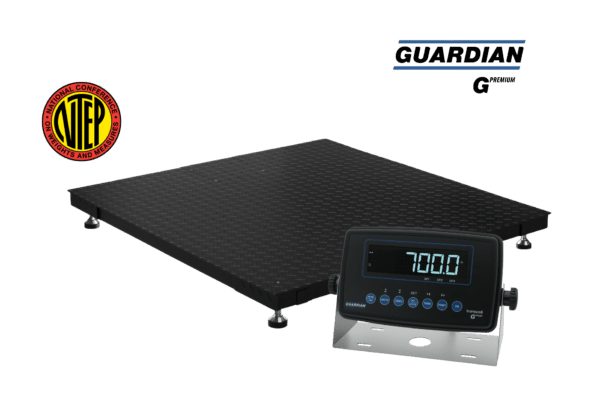
Guardian Premium
Adds the 10,000 lb capacity and the IP69K washdown G-700K readout.

Guardian Lite
The 5,000 lb scale for dry areas, complete with its NEMA 12 G-500E readout.

Guardian 1.0
The previous generation, kept orderable to match existing installations.
Custom & OEMWe also build the ones that aren’t in any catalog. Learn more
A scale is one part of the station. One catalog, one order.
The readout that pairs with a Platform-Only deck, the weigh beams for where a platform can't go, and the cable that connects all of it come off the same shelf, on the same order.
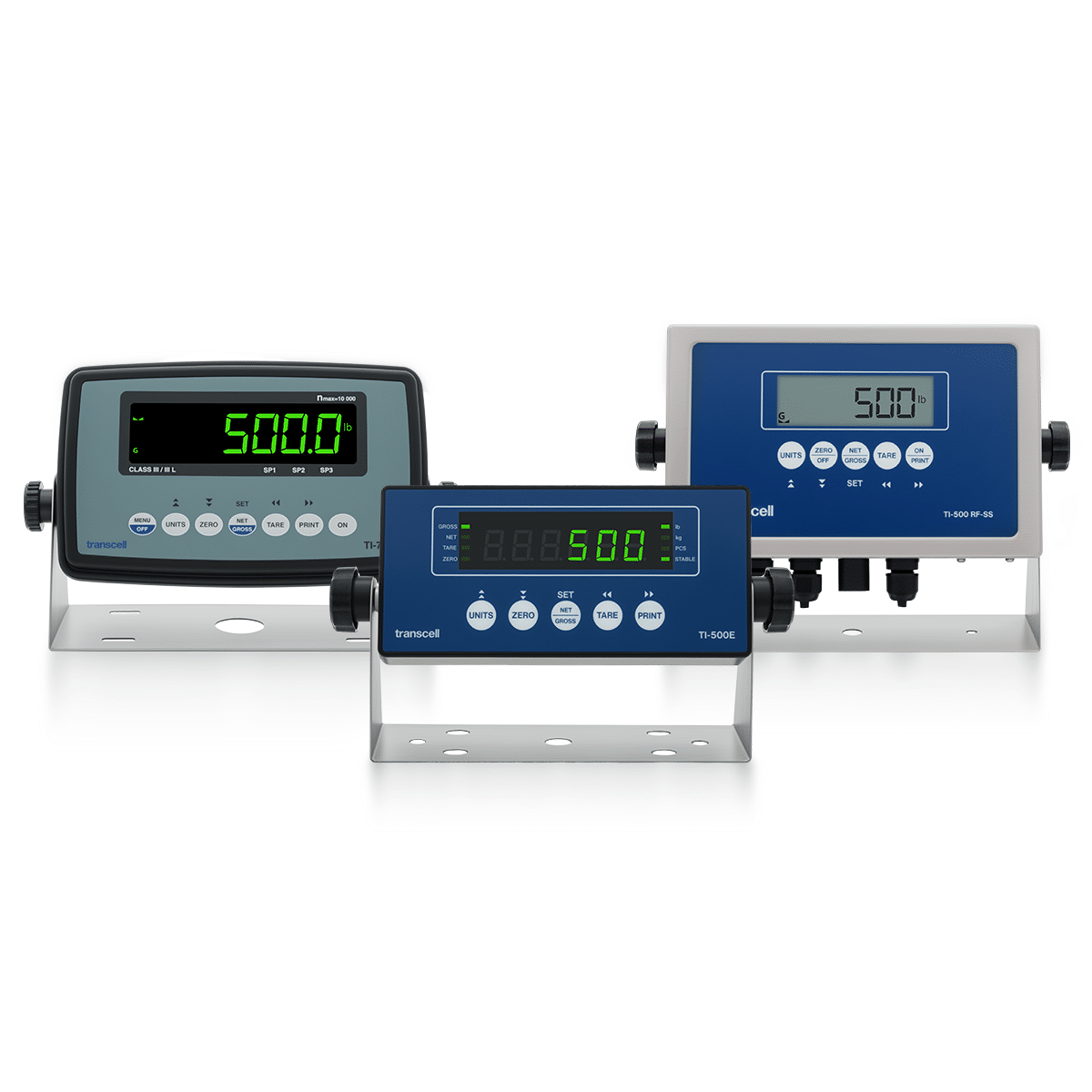
Digital Indicators
The deck outlasts the electronics. Replace a dead readout, or pair an NTEP indicator with a Platform-Only deck.
View products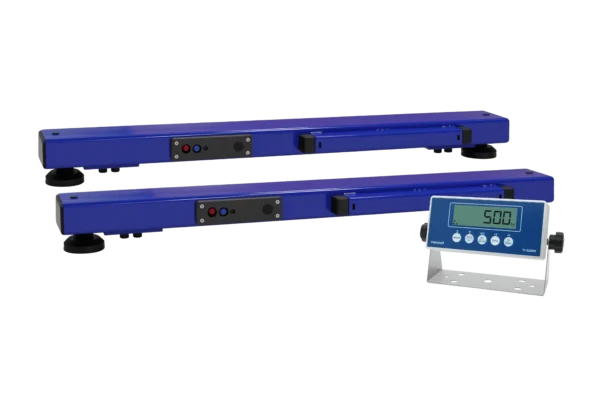
Portable Weigh Beams
When a pallet jack can't climb the deck height and a pit is out of the question, weigh beams sit at floor level.
View products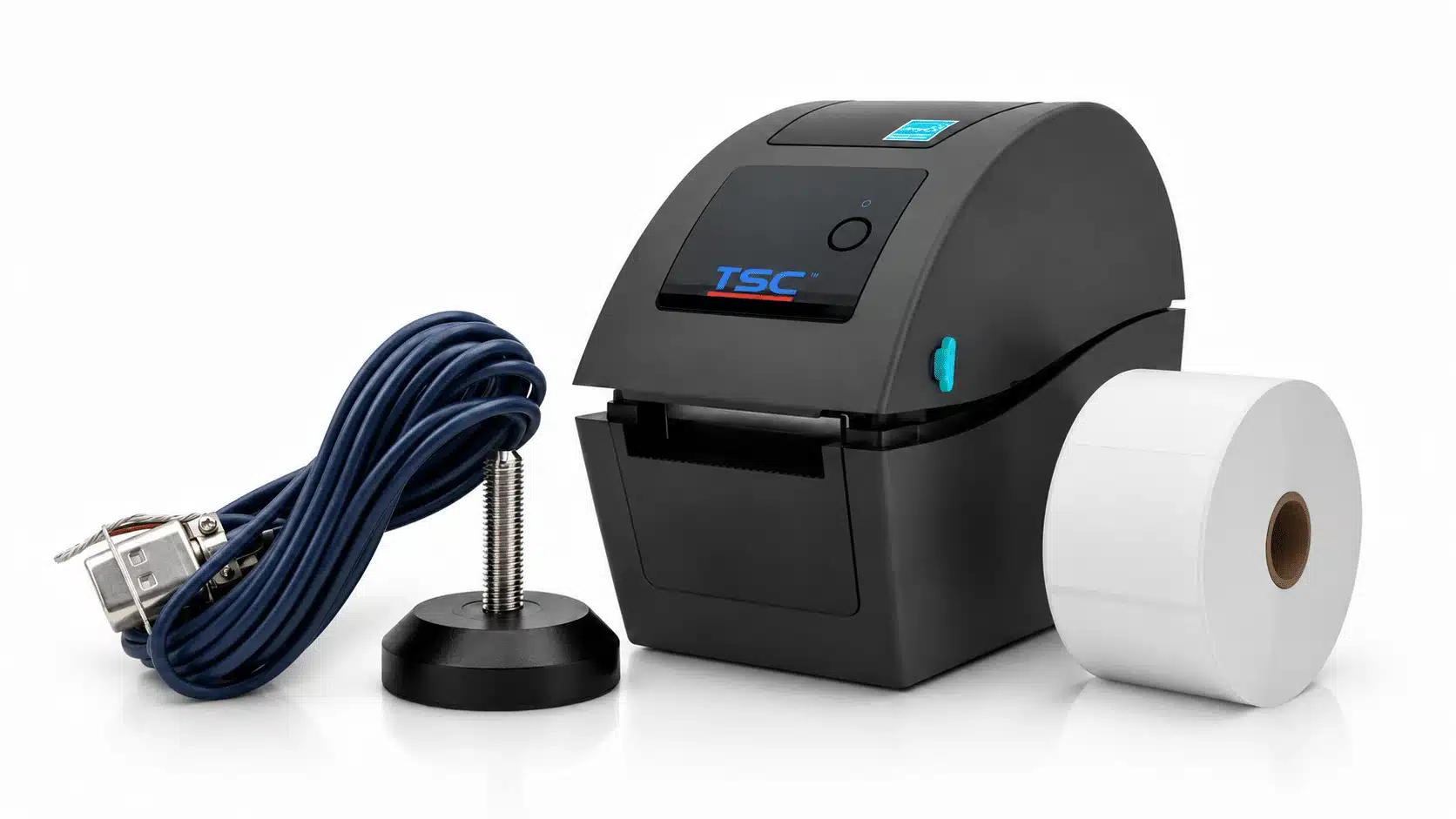
Cables & Accessories
Shielded load cell cable, printers and option modules. The parts that turn a scale into a working station.
View productsWhy Transcell. Ordered like a store, backed like a partner.
Free 2-day shipping
Free 2-day shipping on every USA order, Alaska and Hawaii included, no minimum. Floor scales ship free by ground, contiguous 48 states only.
Ships worldwide
International orders ship at FedEx live rates: what FedEx charges is what you pay.
Warranty backed
Every product carries a manufacturer warranty. If something goes wrong, you deal with the people who built it.
Custom when you need it
Can't find the perfect fit? We build custom load cells and custom electronics for OEMs every day.
Platform scale reference
How to specify a platform scale: which Guardian trim, what capacity and deck size the loads actually need, which readout survives the environment, whether the scale has to be legal for trade, and how the load gets onto the deck in the first place. Below, each of those in turn, how the platform turns a pallet into a number, which Guardian to order for what, the full specification with the trims side by side, and the vocabulary used on the datasheet.
Which platform scale do you need? Five questions, in order.
Every Guardian shares one platform, so most of the usual scale questions are already answered before you start. What is left to decide is the capacity, the footprint, the readout and the paperwork, and one practical question that gets skipped more often than any of them: how the load will actually get onto the deck.
Which Guardian is which?
Guardian Lite is the least expensive complete scale: 5,000 lb, with the NEMA 12 G-500E readout, for dry areas. Guardian Premium is where the 10,000 lb capacity starts, and its G-700K readout is sealed to IP69K for areas that get hosed down. Premium Wireless is the Premium with the floor cable replaced by an RF link. Platform-Only is the Premium deck sold without a readout, and Guardian 1.0 is the previous generation, kept orderable to match installations already on the floor.
Platform-Only is not the cheap option. At $1,475 it costs more than a complete Lite, because it is the 10,000 lb Premium deck sold without a readout, while Lite is a 5,000 lb scale with its indicator included. Buy it when you already have an indicator worth keeping, not to save money on a first scale.
Guardian 1.0 deserves the same honesty: it is still supported, but the current Guardian is the better scale for the money unless you are matching an existing installation.
What capacity and deck size?
Capacity is the easy half: 5,000 lb on every trim, 10,000 lb on Premium, Wireless and Platform-Only. Pick the one that clears your heaviest load with room to spare and move on.
The harder truth is that steady weight is not what wears a floor scale out. A pallet jack setting a load down hard puts several times the nameplate into one corner for a fraction of a second, and that impact, repeated all day, is what a platform has to be built around. The Guardian's ratings state it plainly: on the 5,000 lb platform, 7,500 lb of shock on a corner and 15,000 lb on an edge, because the edge is where a jack lands first. The welded channel undercarriage absorbs that hit so it never reaches the load cells, and the failure it prevents is a permanent zero shift, which is how a hard overload actually kills a scale.
Deck size is set by the load's footprint and the approach. 4 × 4 ft and 5 × 5 ft are available across the current trims, with 4 × 5 ft on Premium Wireless and Guardian 1.0. The whole load has to land inside the deck edges for the reading to mean anything, so size to the pallet overhang, not the pallet.
Standard, washdown, wireless, or no readout at all?
The deck shrugs off the environment. The indicator does not, which is why the readout is the axis the whole lineup turns on.
Standard means the G-500E, a NEMA 12 enclosure: protected against dust and dripping liquids indoors, right for a dry warehouse or shipping area. Washdown means the G-700K, sealed to IP69K, the rating that covers high-pressure, high-temperature hose-down, which is what a food or chemical plant sanitation shift actually does to equipment.
Wireless keeps the IP69K readout and replaces the cable between platform and indicator with an RF link. The cable it removes is the one that runs across the floor: no conduit, no trench, no cable for a forklift to find. On the 4 × 5 ft deck the wireless readout is the TI-500 RF; on the others it is the G-700K RF.
None means Platform-Only. The platform presents a summed load cell bridge, so most NTEP indicators will read it after calibration. For legal-for-trade use, the indicator needs its own NTEP certificate: the Guardian platform is certified on its own, under CC 06-084, for use with any certified, compatible indicator.
Does it have to be legal for trade?
If the weight is the basis of a commercial transaction, the scale has to be a certified device. Guardian is NTEP certified under Certificate of Conformance 06-084 and complies with NIST Handbook 44 as a Class III device, the accuracy class Handbook 44 assigns to commercial industrial scales.
Two things about that certificate are worth knowing before you order. It covers the platform, up to 5,000 divisions, for use with any NTEP-certified, compatible indicator, which is what keeps a Platform-Only deck legal for trade once it is paired with one. And certification is not permission: the finished installation still has to be placed into service and sealed by your local weights and measures authority before it can charge anyone by weight.
If the scale only feeds your own process and never sets a price, none of this applies, and any trim configured any way is fine.
How does the load get onto it?
A forklift drives straight onto the deck and the diamond tread is there so its tires grip it wet. A pallet jack is a different story: it cannot climb the deck height, so it needs either ramps or a pit frame that sets the deck flush with the floor. Ramps eat floor space on two sides; a pit means concrete work and a contractor, and it is the right answer when the scale is permanent and the traffic is constant. Guardian ramps come in 4 × 3, 4 × 4 and 5 × 4 ft and are ordered with the scale; pit frames are a special order.
If neither is practical, the honest answer is a different product: portable weigh beams sit at floor level, straddle the load, and need no ramps and no civil work at all.
The last part of the same question is the floor itself. The adjustable ball-foot feet exist because real warehouse floors are not flat, and a platform that is not sitting on all four feet is not accurate no matter what the load cells cost. Level the scale at installation and check it whenever it moves.
From a pallet to a number. What the platform actually does.
A floor scale is a chain of parts in series, and accuracy in service is whichever link is weakest. This is the path a load takes through a Guardian.
01
The deck takes the hit
A 1/4 in diamond plate spreads a point load across the frame. Thin plate dishes under a pallet corner, and the reading walks with it.
02
The frame absorbs the shock
Welded channel, not bolted. It is why the platform is rated to 15,000 lb on an edge while the load cells never see the impact.
03
Four load cells share it
One shear beam load cell in each corner pocket, each carrying a share that shifts as the pallet moves.
04
The junction box sums it
Four signals become one, and each corner is trimmed so the same load reads the same wherever it sits on the deck.
05
The indicator makes it pounds
It excites the bridge, reads a few millivolts back, and applies the calibration that was set as a system at the factory.
Two service notes fall straight out of this chain. When one corner reads high, the corner trim in the junction box is the first thing to check, not the load cells. And the indicator is the part a washdown environment kills first, as well as the cheapest part to replace, which is the entire reason Platform-Only exists as a trim.
Which Guardian to order. Decided by the floor it lands on.
The last two rows deliberately point out of this category: a platform scale is the wrong purchase for both.
| If the situation is | Order | Why |
|---|---|---|
| A dry storage or shipping area, loads to 5,000 lb | Guardian Lite from $1,275 | The least expensive complete scale. The NEMA 12 G-500E readout is protected against dust and dripping liquids, which is all a dry area asks of it. |
| Loads up to 10,000 lb | Guardian Premium from $1,625 | The 10,000 lb capacity starts at Premium. Same deck sizes, same platform, and the readout upgrade comes with it. |
| An area that gets hosed down | Guardian Premium from $1,625 | The G-700K readout is sealed to IP69K, the rating that covers high-pressure, high-temperature washdown. The deck never cared. |
| No cable run across the floor | Guardian Premium Wireless from $2,125 | An RF link replaces the platform cable: no conduit, no trench, no cable for a forklift to find. Still IP69K, still NTEP as a system. |
| An indicator already on the wall | Guardian Premium Platform-Only from $1,475 | The 10,000 lb Premium deck alone. For legal-for-trade use, pair it with an NTEP-certified, compatible indicator. |
| An existing Guardian 1.0 installation to match | Guardian 1.0 $1,575 | The previous generation, 4 × 5 ft at 5,000 lb with a TI-500E, kept orderable so a matched floor stays matched. |
| A pallet jack and no room for ramps or a pit | Portable weigh beams | A pallet jack cannot climb a platform's deck height. Weigh beams sit at floor level and need no ramps and no concrete work. |
| A dead readout on a scale you already own | A digital indicator | The deck outlasts the electronics. Replace the indicator, recalibrate, and keep the platform; a whole new scale is the wrong spend. |
The platform, line by line. True of every Guardian, whichever trim you pick.
The construction is what the trims have in common; the table after this one is what separates them.
| Specification | Guardian | What it means for the installation |
|---|---|---|
| Deck plate | 1/4 in diamond plate steel | Spreads a point load across the frame, and the raised tread is what a forklift tire grips when the deck is wet. |
| Undercarriage | Heavy-duty welded channel | Welded rather than bolted. This is the part that absorbs shock so the impact never reaches the load cells. |
| Load cells | Four shear beams | One in each corner pocket: Transcell SBS-5K/SE on Premium, Premium RF and Platform-Only, Zemic H8C-2.5K on Lite, and Transcell SBS-2.5K on Guardian 1.0. |
| Corner shock rating | 7,500 lb | On the 5,000 lb platform: half again the nameplate, on one corner, because that is what a hard set-down actually delivers. |
| Edge shock rating | 15,000 lb | Three times the nameplate, because the edge is where a pallet jack lands first. The failure this prevents is a permanent zero shift. |
| Capacities | 5,000 / 10,000 lb | 5,000 lb on every trim; 10,000 lb on Premium, Wireless and Platform-Only. |
| Deck sizes | 4 × 4, 4 × 5, 5 × 5 ft | 4 × 4 and 5 × 5 across the current trims; 4 × 5 on Premium Wireless and Guardian 1.0. |
| Leveling | Adjustable alloy steel ball feet | Each corner sets independently, which is how a real warehouse floor gets dealt with. A scale that is not sitting flat is not accurate. |
| Certification | NTEP CC 06-084 | NIST Handbook 44 Class III, up to 5,000 divisions. It covers the platform, for use with any NTEP-certified, compatible indicator. |
| Displayed division | 1 lb at 5,000 lb, 2 lb at 10,000 lb | The finest legal-for-trade increment: capacity over the platform's 5,000 certified divisions. It is the figure a weights and measures inspector checks first. |
| Calibration | As a system, at the factory | Platform and indicator are calibrated together before shipping, by the people who built the load cells inside. |
| Shipping | Free ground, contiguous 48 states | The one exception to Transcell's free 2-day shipping, because a floor scale moves by freight. It ships on a pallet; liftgate delivery can be arranged when you order. |
| Warranty | 3 yr structural + 2 yr electronics | Three years on the platform structure and two on the electronics, with US-based support. Other Transcell lines carry different terms, so this figure covers Guardian and nothing else. |
Construction and rating figures are from the published Guardian documentation and are subject to change without notice. The full document is the Guardian datasheet (PDF).
The four trims, side by side. What actually changes between them.
Guardian 1.0, the previous generation, sits outside this table: a single 4 × 5 ft, 5,000 lb model with a TI-500E readout at $1,575.
| Compare | Lite | Premium | Wireless | Platform-Only |
|---|---|---|---|---|
| From | $1,275 | $1,625 | $2,125 | $1,475 |
| Capacity | 5,000 lb | 5,000 / 10,000 lb | 5,000 / 10,000 lb | 5,000 / 10,000 lb |
| Indicator | G-500E | G-700K | G-700K RF or TI-500 RF | Not included |
| Readout sealing | NEMA 12 | IP69K | IP69K | Your indicator's |
| Deck sizes | 4 × 4, 5 × 5 ft | 4 × 4, 5 × 5 ft | 4 × 4, 4 × 5, 5 × 5 ft | 4 × 4, 5 × 5 ft |
| Platform to indicator | Cable | Cable | RF wireless | Your cabling |
| Legal for trade | NTEP | NTEP | NTEP | NTEP deck, with a certified indicator |
| Shop | View models | View models | View models | View models |
Datasheet terms, in plain language. What they mean when you're specifying.
Show all 20 terms
- Platform scale
- A low-profile floor scale: a deck on load cells that a load is placed or driven onto. Floor scale and platform scale name the same thing.
- Trim
- One way of buying the same platform. Guardian trims differ in readout and capacity, not in structure.
- Deck
- The steel plate the load sits on. On a Guardian, quarter inch diamond plate.
- Diamond plate
- Steel plate with a raised tread pattern, so a tire or a boot grips it when it is wet.
- Undercarriage
- The welded channel frame under the deck that carries the load out to the four corners and absorbs impact on the way.
- Shear beam load cell
- The load cell type in each corner pocket: a steel beam that measures load by the shear strain in its machined web.
- Summing junction box
- The enclosure that adds the four load cell signals into one and lets each corner be trimmed independently.
- Corner trim
- Adjusting each load cell's contribution so the same load reads the same wherever it sits on the deck. The first thing to check when one corner reads high.
- Ball feet
- Adjustable leveling feet with a ball joint, so each corner can be set independently on an uneven floor.
- Shock rating
- The momentary overload the structure tolerates without damage: 7,500 lb on a corner and 15,000 lb on an edge for the 5,000 lb platform.
- Zero shift
- A permanent change in the scale's empty reading, the damage a hard overload actually causes when it reaches the load cells.
- NTEP
- The National Type Evaluation Program, which tests weighing equipment against Handbook 44 and issues the certificate legal-for-trade use requires.
- Certificate of Conformance
- The NTEP document for a certified device. CC 06-084 covers the Guardian platform, for use with any NTEP-certified, compatible indicator.
- Handbook 44
- The NIST specification and tolerance rulebook that US weights and measures authorities enforce on commercial scales.
- Class III
- The Handbook 44 accuracy class assigned to commercial industrial scales, including platform scales.
- Legal for trade
- Approved for transactions where the weight sets the price. Requires a certified device, then placement into service by the local inspector.
- Division
- The increment the readout counts by. Capacity divided by division is what an inspector checks against the accuracy class.
- NEMA 12
- An indoor enclosure rating against dust, dirt and dripping liquids. The G-500E readout's rating: right for dry areas, not for a hose.
- IP69K
- Sealed against high-pressure, high-temperature washdown, the sanitation-shift rating. The G-700K readout carries it.
- Pit frame
- A frame cast into a recess in the floor so the deck sits flush with it, letting a pallet jack roll on with no ramps.
Platform scales, answered.
Which Guardian should I buy?
The Which Guardian to order table above maps situations to trims. The short version: Lite is the least expensive complete scale for a dry area at 5,000 lb, Premium adds the 10,000 lb capacity and a washdown readout, Wireless removes the floor cable, and Platform-Only is for an indicator you already own.
Why does Platform-Only cost more than a complete Lite?
Because it is the Premium deck, rated for 10,000 lb, sold without a readout, while Lite is a 5,000 lb scale that includes the G-500E. Platform-Only is an upgrade path, not a budget entry point.
Are Guardian scales legal for trade?
Yes. Guardian is NTEP certified under Certificate of Conformance 06-084 and complies with NIST Handbook 44 as a Class III device.
Two things to know. The certificate covers the platform, so any NTEP-certified, compatible indicator completes a legal-for-trade scale. And certification is not permission: the finished installation still has to be placed into service and sealed by your local weights and measures inspector.
Do I need ramps, or a pit?
A forklift drives straight onto the deck. A pallet jack cannot climb the deck height, so it needs either ramps or a pit frame set flush with the floor, and a pit means concrete work and a contractor. If neither is practical, portable weigh beams sit at floor level and need no civil work at all. Guardian ramps come in 4 × 3, 4 × 4 and 5 × 4 ft and are ordered with the scale; pit frames are a special order.
Can I use my existing indicator with a Platform-Only?
Usually yes. The platform presents a summed load cell bridge, so most NTEP indicators will read it after calibration. For legal-for-trade use, the indicator needs its own NTEP certificate; the Guardian platform is certified under CC 06-084.
How does a floor scale ship, and how is it offloaded?
Free ground freight to the contiguous 48 states, which is the one exception to our free 2-day shipping, because a floor scale moves by freight. It ships on a pallet, and liftgate delivery can be arranged when you order. Ask us about liftgate or any other receiving need when you order, and we will work out the most economical way to deliver.
What's the lead time, and is it in stock?
Standard trims and deck sizes are in stock and ship within 2 to 3 business days. Custom decks, capacities and mounting are quoted with a lead time up front.
What's the warranty, and what if it fails in service?
Three years on the platform structure and two years on the electronics, including the indicator. Service, repair and recalibration are handled factory-direct; contact us to arrange it.
Can you build a deck size or capacity that isn't listed?
Yes. Custom footprints, capacities and mounting are a core part of our business, and we build the load cells and electronics inside them ourselves. Tell us the footprint, the capacity and the environment and an engineer will follow up.
We Make Your Challenge Our Business
Tell us what it has to do and we’ll tell you what it takes.